



Hallway Cane Umbrella Holder
A hallway cane umbrella holder is a practical piece of entrance furniture designed to keep walking sticks and wet umbrellas organised.
Hallway Cane Umbrella Holder
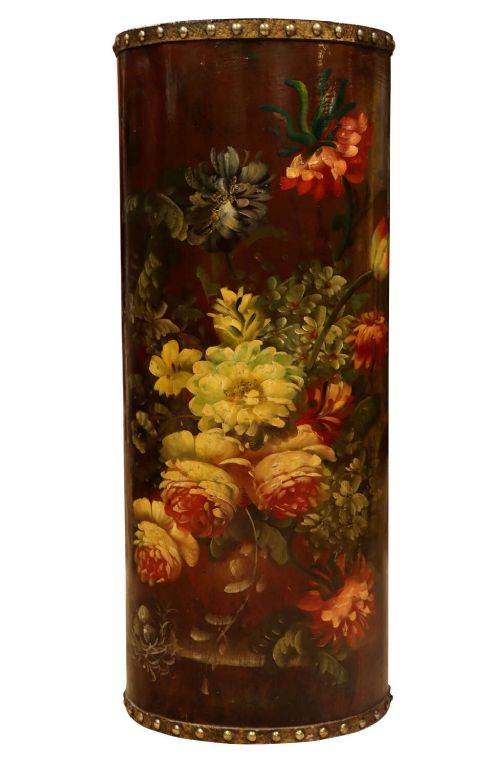
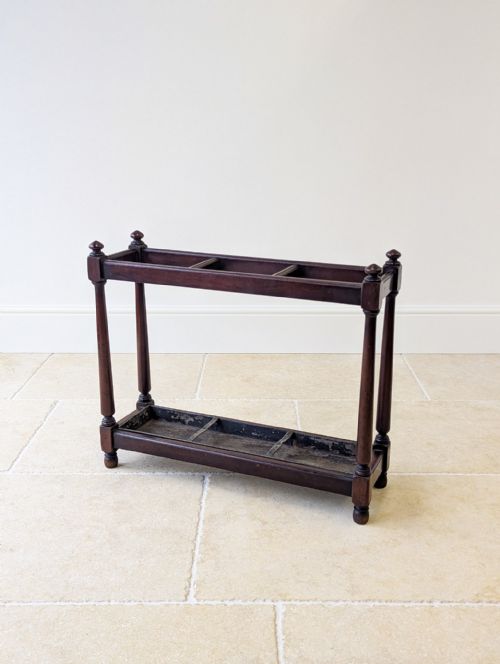
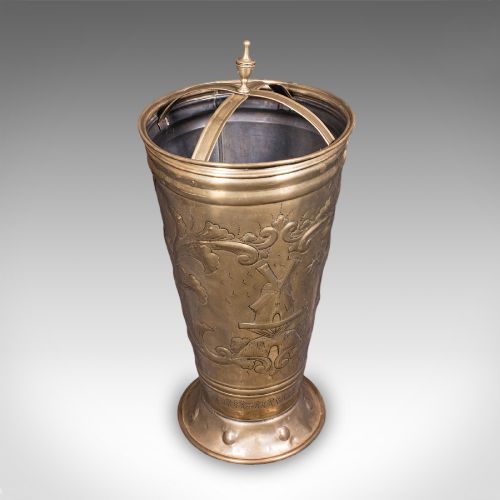
A hallway cane umbrella holder organises walking sticks and damp umbrellas in a domestic entrance, keeping floors clear and dry. These pieces appear in forms ranging from compact semi-circular shapes to substantial floor-standing barrels.
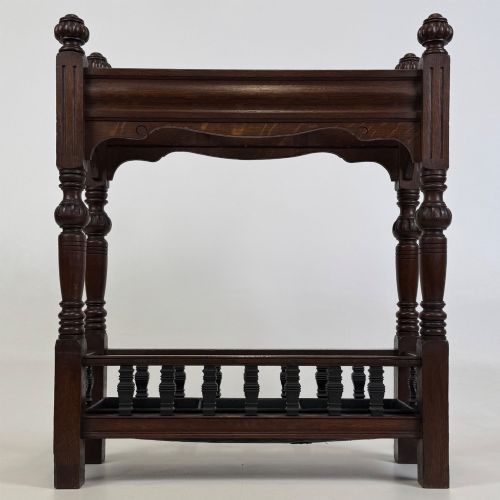
Victorian and Edwardian examples dominate the selection, spanning periods from the nineteenth century into the 1930s. Oak, mahogany, cast iron, and brass form the primary structures found across these domestic hall furnishings.
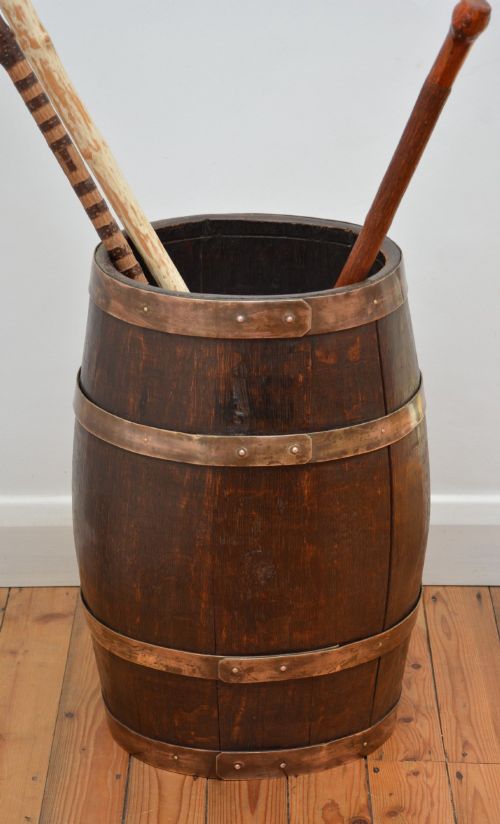
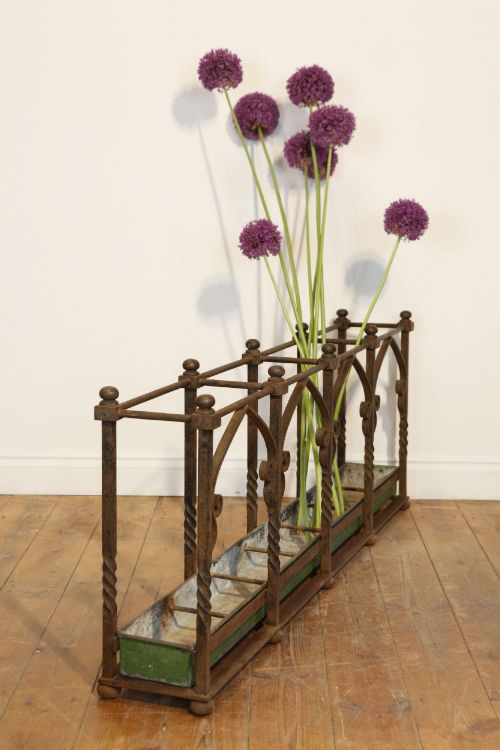
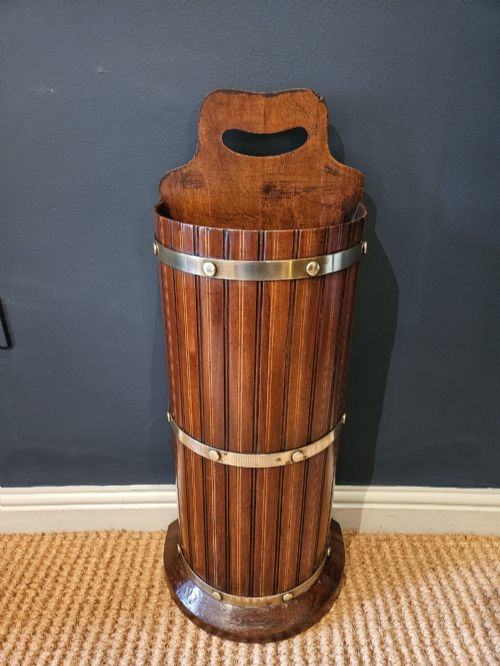
Country house and aesthetic movement designs sit alongside gothic revival and arts and crafts styles. Buyers encounter everything from coopered wooden barrels with brass bands to intricate metalwork frames.
Materials and construction
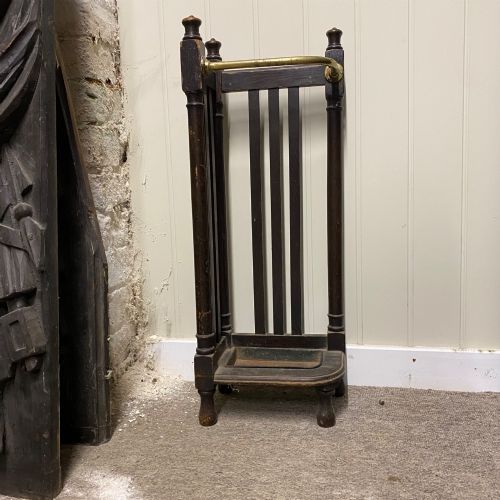
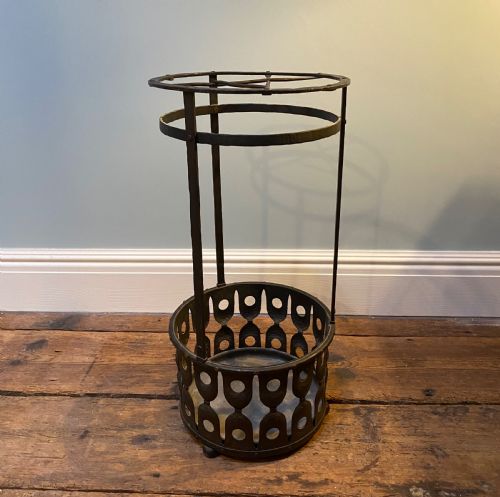
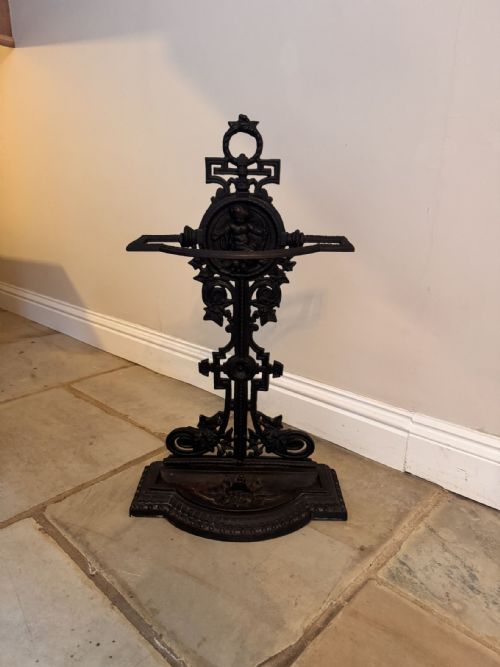
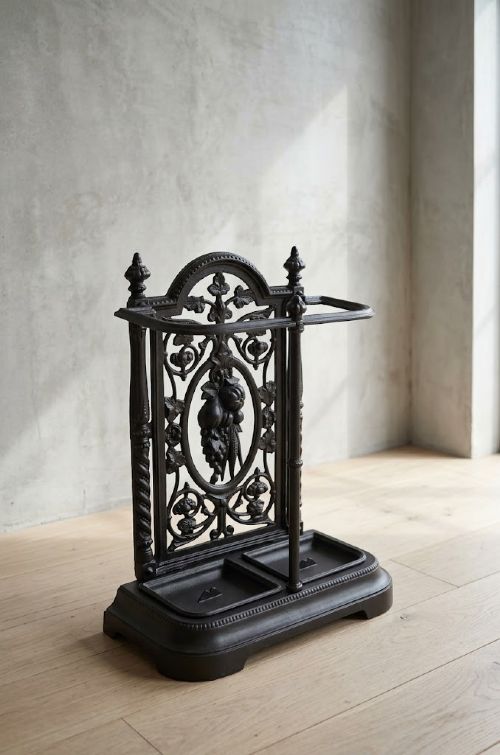
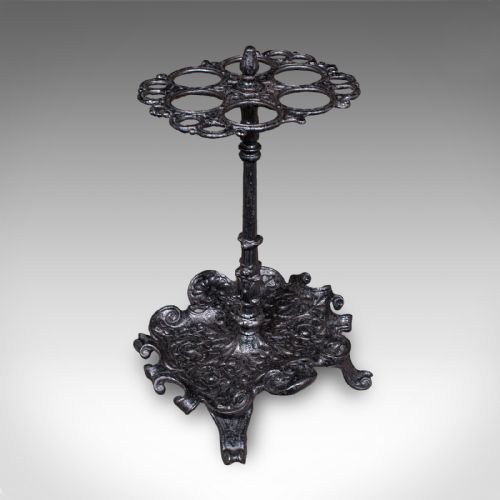
Foundries cast iron and brass into structural frames, decorative panels, and bottom drip trays designed to catch rainwater. Metal components often feature applied finishes such as nickel plating or white enamel.
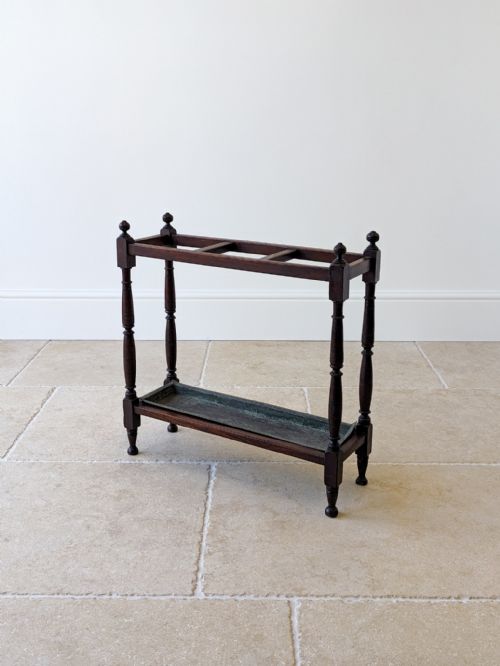
Joiners and coopers constructed wooden versions from oak, mahogany, and pine, frequently utilising coopered barrel techniques with metal hoops. Bentwood methods also shape circular frames for lighter hallway placement.
Hallway Cane Umbrella Holder Retail Price Guide 2026
Typical asking prices for hallway cane umbrella holder among the pieces listed under this phrase on Sellingantiques today, from the lower quarter to the upper quarter. They describe what is for sale here now, not the wider market.
Foundry workers occasionally cast unexpected motifs into hallway ironwork, including full-length footballers and bamboo-mimicking faux bois stems.
Assessing quality
The weight and gauge of the metalwork or timber dictate the structural integrity of a holder. Substantial cast iron frames and thick oak staves indicate higher manufacturing standards than thin sheet metals or soft pine.
Original drip trays and intact hardware significantly affect the integrity of a piece. Retaining these detachable water catchers ensures the holder functions properly in a hallway setting.
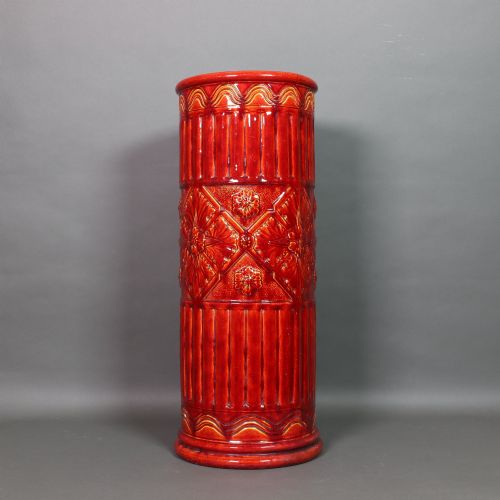
Coalbrookdale·Thomas Jeckyll·Thonet·Burmantofts Faience·Liberty Design
The Hallway Cane Umbrella Holder Glossary
- Demi-lune
- A half-moon shape used to describe semi-circular umbrella stands that sit flat against a hallway wall. This profile allows the piece to occupy minimal floor space.
- Coopered
- Construction method using parallel tapered wooden staves bound by metal hoops, similar to barrel making. This technique creates sturdy cylindrical or semi-circular bodies for timber stands.
- Drip tray
- A metal or ceramic pan positioned at the base of a stand to catch water from wet umbrellas. These trays protect hallway flooring from moisture damage.
- Stick loop
- A metal divider or ringed framework at the top of a stand that separates individual canes and umbrellas. This keeps contents upright and prevents them from leaning or tangling.
- Faux bois
- A decorative technique mimicking the texture and appearance of natural wood grain. It appears frequently on cast iron and ceramic stands from the art nouveau period.
Hallway Cane Umbrella Holder: Frequently Asked Questions
Where should a hallway cane umbrella holder be placed?
These holders suit entrance halls, vestibules, and boot rooms where coats and outdoor gear are stored. Placing them near the primary doorway catches dripping rain before moisture reaches interior wooden floors.
Ensure adequate clearance around the piece so walking sticks can be retrieved easily without disturbing surrounding furniture.
How do you protect floors from wet umbrellas?
Most antique stands feature integrated or removable metal drip trays at the bottom to pool rainwater. Emptying and drying these trays regularly prevents rust accumulation and protects underlying flooring.
For wooden coopered stands without metal bases, placing a small ceramic or zinc liner inside safeguards the timber from prolonged water exposure.
Can these holders accommodate walking sticks as well?
Umbrella stands serve equally well for walking sticks, canes, and shooting sticks. The internal dividers or looped top frames keep slender shafts upright and accessible.
Narrower semi-circular models work particularly well if the collection consists primarily of slender walking canes rather than wide golf umbrellas.
How do you distinguish between Victorian and Edwardian examples?
Victorian stands often display heavier ornamentation, gothic revival motifs, or robust cast iron work with dark finishes. Oak and mahogany versions from this era frequently feature deep patination and substantial brass banding.
Edwardian and later pieces tend toward lighter constructions, including arts and crafts oak frames, nickel-plated art deco designs, or slender brass tubing.