





Antique Umbrella Cylinder
These antique umbrella cylinder options are cylindrical vessels made to hold walking sticks and wet canopies.
Antique Umbrella Cylinder
An antique umbrella cylinder is a domestic holder designed to organise walking sticks, canes, and umbrellas in hallways and entryways. The examples recorded here include ceramic vessels, metal tubes, and turned wooden forms created to keep wet tips off hallway floors.
The versions most frequently met on this page span the nineteenth and mid-twentieth centuries, drawing on Victorian, Arts and Crafts, and Aesthetic Movement designs. Makers ranged from English potteries to export workshops in China and Japan.
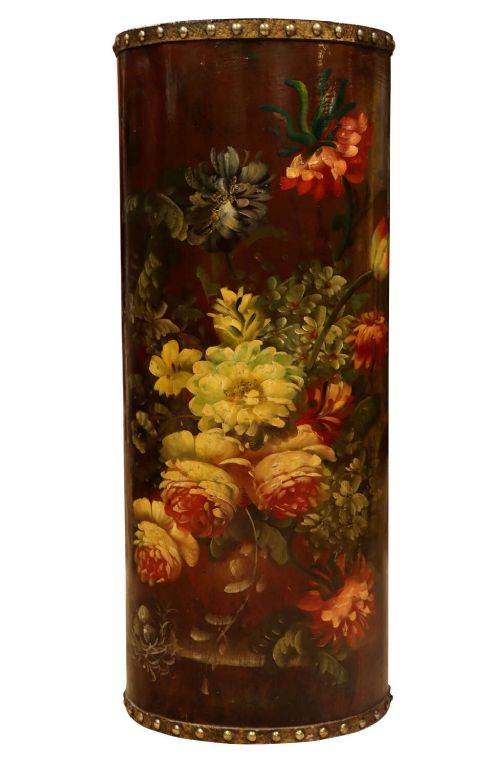
Forms vary from robust copper cylinders and brass-studded trunks to glazed earthenware and porcelain vessels. Each piece fulfills the practical requirement of vertical storage while serving as a decorative entrance feature.
How they were made
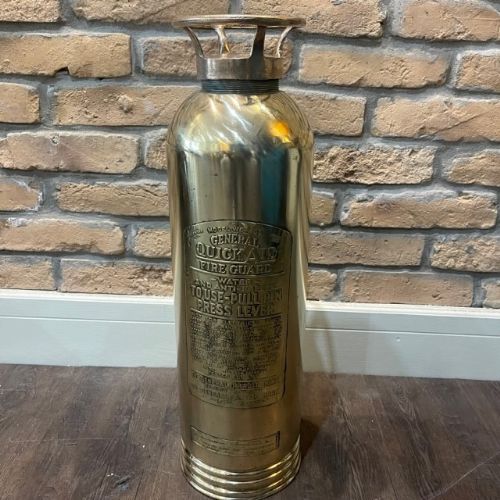
Makers shaped these cylinders using metals such as copper and brass, often applying hand-hammered textures or securing components with brass tacks. Other vessels utilised dug-out tree trunks shaped into rustic wooden cylinders.
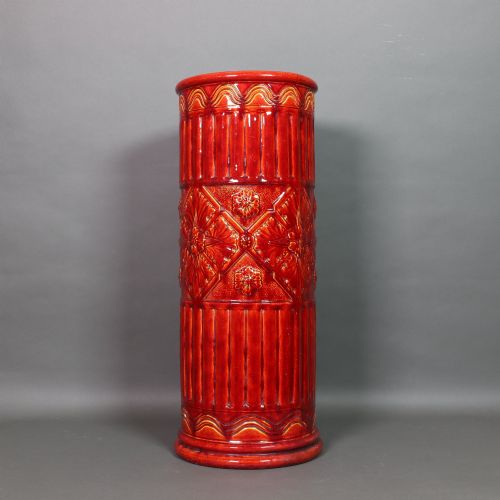
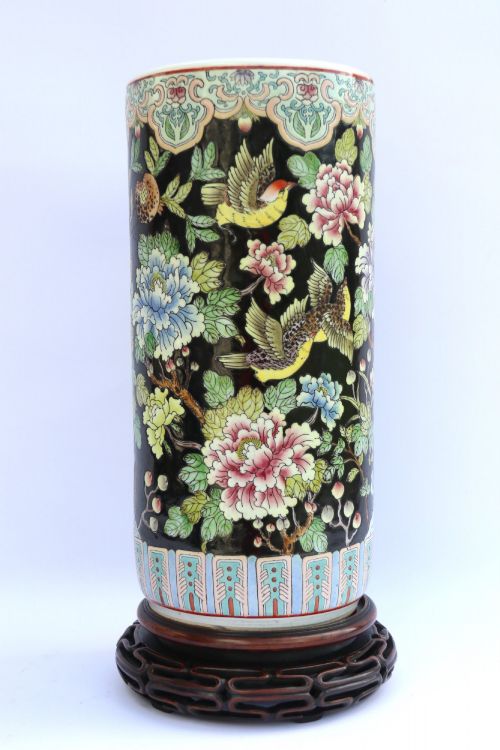
Ceramic examples were constructed from earthenware, faience, and porcelain, finished with glazes, enamels, and hand-painted floral decorations. These ceramic bodies were fired to withstand daily contact with heavy wooden shafts and metal ferrules.
Antique Umbrella Cylinder Retail Price Guide 2026
Typical asking prices for umbrella cylinder among the pieces listed under this phrase on Sellingantiques today, from the lower quarter to the upper quarter. They describe what is for sale here now, not the wider market.
Listings feature items from the nineteenth century, nineteen hundred, and nineteen-fifty, spanning copper, brass, porcelain, and earthenware.
What varies in quality
Quality rests upon the execution of the material, whether in the crispness of hand-painted floral porcelain or the weight and joinery of heavy copper sheet work. Superior pieces display deliberate craftsmanship in every detail, from the rim to the base.
The integrity of the decorative surface distinguishes finer examples, such as carefully applied glazes on faience pottery or precise hand-painting on export porcelain. Inferior execution shows in heavy, uninspired surface decoration or poor material stability.
Burmantofts Faience·Fukagawa
The Antique Umbrella Cylinder Glossary
- Faience
- Tin-glazed earthenware produced in imitation of Italian majolica. It provides a dense, absorbent body suitable for colourful opaque glazes.
- Ferrule
- The metal cap fitted to the bottom of an umbrella or walking stick. It protects the wood or fabric from splitting against the floor.
- Rose Medallion
- A style of nineteenth-century Chinese export porcelain featuring panels of figures and birds surrounded by green and pink floral borders.
- Aesthetic Movement
- A late nineteenth-century design style that emphasised visual beauty over narrative subject matter. It drew heavy inspiration from Japanese art and natural motifs.
Antique Umbrella Cylinder: Frequently Asked Questions
What is an antique umbrella cylinder?
An antique umbrella cylinder is a vertical vessel designed to hold walking sticks, canes, and umbrellas in domestic entryways. They keep wet umbrella tips contained and provide an orderly storage method in hallways.
These pieces range from industrial copper tubes and ceramic pottery to carved wooden tree trunks. They combine practical utility with decorative presence in the hall.
How were these cylinders used?
These vessels stood in hallways to receive wet umbrellas and walking sticks as residents and visitors entered the house. The interior contained the moisture from the wet tips, protecting wooden floors.
They also served as a decorative focal point near the front door. Their vertical shape made efficient use of narrow hallway spaces.
How do I live with an antique umbrella cylinder?
Place your cylinder in a hallway or boot room where it can receive everyday walking sticks and umbrellas. Ensure that very wet items are shaken off before placement to protect the interior.
Pair copper or ceramic cylinders with traditional entrance furniture. They function well when placed against panelled walls or near coat hooks.
How do I tell periods apart?
Nineteenth-century pieces often display Victorian or Arts and Crafts characteristics, such as hand-hammered copper or aesthetic movement faience pottery. Mid-century examples typically feature simpler hand-painted floral decoration on ceramic bodies.
Material choices also signal the era, with heavy copper and export porcelain pointing to the eighteen-hundreds, while specific painted metal and ceramic mixes indicate the nineteen-fifties.