



Hallmarked Silver Tea Box
A hallmarked silver tea box secures leaf and powder behind assayed metal walls, carrying decades of domestic ritual in solid sterling.
Hallmarked Silver Tea Box
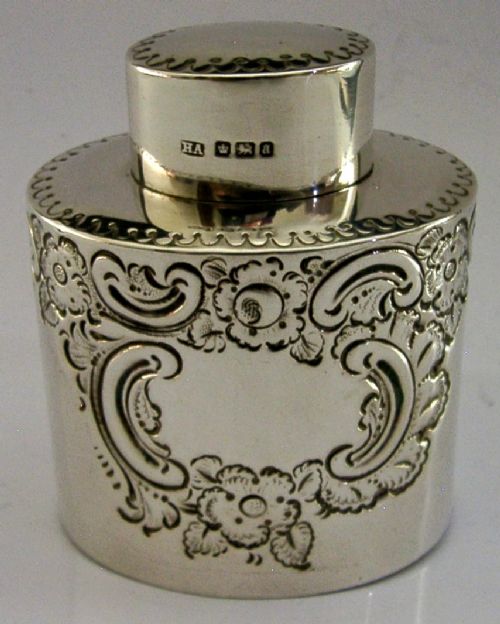
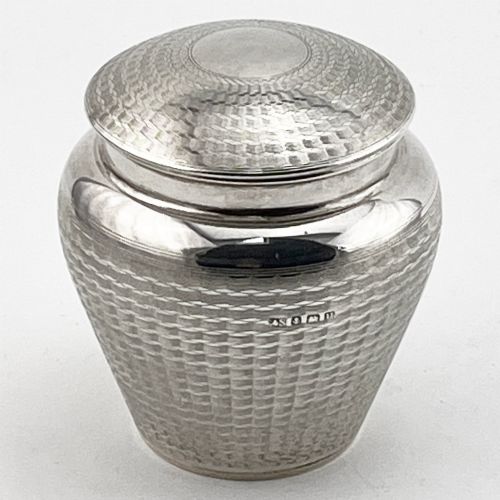
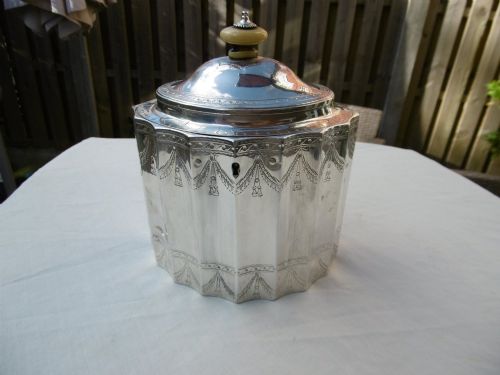
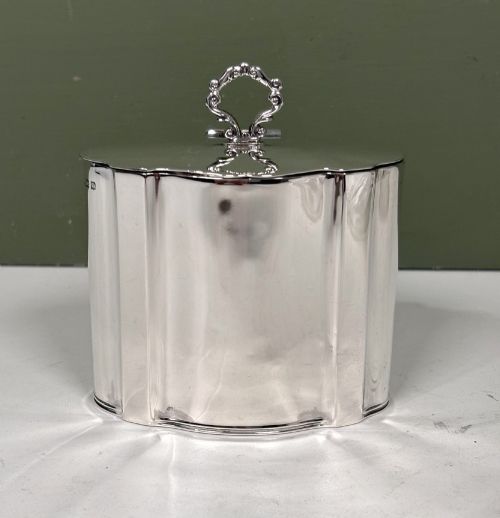
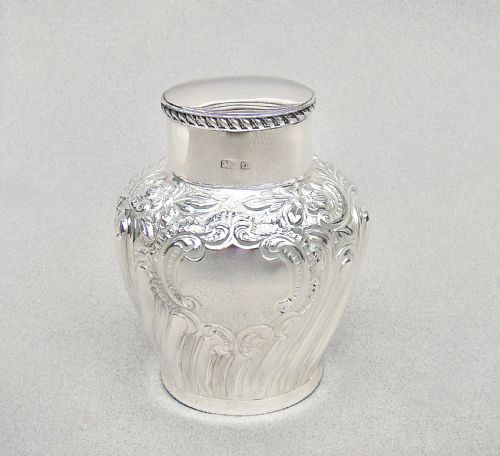
A hallmarked silver tea box is a rigid container designed to hold dried leaf or powder securely, protecting precious blends from light and air. These vessels appear in forms from simple canisters to knife box shapes and fluted Georgian bodies, spanning the eighteenth, nineteenth, and twentieth centuries. Buyers seeking a hallmarked silver tea box will find examples ranging from Victorian and Edwardian periods through to George V and Art Deco designs.
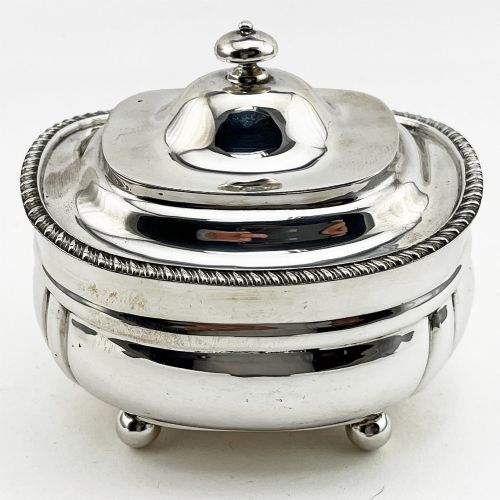
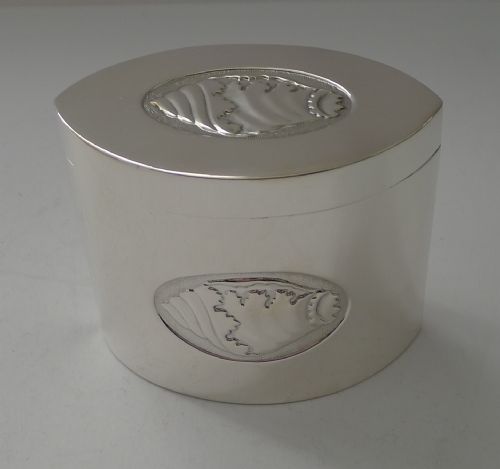
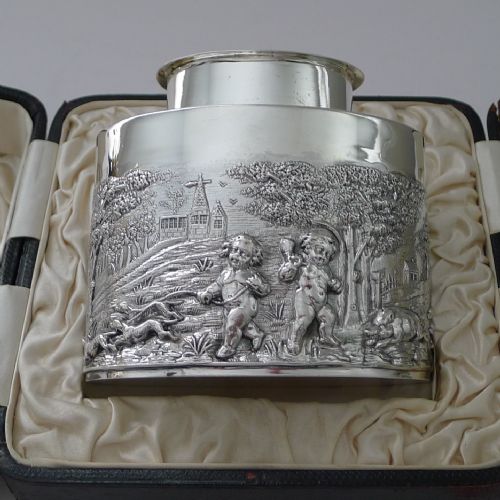
The pieces on this page are predominantly tea caddies and tea caddy boxes fashioned in sterling silver, alongside related silverwares and boxed sets. Makers utilised internal linings of velvet, silk, and satin to cushion contents, while fitted cases occasionally housed accompanying spoons or tongs. Most items stem from the Edwardian and Victorian eras, with occasional eighteenth century Georgian pieces and 1930s work appearing in the selection.
How they were made
Silversmiths constructed these boxes using solid sterling silver, shaping sheet metal through hammering, spinning, and soldering to form the body and lid. Assay offices in locations such as London, Birmingham, Sheffield, and Chester struck the metal with hallmarks to guarantee the silver standard. Hinges, catches, and internal compartments demanded precise metalwork to ensure lids closed flush against the container walls.
Interiors frequently received soft linings of velvet, silk, or satin to protect delicate contents and elevate the tactile experience of opening the box. Specialised forms like knife box caddies required meticulous angles and joinery to replicate larger dining furniture in miniature scale. Structural integrity relied on thick gauge silver, particularly on eighteenth-century fluted bodies and heavy Edwardian canisters.
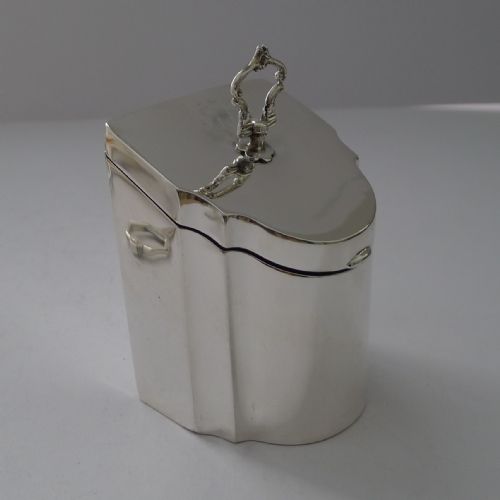
One remarkably shaped caddy mimics the steep profile of a dining room knife box, bringing miniature cutlery architecture straight to the tea table.
What varies in quality
Quality in a hallmarked silver tea box rests upon the thickness of the silver gauge, the crispness of chased or fluted ornamentation, and the precision of the maker's hand. Heavier silver weight provides structural permanence, whereas thin metal succumbs easily to dents and rim distortion over generations of use. Master silversmiths executed hinges and closures that operate with smooth resistance, avoiding loose lids or misaligned seams.
The reputation of the maker and the clarity of the complete set of hallmarks significantly elevate an example above standard production pieces. Boxes retaining original fitted velvet or satin linings, or accompanying matched spoons and tongs, demonstrate superior original commissioning. Furthermore, distinct stylistic execution - such as precise Georgian fluting or bespoke Edwardian forms - separates standard utility wares from collector pieces.
Robert Hennell·Zimmermann·Thomas Hayes·William Hutton and Sons Ltd·Ernest Druiff and Co·Harry Atkin
The Hallmarked Silver Tea Box Glossary
- Hallmark
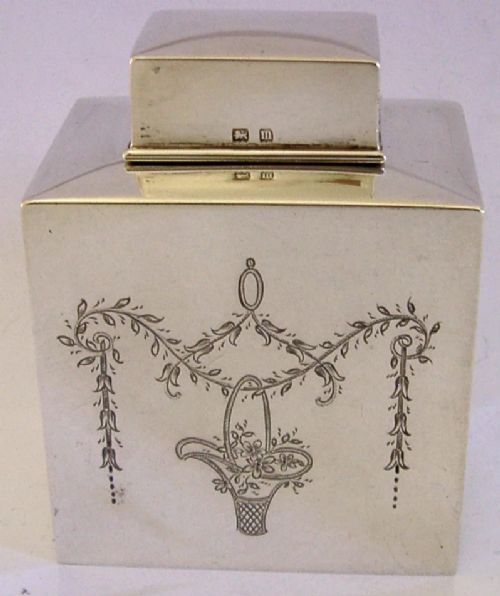
- A series of official marks stamped onto precious metal items to guarantee purity, origin year, and maker identity. These stamps typically include the standard mark, assay office mark, and date letter.
- Sterling silver
- An alloy comprising ninety-two point five percent silver and seven point five percent other metals, usually copper, chosen for durability. This composition forms the standard material for quality tea caddies.
- Tea caddy
- A container designed to store tea leaves safely away from humidity and light. Early examples derived their name from the word catty, a Chinese unit of weight.
- Assay office
- An official body responsible for testing the purity of precious metals and applying statutory hallmarks. Towns like London, Birmingham, Sheffield, and Chester operated distinct offices.
- Chased
- Decorated by hammering metal from the front to sink the design and raise relief patterns without removing material. This technique created the surface ornamentation seen on many Victorian and Georgian pieces.
Hallmarked Silver Tea Box: Frequently Asked Questions
What is a silver tea box used for?
A silver tea box served to store valuable tea leaves safely away from light, moisture, and household odours in wealthy homes.
Today, collectors use them to display antique silver on desks, sideboards, or dining tables, or to house small trinkets and keepsakes.
How do I date a silver tea box?
You can date a silver tea box by locating the stamped hallmarks and checking the specific date letter against assay office records.
Stylistic cues such as Georgian fluting, Victorian engraving, or Edwardian proportions also provide a clear indication of the period of manufacture.
Were all tea boxes lined with fabric?
Not all tea boxes featured fabric linings, as many utilitarian caddies relied entirely on plain silver interiors to hold loose leaves directly.
Fitted velvet, silk, or satin linings appeared more frequently in presentation pieces, knife box forms, or sets that included spoons and tongs.
How do I clean a silver tea box?
Cleaning a silver tea box requires a soft cloth and specialised silver polish applied gently to avoid wearing down the raised hallmarked stamps.
Harsh abrasives and chemical dips must be avoided, especially around internal fabric linings and delicate hinges where residue can become trapped.