




Hallmarked Silver Casket
A hallmarked silver casket is a sturdy receptacle for valuables, built to hold jewellery, trinkets or keepsakes securely on a dressing table.
Hallmarked Silver Casket
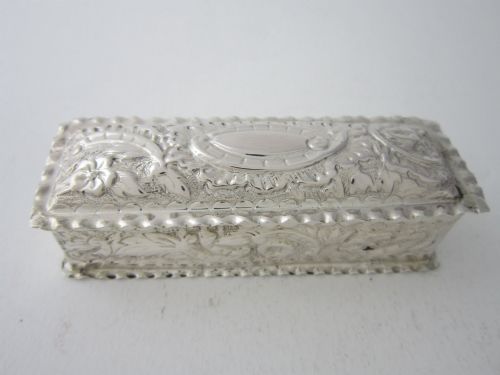
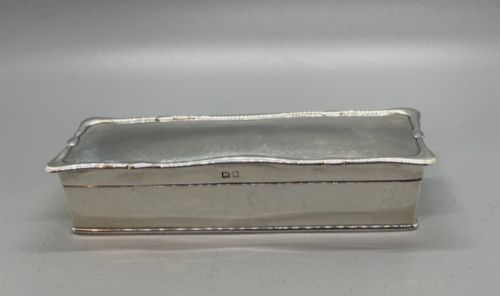
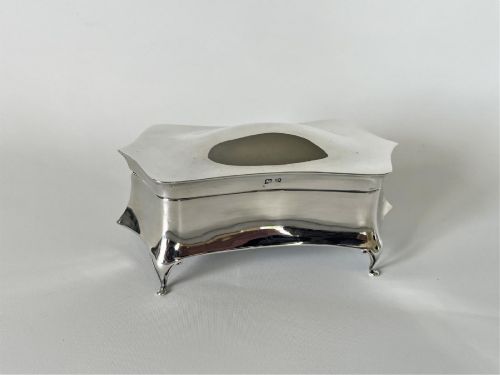
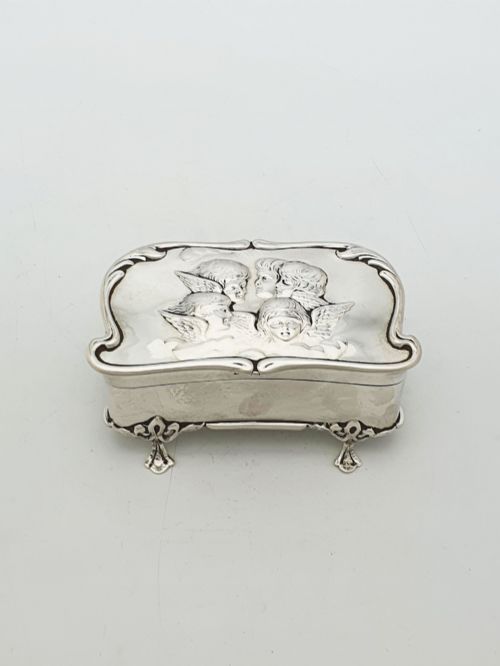
A hallmarked silver casket serves primarily as a decorative and practical container for small personal items, appearing in forms such as jewellery boxes, trinket boxes, and ring boxes. These pieces emerge predominantly from the Victorian, Edwardian, and George V periods, reflecting the shifting tastes of late nineteenth and early twentieth-century dressing tables.
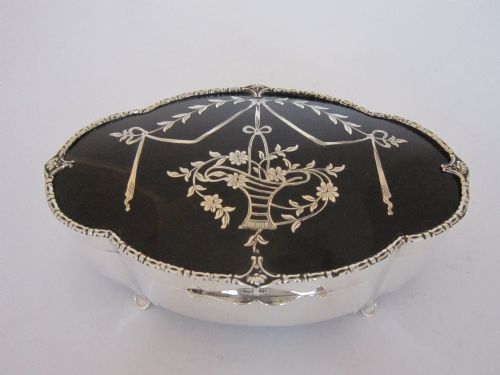
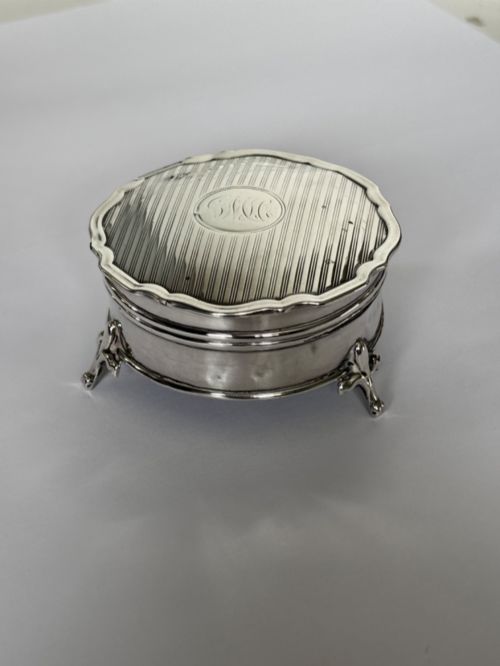
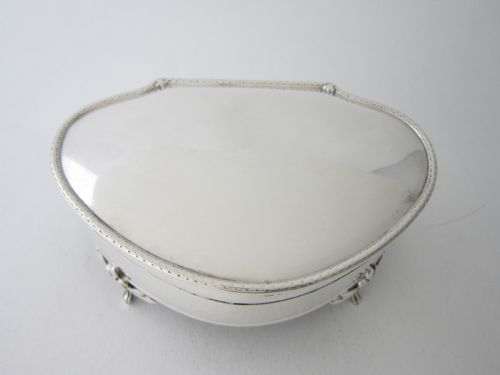
The objects seen here span from compact ring boxes to larger fitted jewellery caskets and potpourri boxes. Buyers most frequently encounter Edwardian and Victorian specimens shaped as oval or rectangular containers.
Origins trace directly to English assay offices, with hallmarks from cities like Birmingham, London, and Chester marking the standard of the metal. Styles range from Victorian Rococo Revival and Neoclassical Revival to Art Nouveau and Art Deco.
What varies in quality
The standard of a hallmarked silver casket depends heavily on the weight of the metal used and the crispness of the chasing or repoussé work on the body. Heavier gauge silver provides greater durability and resists denting more effectively than thin plate.
Interior execution also separates standard pieces from finer examples, particularly the presence of a rich gold gilt wash or a well-preserved velvet lining. Maker marks associated with notable workshops indicate superior craftsmanship and careful finishing of hinges and clasps.
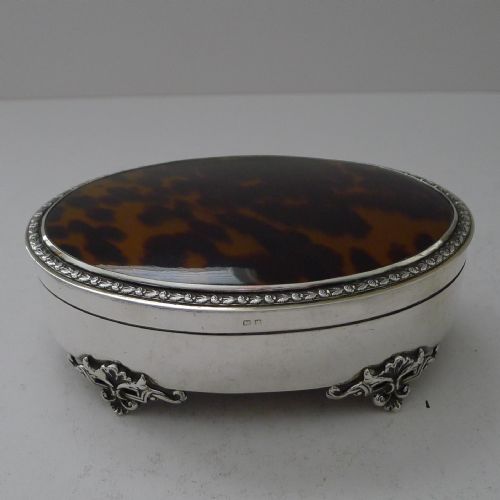
Listings feature sterling silver combined with tortoiseshell, velvet, and silver gilt across Victorian, Edwardian, and George V periods.
William Neale & Sons·William Comyns & Sons
The Hallmarked Silver Casket Glossary
- Hallmark
- An official stamp applied by an assay office to indicate the metal standard, the maker, and the year of testing. These marks provide the primary means of dating English silver.
- Sterling silver
- An alloy consisting of pure silver and other metals, usually copper, to increase durability. This standard forms the core material for nearly all these boxes.
- Tortoiseshell
- The mottled brown material derived from the shell of certain turtle species, used historically as an inset panel on silver boxes. It contrasts sharply with the bright metal surround.
- Silver gilt
- Sterling silver that has been coated with a thin layer of gold, often applied to the interior of a box to protect the metal and create a warm visual contrast.
- Potpourri box
- A specialised container featuring a pierced or perforated lid designed to diffuse scent from dried botanicals. These sit alongside standard trinket and jewellery boxes on dressing tables.
Hallmarked Silver Casket: Frequently Asked Questions
What is a hallmarked silver casket used for?
These boxes function primarily as secure storage on dressing tables for rings, cufflinks, brooches, and other small personal valuables.
They also serve as decorative desktop accessories designed to display tortoiseshell or chased silver craftsmanship in domestic interiors.
How do I identify the date of a silver box?
Assay office marks and date letters stamped directly into the silver provide the exact year of manufacture and the city where it was tested.
Stylistic cues such as Art Nouveau curves or Neoclassical symmetry help narrow down the period when hallmark stamps are worn.
Are these boxes lined with velvet?
Many surviving examples retain their original plush velvet or silk linings designed to protect delicate jewellery against scratches.
Some interiors feature a plain silver surface or a gold gilt wash rather than fabric upholstery.
What is the difference between a trinket box and a jewellery casket?
Trinket boxes generally measure smaller and suit lightweight items like rings, pins, or collar studs.
Caskets usually denote larger, heavier receptacles built with fitted compartments for a wider variety of valuable personal possessions.