


Art Nouveau Jewellery Box
An art nouveau jewellery box brings organic fluid forms to the dressing table, holding precious trinkets in silver, bronze, or kingwood.
Art Nouveau Jewellery Box
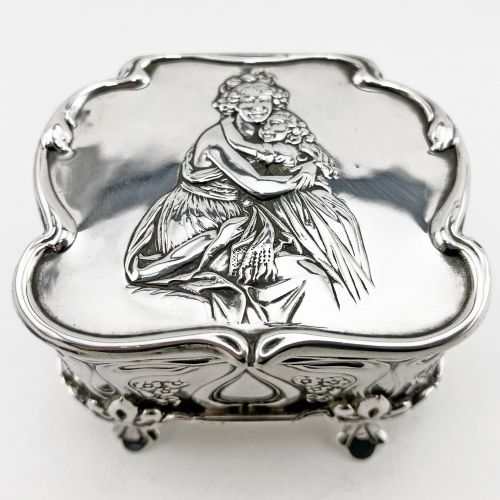
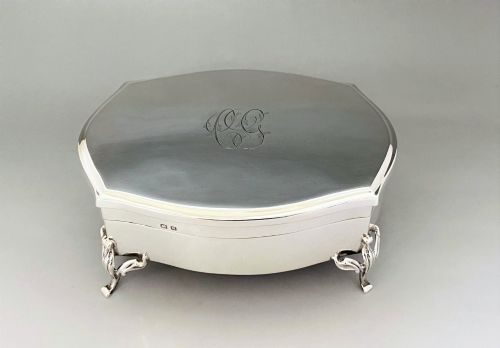
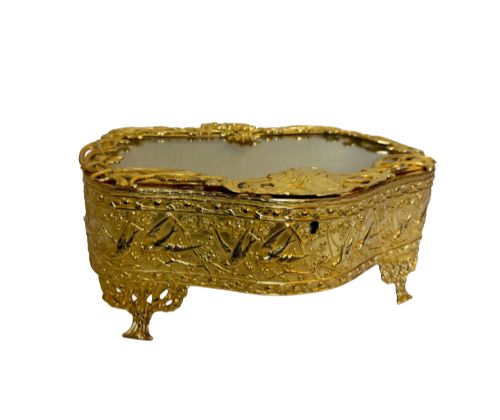
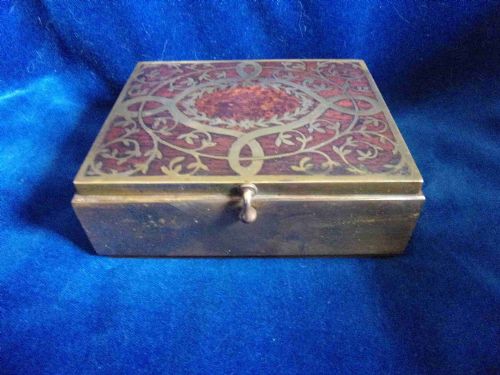
An art nouveau jewellery box combines functional storage with the curving vegetal motifs characteristic of the late nineteenth and early twentieth centuries. These pieces appear in forms ranging from small trinket containers to large silver caskets and ring boxes.
The material palette spans sterling silver, gilt bronze, glass, brass, and precious woods like kingwood, often accompanied by silk or velvet linings. Pieces frequently originate from British workshops alongside continental European makers working in the Jugendstil manner.
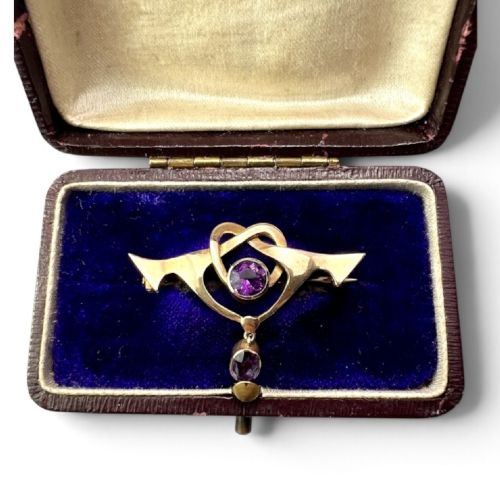
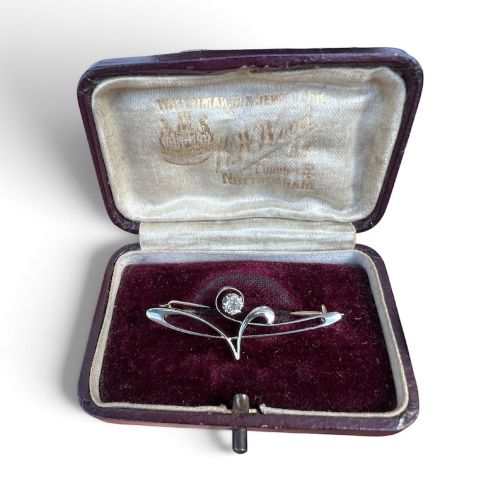
The selection on this page shows examples dating from the Edwardian period back to eighteen eighty, encompassing both domestic silver items and decorative imported caskets. Buyers encounter hinged lids, domed casket profiles, and pierced metalwork designed for dressing table use.
Judging quality and execution
Quality rests in the crispness of the chased or cast ornament and the fluidity with which plant-derived lines are integrated into the form. Finer boxes display deliberate attention to structural weight, hinge alignment, and the retention of original internal linings.
The distinction between standard commercial production and superior pieces lies in the depth of hand-finishing on metal surfaces and the complexity of inlaid materials. Maker attribution and well-preserved surface patination further elevate the standing of an individual box.
Erhard and Sohne·S Theeman·William Comyns·A J Zimmerman·WMF·Selfridges and Co
The Art Nouveau Jewellery Box Glossary
- Jugendstil
- The German manifestation of the art nouveau movement, prevalent around nineteen hundred. It shares the same organic vocabulary and flowing lines.
- Repoussé
- A metalworking technique where the design is hammered into relief from the reverse side. This method creates the characteristic raised floral patterns on silver boxes.
- Boullework
- An ornate marquetry process using brass and tortoiseshell inlay developed in France. It appears on decorative desk and jewellery boxes from this era.
- Pierced work
- Metal pierced through to create an openwork decorative pattern. This technique is frequently found on Edwardian silver trinket boxes.
- Kingwood
- A dense tropical wood with rich dark figuring utilised for high-end nineteenth-century caskets. It provides a smooth dark ground for metal mounts.
Art Nouveau Jewellery Box: Frequently Asked Questions
How do I clean a silver jewellery box?
Use a soft microfiber cloth to gently remove dust from crevices and chased relief details.
Avoid abrasive polishes that can wear away thin silver plating or soften the hand-hammered texture of the metal.
Were these boxes used only for jewellery?
Many boxes served multiple domestic purposes on the dressing table, holding buttons, pins, and small sewing accessories alongside rings.
Larger caskets were often designated for correspondence or keepsakes as well as precious ornaments.
How do I date an art nouveau box?
Examine the hallmarks on silver pieces for specific assay office symbols and date letters.
Stylistic cues such as the transition from Edwardian silver mounts to continental Jugendstil brass help narrow the decade of production.
Are glass panels original to bronze caskets?
Many bronze and gilt metal boxes incorporate bevelled glass or painted panels securely held within the metal framework.
Checking the internal seating of the glass reveals whether the panels remain undisturbed since manufacture.