

Hall Stick Stand Drip Tray
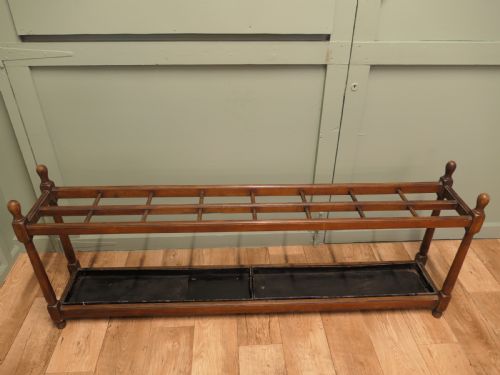
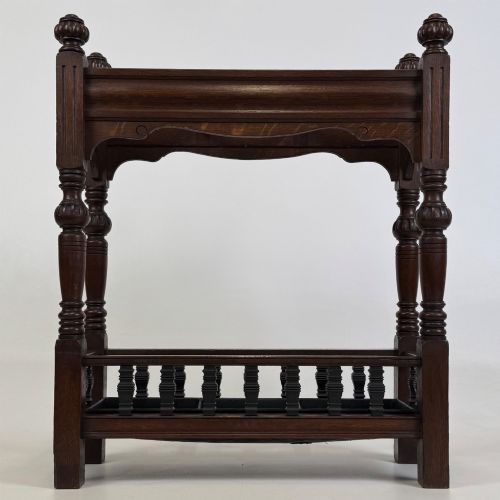
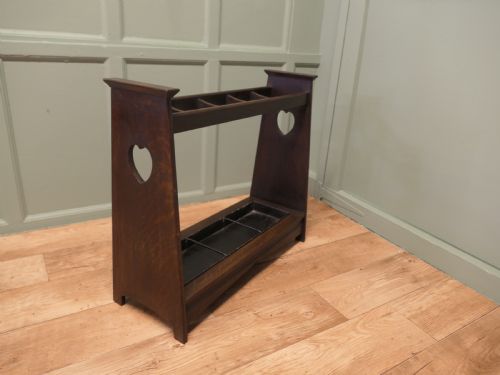
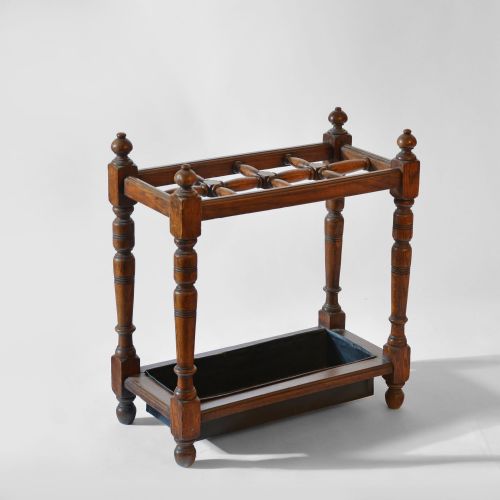
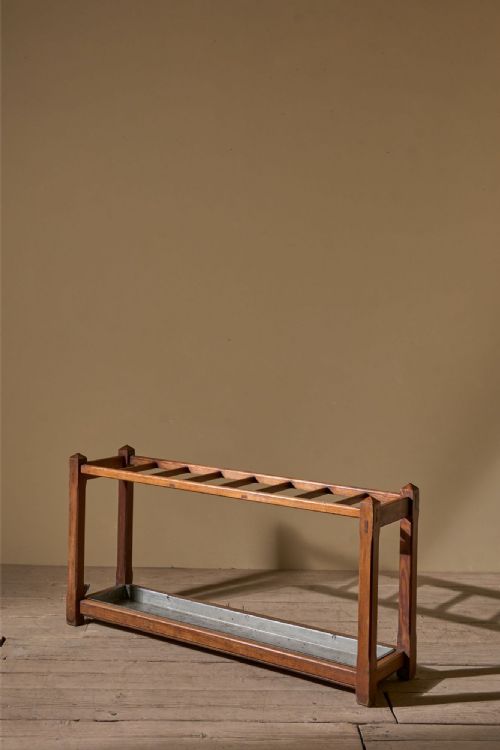
A hall stick stand drip tray forms the essential base of a traditional hallway, catching rain and mud from walking canes and umbrellas.
Hall Stick Stand Drip Tray
A hall stick stand drip tray is an integral part of nineteenth and twentieth-century hallway furniture designed to protect wooden floors from wet walking canes and umbrellas. These items appear across Victorian, Edwardian, and Art Deco periods, serving functional daily use in country houses and town residences.
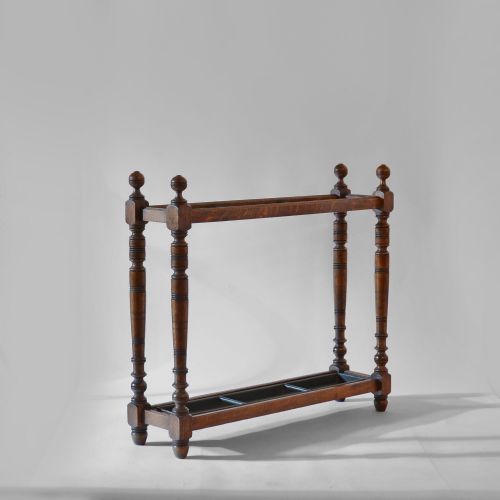
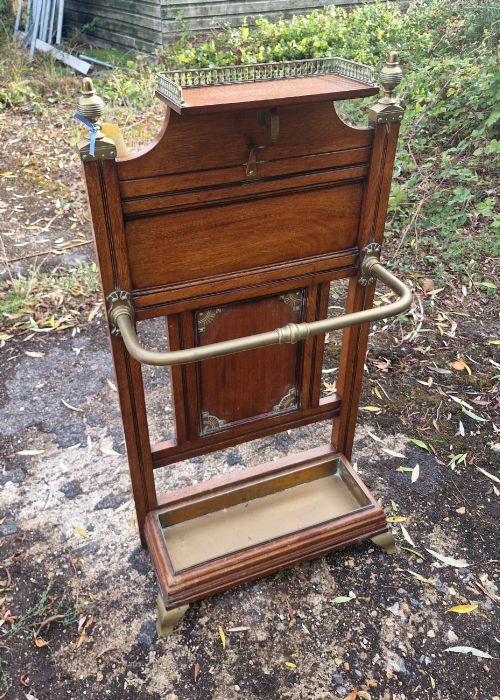
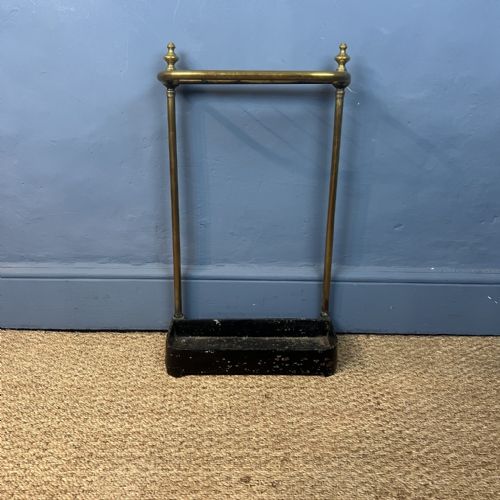
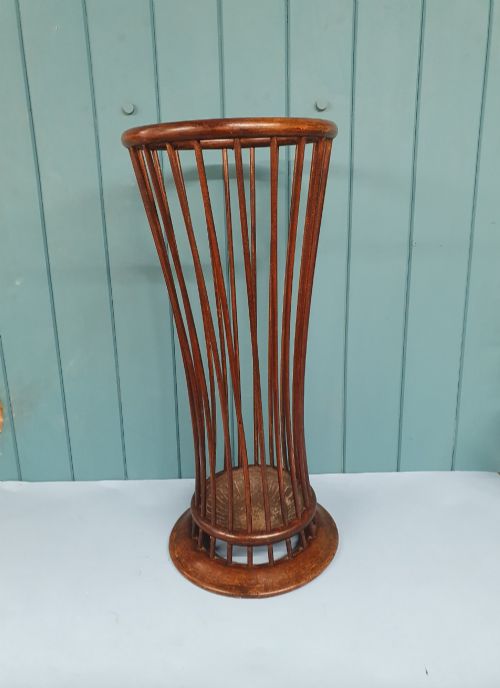
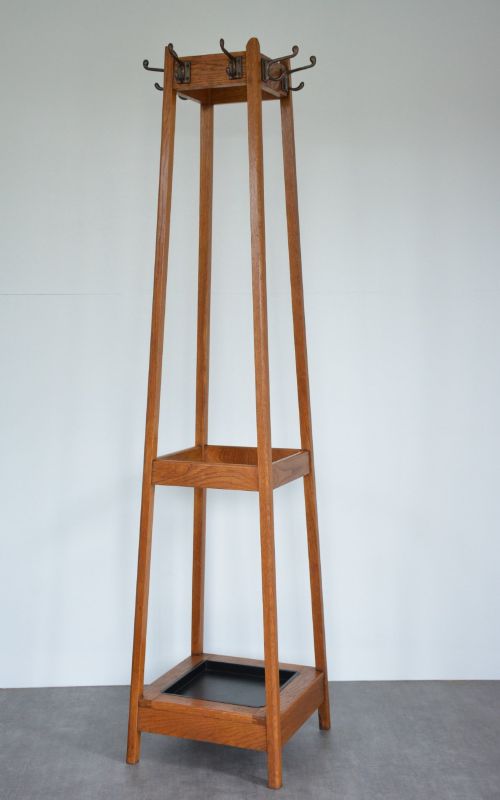
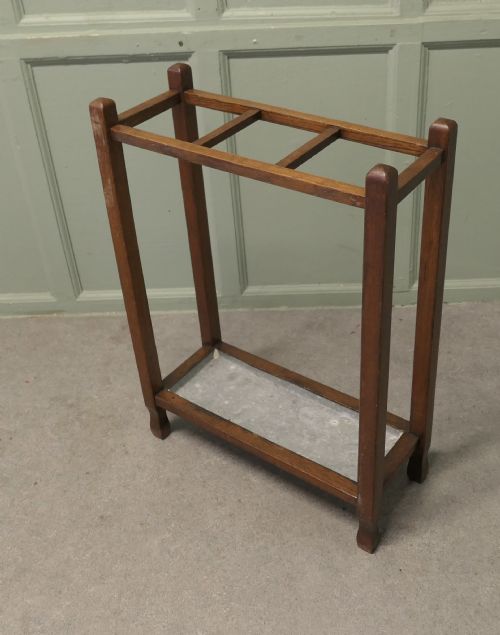
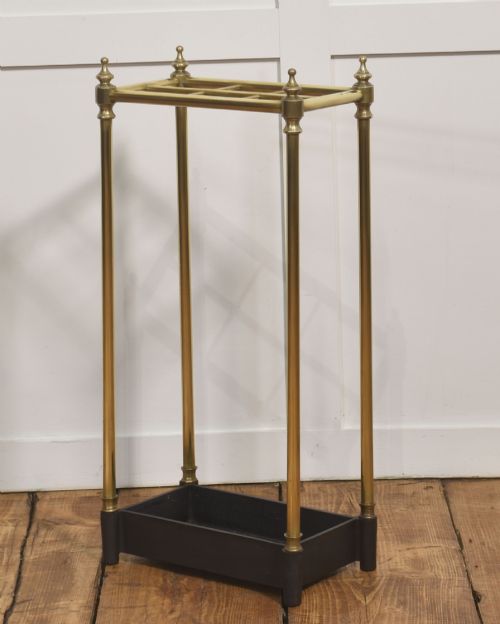
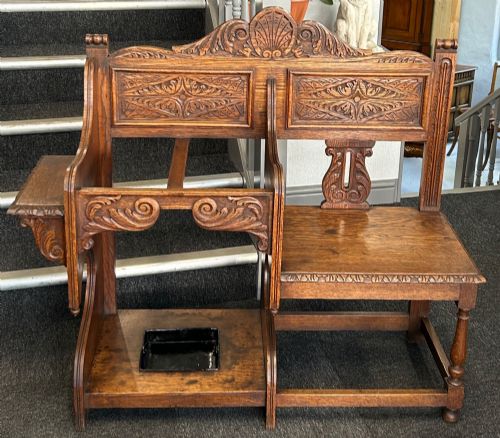
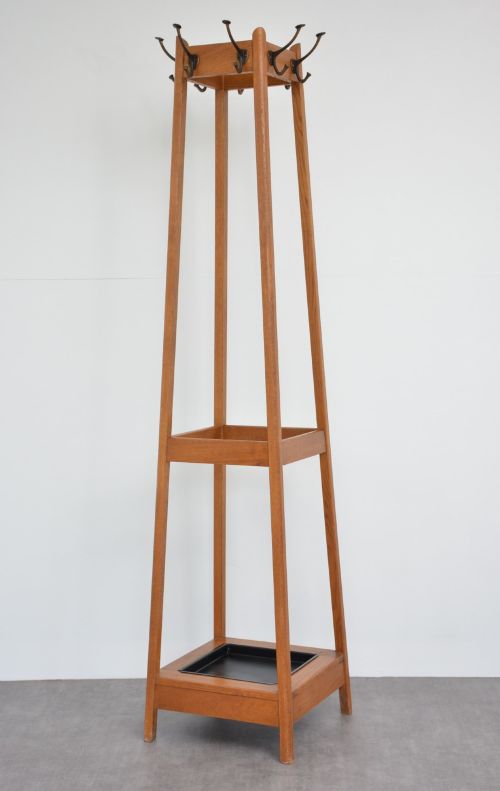
The objects take the form of standalone trays or lower reservoirs built into umbrella stands, hall seats, and coat stands. Oak, mahogany, and pitch pine provide the wooden frames, while cast iron, brass, zinc, and steel form the durable collection vessels at the base.
Most examples originate from the Victorian and Edwardian eras, with Arts and Crafts and Gothic Revival styles shaping the wooden varieties. Buyers typically encounter oak stick stands fitted with original metal trays or heavy cast iron frames designed for domestic entryways.
How they were made
Metal components rely on foundry casting and sheet fabrication, utilising cast iron, brass, and zinc. Makers formed heavy iron frames for stability while shaping removable metal trays to catch water efficiently.
Woodworking construction incorporates solid oak, mahogany, and pitch pine, often featuring carved details or panel assembly. Joinery methods secure upright frames to sturdy base reservoirs designed to hold heavy metallic drip trays.
Listings feature oak, mahogany, and pitch pine alongside cast iron and brass, spanning the Victorian, Edwardian, and Art Deco periods.
What varies in quality
The presence of original metal drip trays distinguishes complete examples from those modified or supplemented later. Survival of the original zinc or brass liner indicates a well-preserved piece that retains its intended function.
Material substance and structural heft mark the division between standard utility items and finer pieces. Solid timber frames with carved ornamentation or substantial cast iron structures demonstrate superior craftsmanship compared to plain industrial forms.
Heals of London·Liberty Design
The Hall Stick Stand Drip Tray Glossary
- Drip tray
- A removable metal vessel placed at the base of a stand to catch water from wet umbrellas. These liners are frequently made of zinc, brass, or galvanised iron.
- Hall stand
- A large piece of hallway furniture combining coat hooks, a mirror, a seat, and umbrella storage. Many versions incorporate the lower tray directly into the main frame.
- Demi lune
- A half-moon shape utilised in the design of corner or wall-fitting umbrella stands. This profile allows the piece to sit flush against hallway walls.
- Pitch pine
- A resinous softwood favoured in nineteenth-century country house furniture for its durability and prominent grain pattern. It appears frequently in robust utility stands.
Hall Stick Stand Drip Tray: Frequently Asked Questions
What is a hall stick stand drip tray?
A hall stick stand drip tray is the water-collection basin positioned at the bottom of an umbrella or walking stick stand. It prevents moisture from damaging hallway floors.
These trays are usually removable to allow easy emptying and cleaning. They form a key component of period umbrella stands from the Victorian and Edwardian eras.
How do I identify a Victorian stick stand?
Victorian stick stands often feature heavy cast iron or rich timbers like mahogany and oak. Gothic Revival and Aesthetic Movement influences appear frequently in these nineteenth-century pieces.
Look for robust construction methods and period ornamentation such as bun feet or cast metal frames. Original metal drip trays inside the base further confirm the age and integrity.
Are metal drip trays removable?
Most period drip trays lift out independently from the base of the stand. This design allowed Victorian and Edwardian householders to empty accumulated rainwater without moving the heavy frame.
Replacement liners are common, so finding an original zinc or brass tray adds to the authenticity of the piece.
Where should I place a stick stand?
A stick stand belongs in a hallway, porch, or boot room where people enter the house. Its traditional purpose is holding walking canes, umbrellas, and parasols.
The waterproof tray protects timber floorboards or stone flags from dripping water, making practical placement near the main entrance essential.