
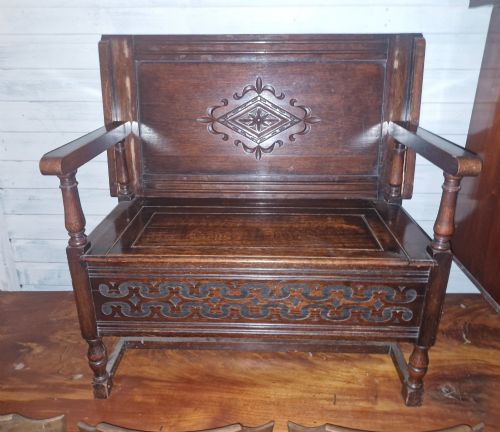
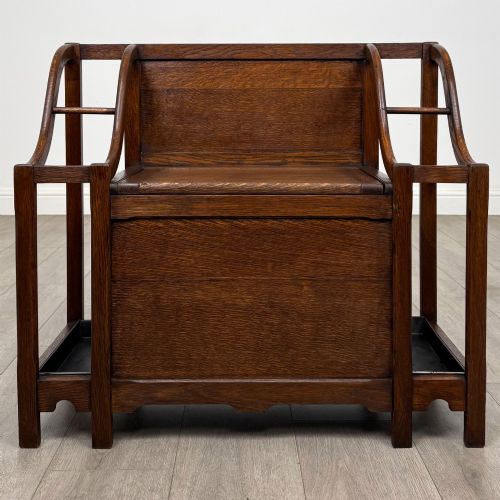
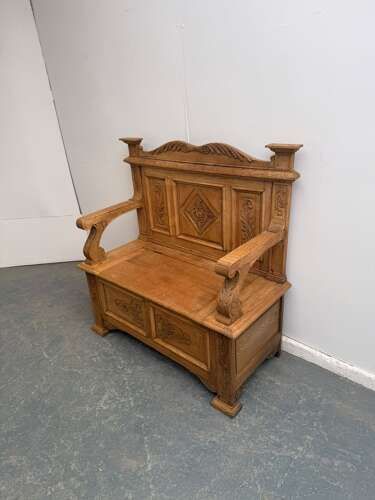
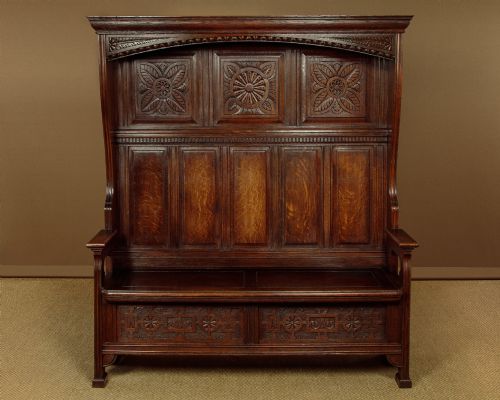
Hall Bench with Storage
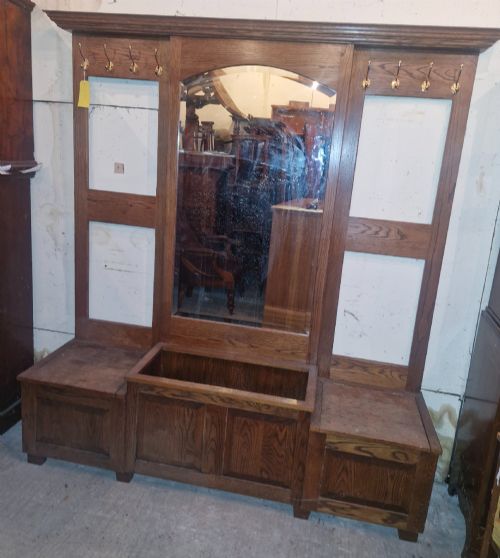
A hall bench with storage provides an entrance seat that conceals boots and woollens while anchoring the hallway.

What these pieces are
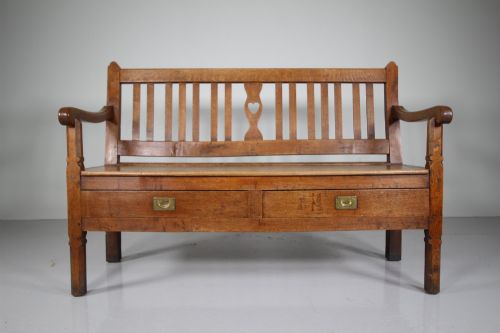
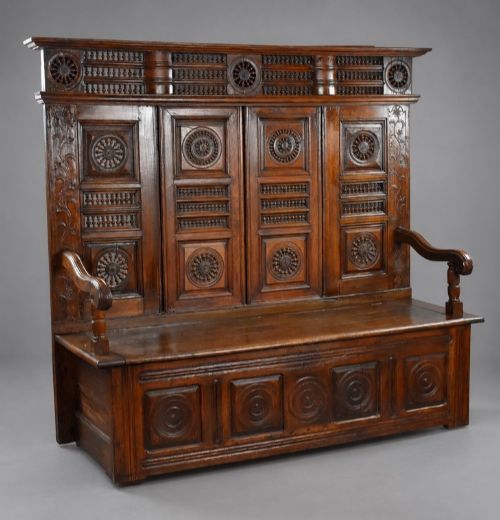
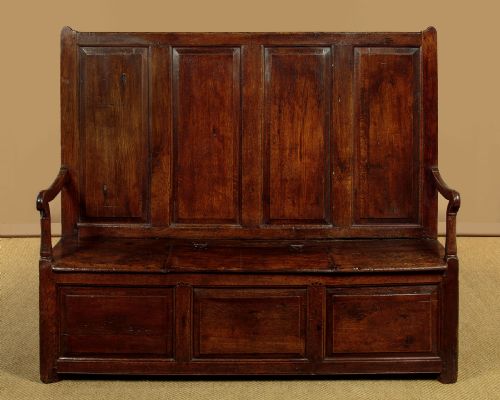
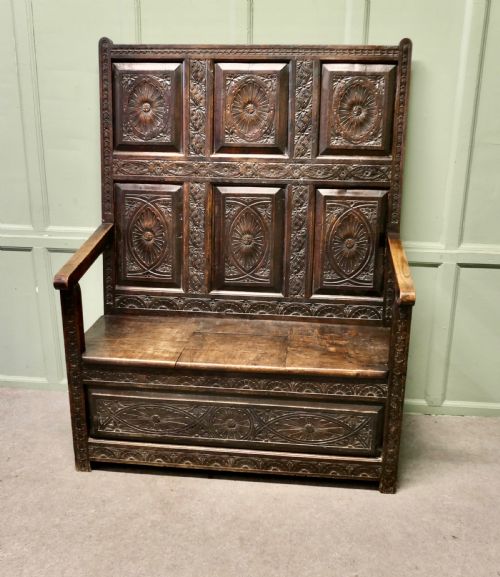
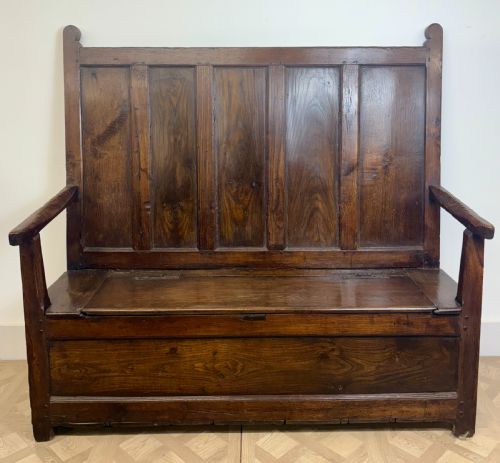
A hall bench with storage combines a wooden seat for pulling on footwear with a concealed compartment underneath for domestic clutter. These items appear across several distinct eras, ranging from austere seventeenth-century high-back forms to lighter Edwardian interpretations.
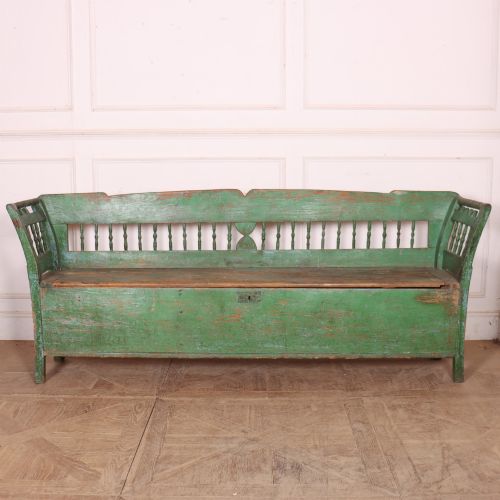
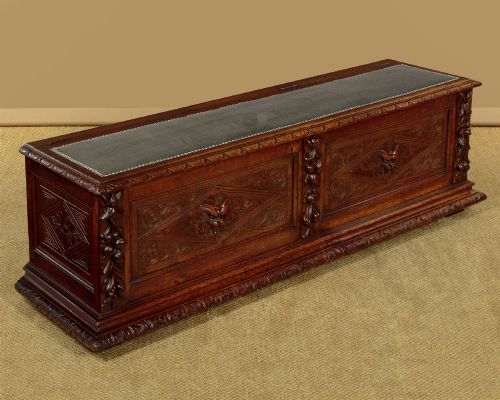
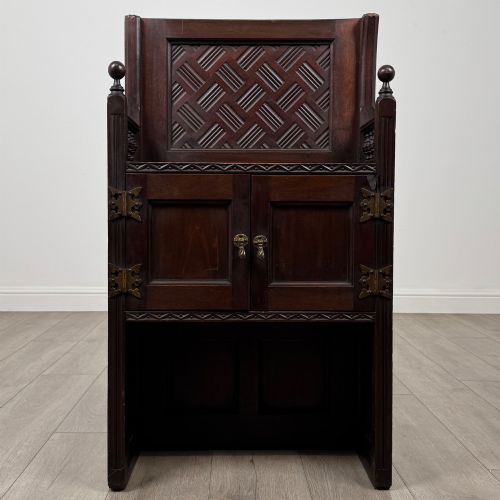
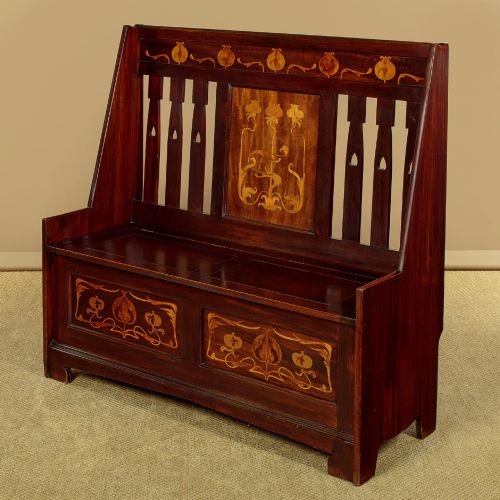
The pieces on this page draw upon country primitive, Arts and Crafts, and Jacobean Revival traditions. French provincial examples and English country settles predominate, alongside versatile convertible designs such as monks benches.
Makers and provincial joiners utilised traditional box seats and hinged cupboards to turn passageways into tidy reception areas. Buyers encounter variations that span from robust eighteenth-century oak constructions to compact early twentieth-century hall seats.
How they were made
Carpenters constructed these items primarily from solid oak and mahogany, often incorporating secondary timbers such as pine for internal framing. Boxwood inlay and brass hardware occasionally accent the primary woodwork to highlight panels and lid hinges.
Joiners relied on pegged mortise and tenon joints to build robust frames capable of withstanding heavy daily use in busy entranceways. Surfaces received wax or polished finishes that preserved the natural grain of the timber over centuries of domestic handling.
Retail Price Guide 2026
Typical UK retail prices for hall bench with storage, calculated from the Sellingantiques database of over a million retail prices indexed since 2003. This retail price guide relies exclusively on Sellingantiques data; no external sources or auction records are used, so the figures do not describe the wider market.
Hungarian wax imparts a distinct, enduring warmth to country primitive settles that smells faintly of old hearths.
What varies in quality
The integrity of the timber framing and the retention of original hinged lids distinguish superior examples from heavily restored pieces. Grain selection and the crispness of carved details reveal the skill invested by the original workshop.
Proportion and structural balance dictate the visual weight of each settle within a narrow hallway. Pieces retaining their early waxed surfaces and integrated box storage demonstrate a more unified historical character.
James Shoolbred & Co.
The Hall Bench with Storage Glossary
- Settle
- A wooden bench featuring a high back, solid arms, and an enclosed base used for storage. This form kept draughts away from inhabitants in the hall.
- Box seat
- A hinged bench seat that lifts to reveal a concealed compartment beneath. Joiners utilised this cavity to hold blankets and boots.
- Monks bench
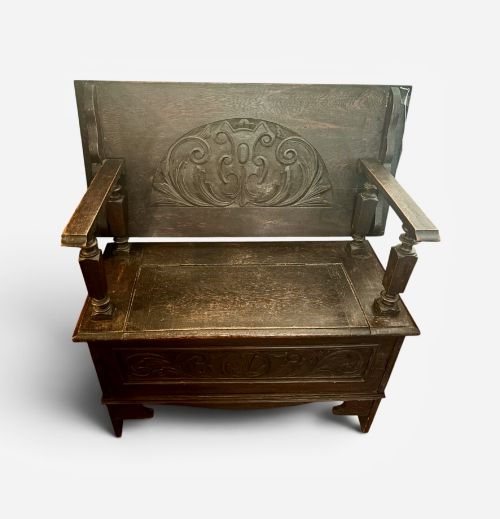
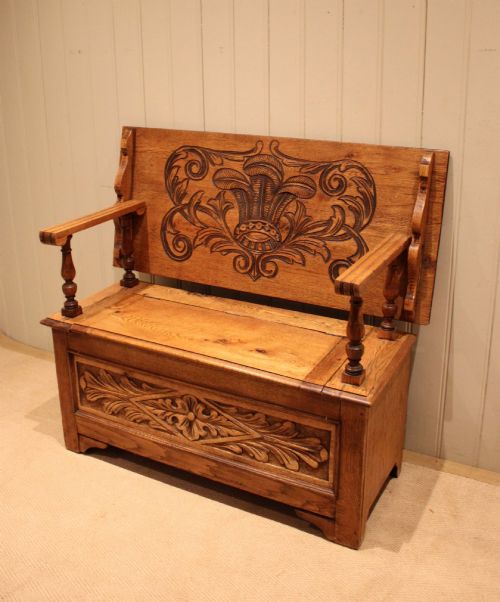
- A convertible piece of furniture featuring a back that tilts forward to form a table top. This dual-purpose design suited smaller historical interiors.
- Mortise and tenon
- A traditional woodworking joint where a projecting tongue fits snugly into a matching cavity. This method binds frame components without modern fasteners.
Frequently Asked Questions
How do I use a hall bench with storage?
Place the item in an entrance hall or boot room to provide an accessible seating spot when removing footwear. The internal compartment accommodates bulky items like umbrellas, scarves, and extra cushions.
Ensure adequate clearance around the front of the piece so the storage lid or hinged seat can open fully without striking walls or doors.
How do I distinguish eighteenth-century settles from later revivals?
Examine the construction marks inside the storage box and the wear patterns on the seat boards. Eighteenth-century examples often exhibit hand-planed surfaces and irregular pegged joints specific to regional workshops.
Later Jacobean Revival and Edwardian interpretations typically display more uniform machine-sawn framing and standardised hardware fastenings.
What is a monks bench?
A monks bench is a compact seating form featuring a pivoting backrest that lowers onto the arms to create a flat table surface. This ingenious design allowed one piece of furniture to serve multiple dining and resting functions.
Historical examples combine enclosed box storage beneath the seat with sturdy panel construction to support the weight of the pivoting back.
How should I care for an antique oak settle?
Maintain the timber by applying natural beeswax sparingly and buffing gently with a soft cloth to preserve the patina. Avoid placing the wood near direct heat sources or damp entryways that cause boards to warp.
Regular dusting prevents particulate buildup in carved crevices and protects historical wax finishes from premature degradation.