






Half Moon Credenza
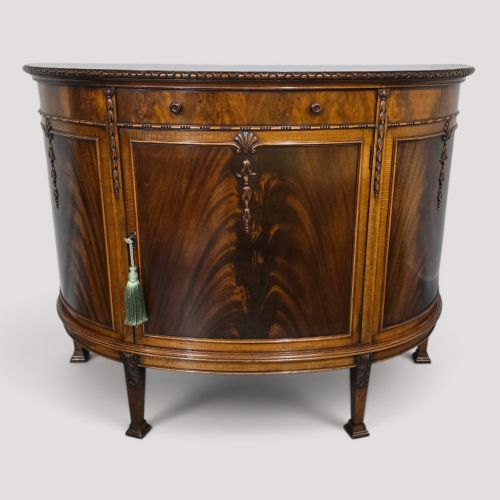
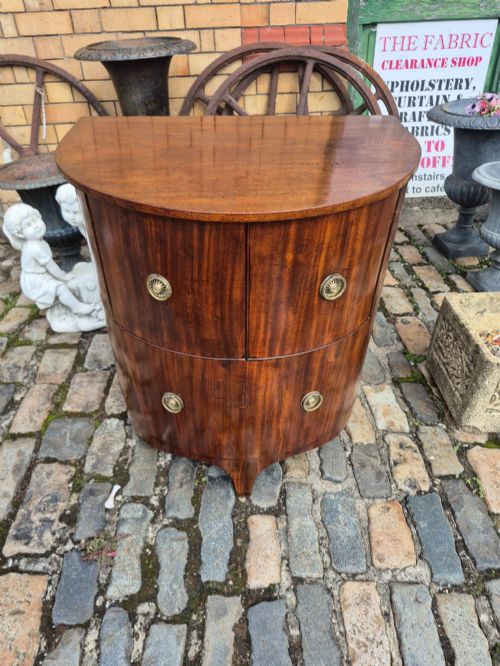
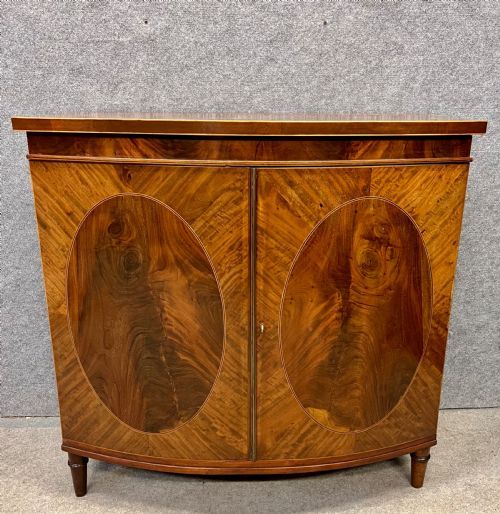
A half moon credenza brings graceful curved lines to a room, offering useful storage without dominating the floor space.
Half Moon Credenza
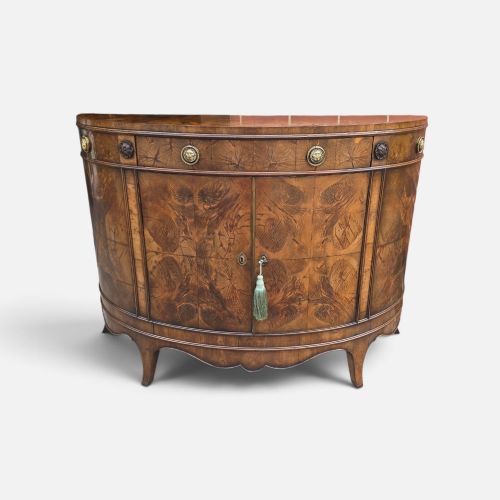
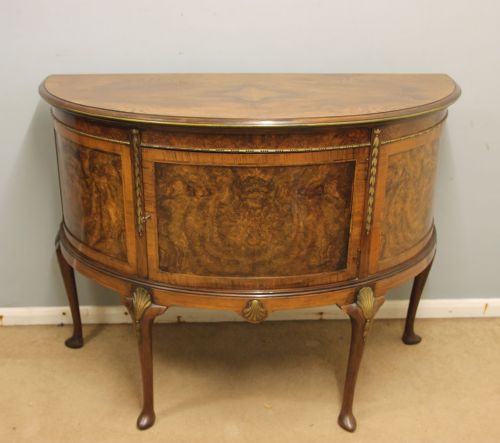
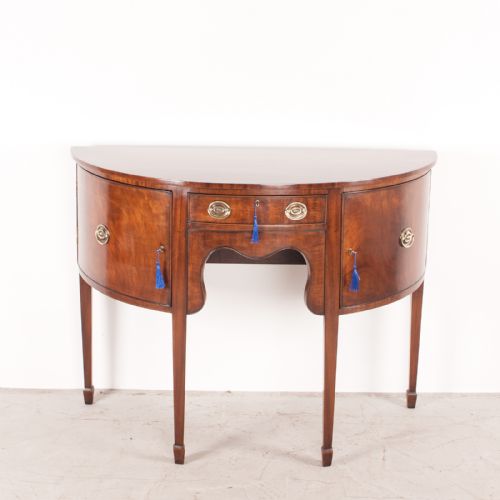
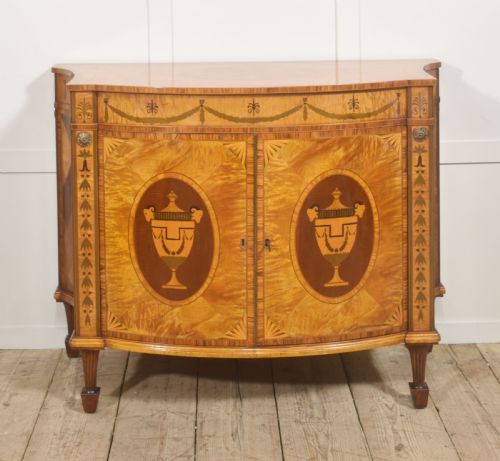
The selections available here span from the eighteenth century through to the early twentieth century, taking in Edwardian interpretations and revival movements. Mahogany, satinwood, and walnut form the primary timbers of the examples encountered on this page.
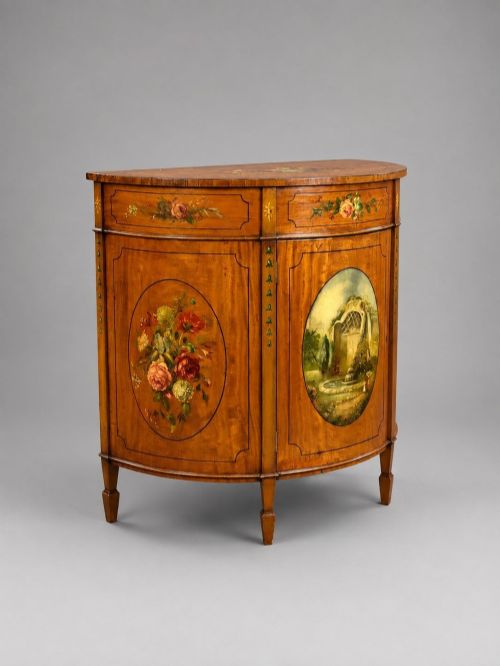
Buyers frequently encounter Sheraton Revival and Neoclassical designs among these listings, alongside French marquetry and painted decorative finishes. Such pieces combine utility with formal elegance, serving as focal points in traditional interiors.
Materials and Construction
Cabinetmakers utilised dense hardwoods such as mahogany and walnut for structural stability, often applying fine veneers like satinwood and burr elm to visible exterior surfaces. Boxwood stringing and intricate marquetry provide contrasting detail across the curved facades.
Many cabinets incorporate hand-painted panels or elaborate brass mounts, reflecting French and English stylistic influences from different periods. Marble tops appear on selected pieces, adding weight and a durable surface to the semicircular frames.
Half Moon Credenza Retail Price Guide 2026
Typical asking prices for half moon credenza among the pieces listed under this phrase on Sellingantiques today, from the lower quarter to the upper quarter. They describe what is for sale here now, not the wider market.
Curved doors require cabinetmakers to plane timber against the grain, meaning every demi-lune drawer front tells a quiet story of resistance.
Evaluating Craftsmanship
The standard of a half moon credenza rests on the precision of its curved joinery and the subtlety of its veneer work. Master cabinetmakers aligned grain patterns seamlessly around tight radiuses, whereas simpler items rely on painted decoration to mask basic construction.
The delicacy of inlaid motifs and the crispness of carved or cast brass hardware distinguish workshop pieces from mass-produced furniture. Original marble tops and intact hand-painted surfaces also elevate the standing of a cabinet within its period.
James Hicks·Pietro Ferrario·Kaufman
The Half Moon Credenza Glossary
- Demi-lune
- A French term meaning half-moon, describing furniture with a semicircular shape designed to stand against a flat wall. These pieces frequently serve as commodes or side cabinets.
- Marquetry
- The art of applying pieces of veneer to a structure to form decorative patterns and pictures. Craftsmen use various coloured woods to achieve tonal depth.
- Satinwood
- A durable tropical hardwood with a lustrous yellowish sheen, popular in fine cabinetry during the eighteenth and nineteenth centuries. It provides an ideal canvas for painted details.
- Sheraton Revival
- A late nineteenth and early twentieth century design movement inspired by the neoclassical furniture of George Sheraton. It favours light timbers, slender proportions, and classical symmetry.
- Commode
- A low cabinet or chest of drawers, originating in France during the seventeenth century. In English furniture, the term often describes decorative side cabinets with curved fronts.
Half Moon Credenza: Frequently Asked Questions
Where should I place a half moon credenza?
These cabinets suit entrance halls, drawing rooms, or dining spaces where a shallow footprint is beneficial. Their curved profile softens rigid architectural corners while providing surface area for lamps or decorative objects.
Because they sit flat against the wall, they do not obstruct walkways like circular tables might. They function effectively beneath large mirrors or paintings.
How do I identify a Georgian demi-lune piece?
Authentic eighteenth-century examples exhibit solid timber carcass construction beneath fine mahogany, burr elm, or satinwood veneers. The interior drawer linings typically feature hand-cut dovetails and native softwoods.
Stylistic restraint and superior timber selection separate genuine Georgian items from later revival pieces. Hardware should match the period of the cabinet.
What is the difference between a credenza and a commode?
A credenza traditionally functions as a sideboard or storage cabinet for dining rooms, often featuring cupboards. A commode is typically lower, frequently containing drawers rather than shelved doors.
In antique terminology, these definitions often blur, particularly with semicircular French and English pieces. Both serve similar decorative and storage functions in modern homes.
How do I care for antique satinwood furniture?
Keep satinwood cabinets away from direct sunlight and heat sources to prevent the veneers from drying out and lifting. Dust gently with a dry, soft cloth and avoid chemical polishes.
Application of microcrystalline wax once or twice a year helps nourish the timber and protect the finish. Natural beeswax should be used with caution on painted surfaces.