




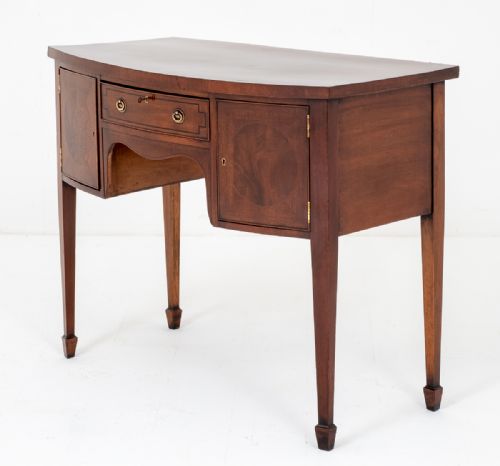


Regency Curved Sideboard
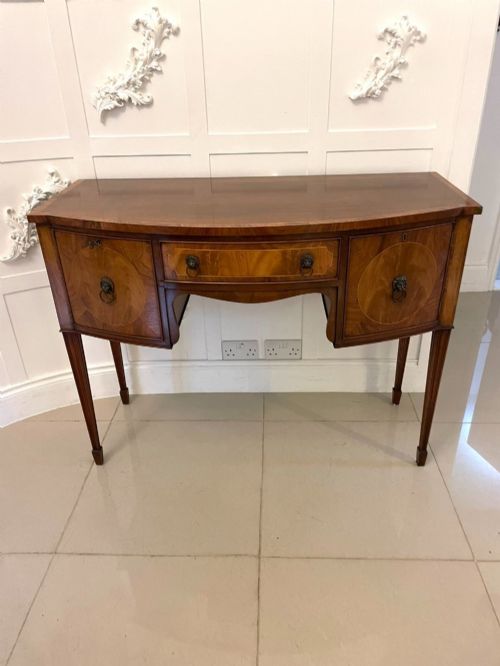
A regency curved sideboard brings grand neoclassical lines and rich timber into a dining room, offering deep storage with sweeping frontal curves.
Regency Curved Sideboard
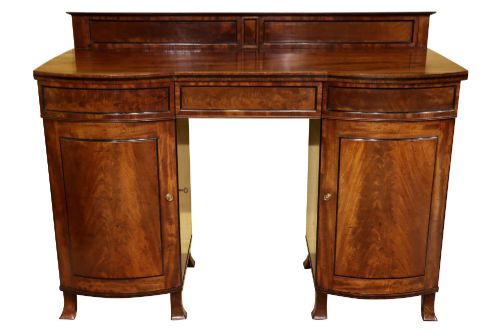
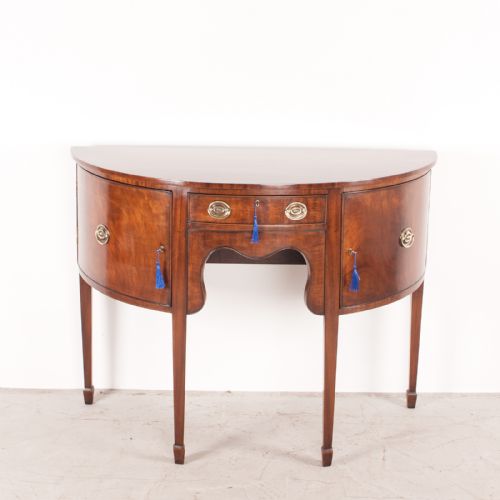
When you search for a regency curved sideboard, you encounter formal dining room furniture built with bow fronts, demi-lune shapes, and sweeping pedestals. The pieces on this page span the nineteenth century and the Georgian era, alongside later interpretations from nineteen twenty and eighteen eighty.
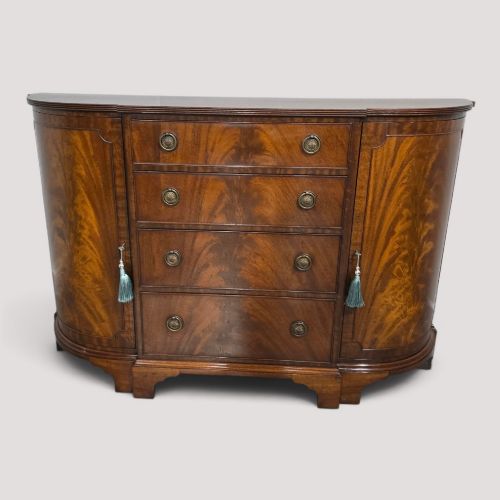
You are most likely to meet mahogany sideboards featuring bow fronts and flame mahogany veneer. These forms range from compact small bowfront pieces to larger pedestal sideboards designed for grand dining spaces.
Alongside standard sideboards, the selection includes side cabinets in amboyna wood and marble top demi-lune formats. These variations reflect the broader neoclassical taste of the period, incorporating brass and ebony details.
Materials and construction
Cabinet makers utilised solid mahogany and flame mahogany veneer over supportive timber carcases to create rich, figured surfaces. Decorative contrast came from inlay and banding using ebony and amboyna wood.
Structural hardware and ornamentation relied on brass fittings, while specialised furniture incorporated white marble tops. These materials were shaped into curved bow fronts, demi-lune outlines, and pedestal configurations.
Regency Curved Sideboard Retail Price Guide 2026
Typical asking prices for regency curved sideboard among the pieces listed under this phrase on Sellingantiques today, from the lower quarter to the upper quarter. They describe what is for sale here now, not the wider market.
Listings feature eighteenth-century Georgian items alongside nineteenth-century Regency pieces, eighteen-eighty marble top cabinets, and nineteen-twenty mahogany bowfronts.
Judging quality and execution
Quality rests in the selection of timber grain, particularly the liveliness of the flame mahogany veneer across curved drawer fronts and doors. Finer examples display meticulous matching of wood grains and subtle stringing.
The sophistication of the neoclassical styling distinguishes superior pieces, from the proportion of the bow front to the integration of brass mounts and amboyna panels. Execution of the curved joinery demands exceptional skill to maintain smooth, continuous lines.
The Regency Curved Sideboard Glossary
- Bow front
- A convex, outward-curving front facade common on case furniture of the period. This shape softens the room and maximises internal storage capacity.
- Demi-lune
- A half-moon shape used for tables and side cabinets. This semicircular design fits flush against a wall while providing a curved presentation.
- Flame mahogany
- A highly figured veneer cut from the fork of the mahogany tree. It creates a distinctive flame-like pattern across the timber surface.
- Pedestal sideboard
- A dining room storage form featuring flanking cabinets or pedestals connected by a central table section. These grand pieces define formal Regency interiors.
Regency Curved Sideboard: Frequently Asked Questions
Where did these sideboards stand?
These pieces traditionally stood against the dining room wall, holding silver, linens, and dining accessories during meals.
Their curved designs allowed servants to move past them easily while serving large dinner parties.
How do I style a curved sideboard?
Place the sideboard in a dining room or hallway where its curved silhouette can be appreciated from multiple angles.
Keep the top uncluttered, perhaps with a pair of lamps or decorative urns that complement the neoclassical styling.
Are all these pieces from the Regency period?
The listings include pieces from the nineteenth century and Regency era, alongside Georgian items and later nineteenth-century interpretations.
Stylistic cues link them together under the broad umbrella of neoclassical design.
What is the difference between a side cabinet and a sideboard?
Sideboards are typically longer dining room pieces designed for serving and storing tableware.
Side cabinets, such as marble-topped demi-lune pieces, offer more compact or specialised storage for smaller rooms.