
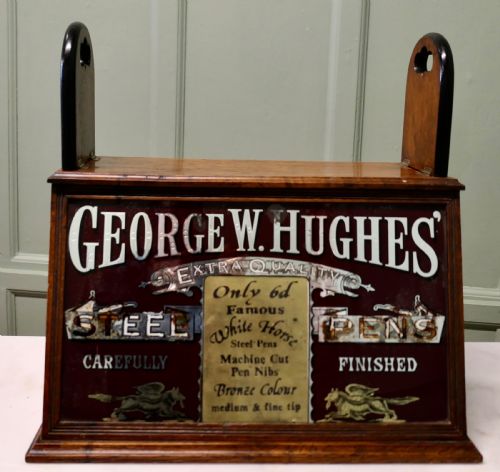
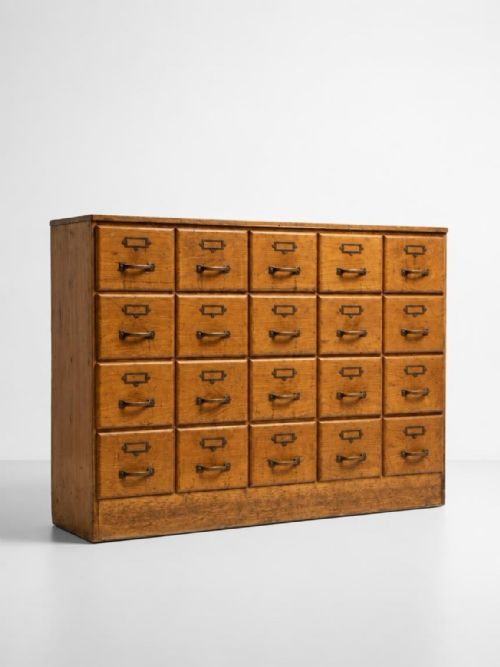
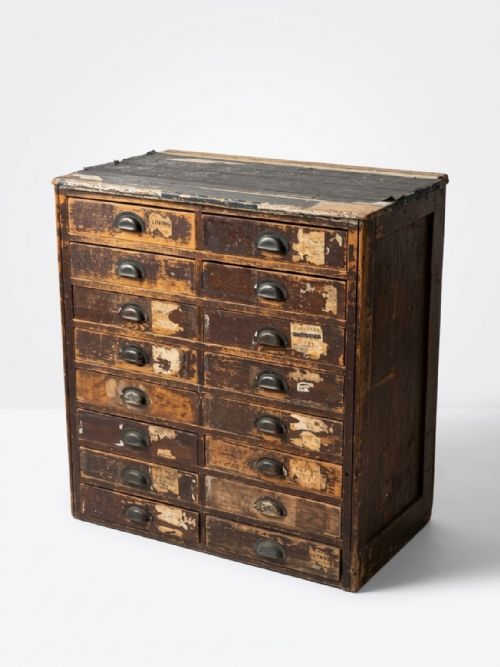
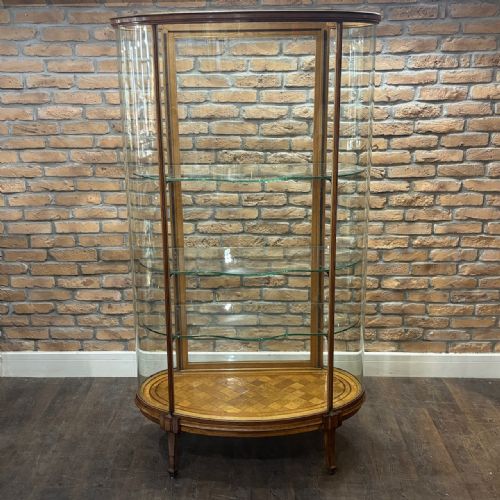
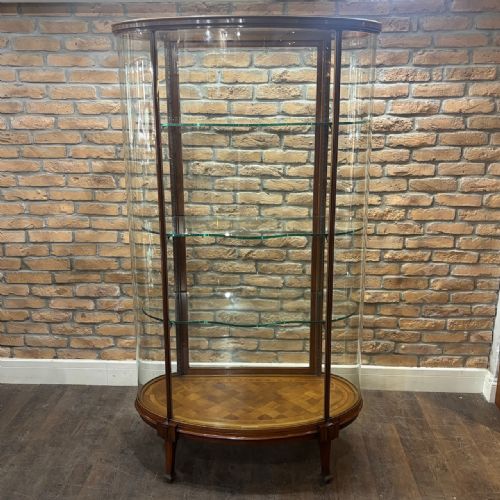
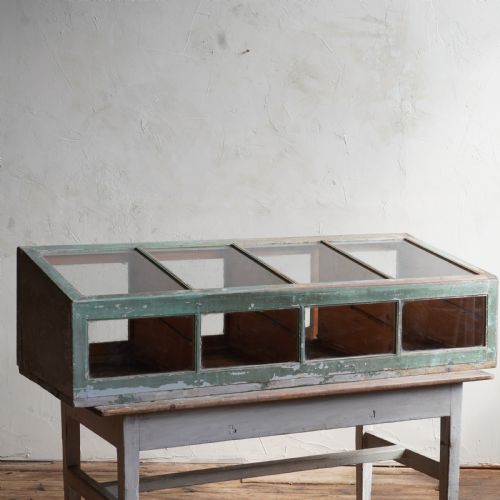
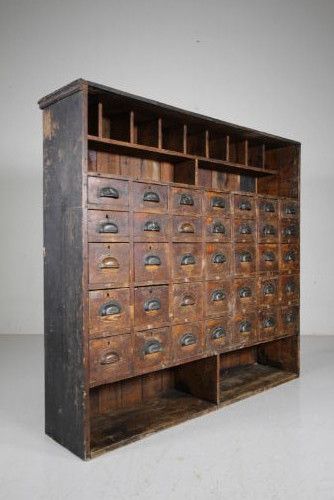
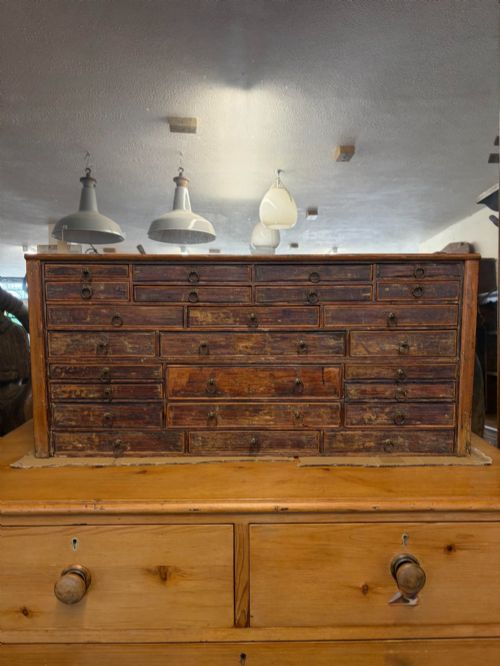
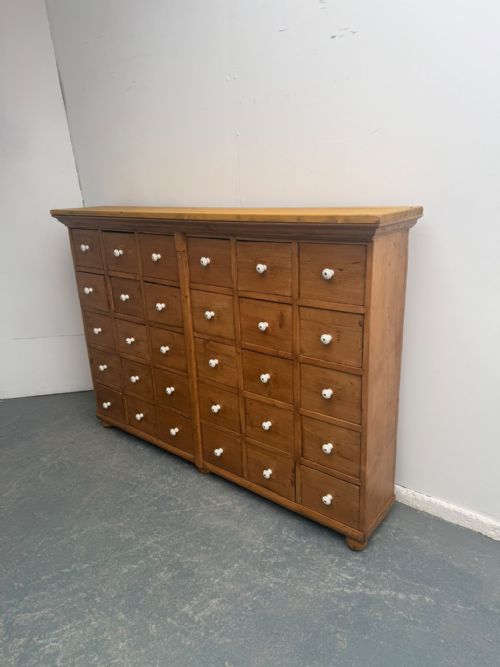

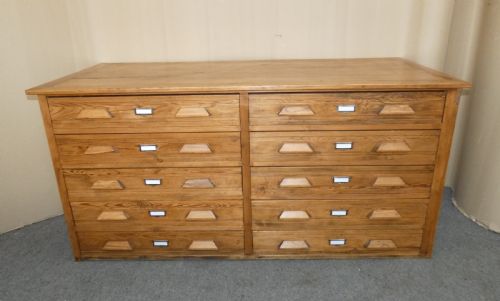

Haberdashery Shop Cabinet
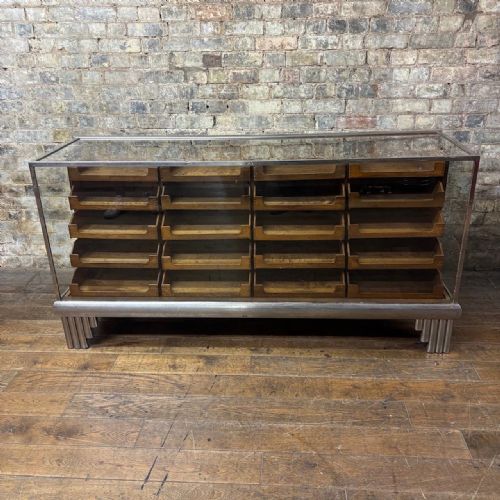
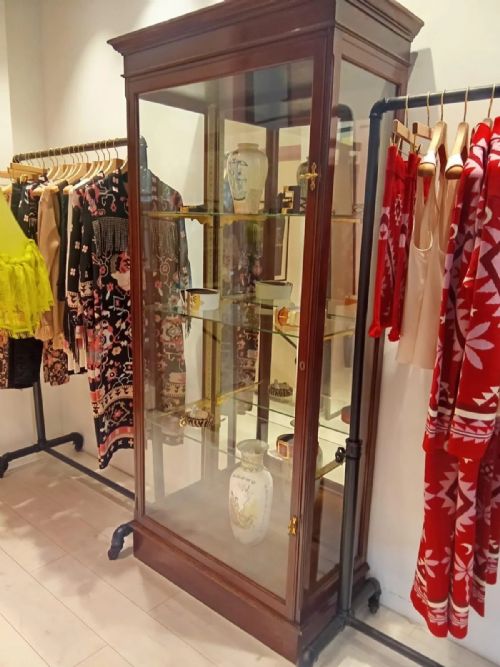
A haberdashery shop cabinet brings utilitarian display and generous compartmentalised storage into domestic interiors, offering glass viewing areas and rows of drawers.
Haberdashery Shop Cabinet
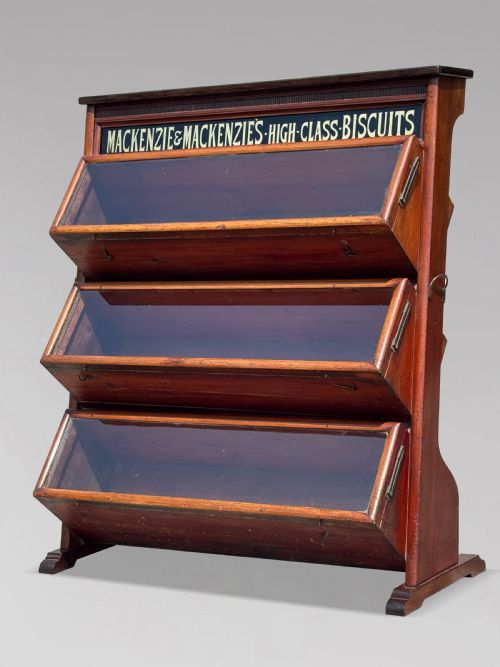
A haberdashery shop cabinet comprises commercial display counters, multi-drawer chests, and glazed storage units originally built for retail trade. The selection draws on Victorian, Edwardian, and Art Deco periods, encompassing industrial utility forms alongside commercial shop fittings.
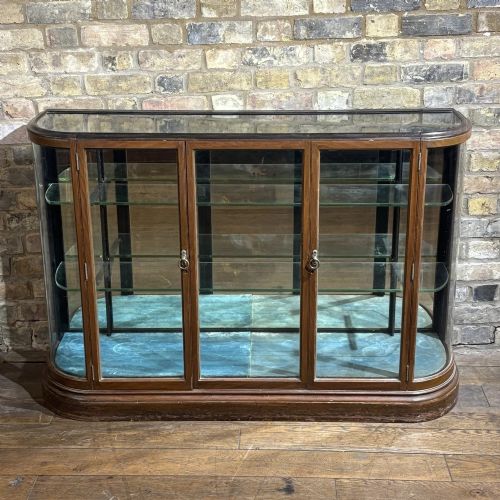
The most common versions met on this page include multi-drawer banks in pine or mahogany, countertop display cases, and tall oak or metal-framed shop counters. These pieces originate from commercial drapers, chemists, and general merchants active through the nineteenth and early twentieth centuries.
How they were made
Construction relies heavily on solid oak, mahogany, and pine, paired with glazed panels and brass or chrome hardware. Timber frames provide structural strength for housing numerous internal drawers or large display surfaces.
Makers utilised traditional dovetail joints for drawer construction and integrated specialised mechanisms like flip-up glass doors or mirrored interiors. Surfaces range from polished hardwood finishes to distressed painted pine and aluminium framework.
Listings include oak, mahogany, pine, and metal materials spanning the Victorian, Edwardian, and Art Deco periods.
What varies in quality
Scale and proportion dictate the distinction between standard commercial fittings and grand retail centrepieces. Construction density, such as the number of working drawers and the presence of original brass pulls, signals higher commercial status.
The integrity of original glazing, secondary woods, and maker signatures or merchant branding elevates individual pieces. Retained factory finishes and untouched institutional provenance mark the upper tier of surviving examples.
F Sage And Co·Dudley And Co·John Stow Ltd·Philip Joseph And Sons·John Hill And Son
The Haberdashery Shop Cabinet Glossary
- Haberdashery cabinet
- A multi-drawer storage unit or display case designed for selling small sewing items, ribbons, and fastenings. These pieces feature banks of shallow drawers or glass-fronted compartments.
- Shop fitting
- Custom furniture built for commercial retail spaces during the nineteenth and early twentieth centuries. Such items include counters, wall cases, and modular shelving units.
- Countertop display case
- A glazed tabletop cabinet intended for placing on top of retail counters to showcase small goods to customers. They often feature rear sliding doors for easy access.
- Dovetail joint
- A traditional woodworking technique joining two pieces of wood by interlocking wedge-shaped fingers. This method provides robust structural integrity for heavy use drawers.
- Bow end
- A curved cabinet end designed to soften the rectangular profile of a shop counter or display case. This shape maximises viewing angles in retail environments.
Haberdashery Shop Cabinet: Frequently Asked Questions
How do I use a haberdashery cabinet at home?
These cabinets suit living spaces for organising small collections, stationery, or tableware within their numerous drawers. Glass-fronted sections allow for displaying decorative objects while keeping them dust-free.
Their substantial depth and height also make them effective as kitchen islands or hallway storage consoles. The modular nature of multi-drawer banks helps sort domestic items efficiently.
What is the difference between Victorian and Art Deco cabinets?
Victorian examples typically utilise heavy mahogany or pine with traditional brass pulls and ornate architectural mouldings. They frequently feature numerous small drawers intended for ribbons and threads.
Art Deco pieces introduce cleaner lines, lighter oak construction, and modern metal elements like chrome or aluminium framing. Their design reflects the shift towards industrial utility and streamlined retail interiors during the nineteen-thirties.
Are these cabinets suitable for kitchen islands?
Many shop counters and drawer banks possess the ideal height and depth for domestic kitchen placement. Their solid timber construction provides durable work surfaces and substantial internal storage.
Buyers should verify specific dimensions and floor clearance before installation. The multi-drawer configurations work well for cutlery, linens, and kitchen utensils.
How do I identify a maker on a shop cabinet?
Maker attribution usually relies on applied metal badges, stamped manufacturer marks on drawer interiors, or hand-written merchant signatures. Specialised retail outfitters often branded their commercial fittings for identification.
Archival records and trade catalogues help match specific construction methods to known workshops. Original labels add historical context without altering the core utility of the piece.