




Gustavian Painted Chest
These gustavian painted chest pieces bring pale Scandinavian elegance and practical storage to a room.
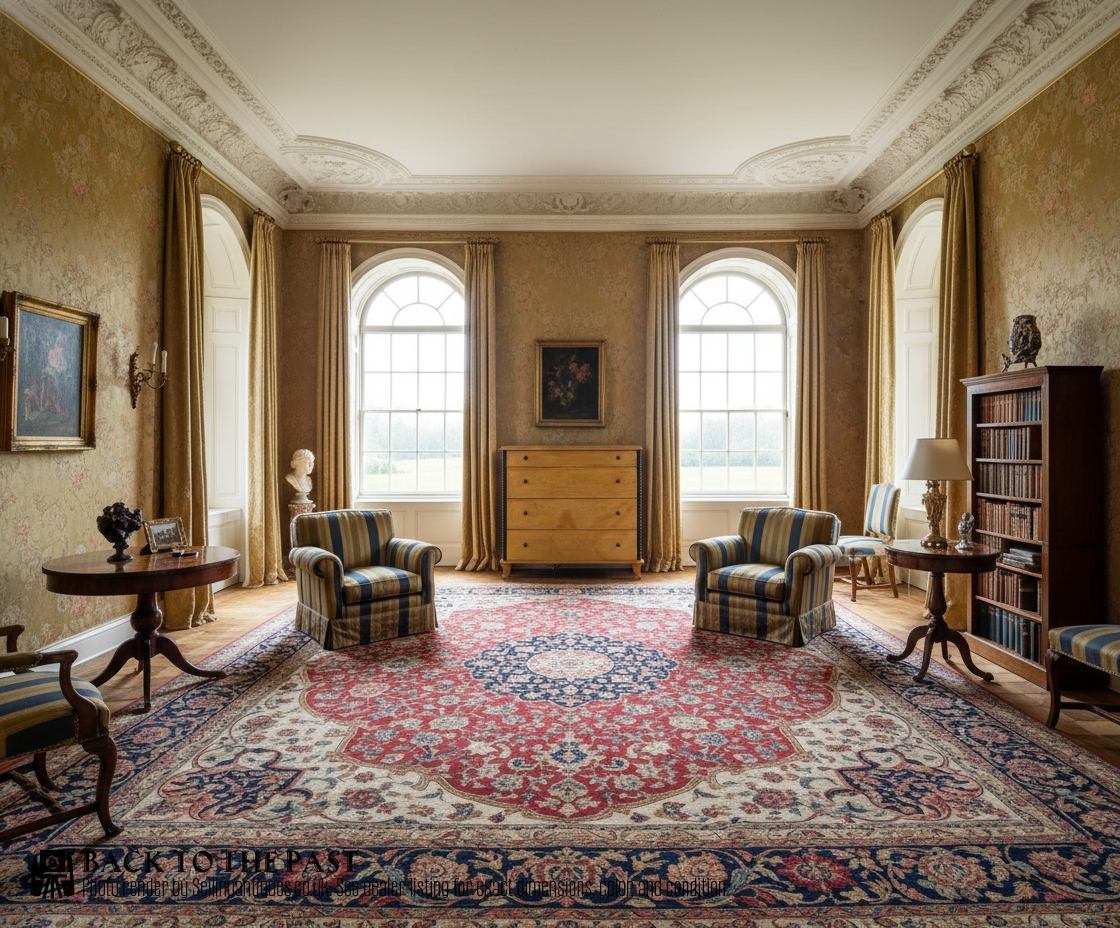
Gustavian Painted Chest
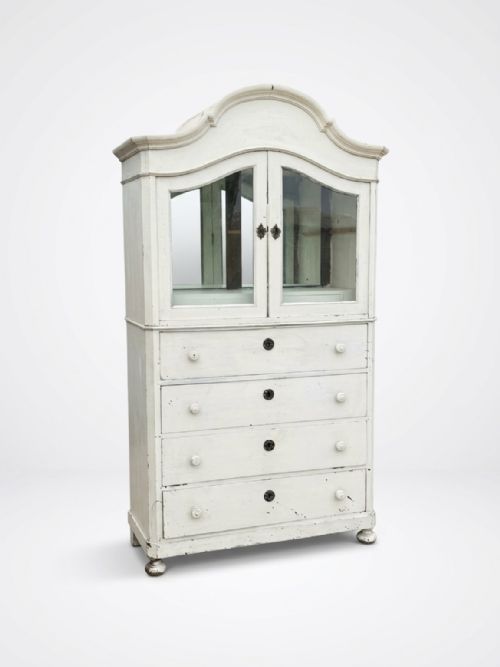
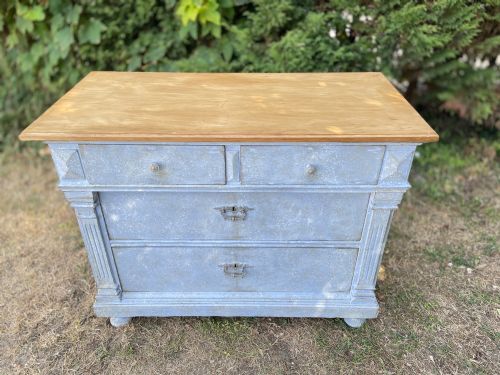
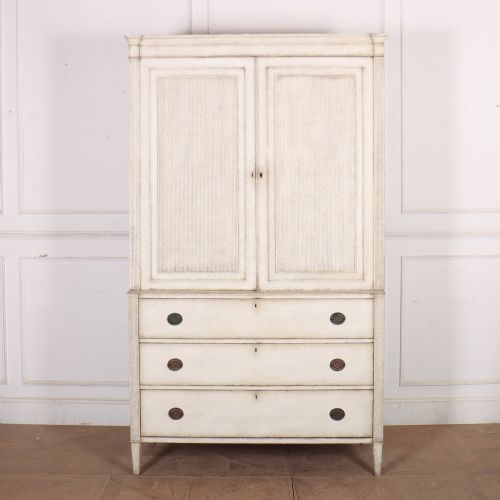
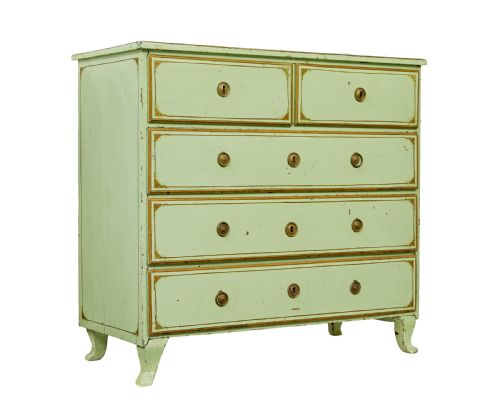
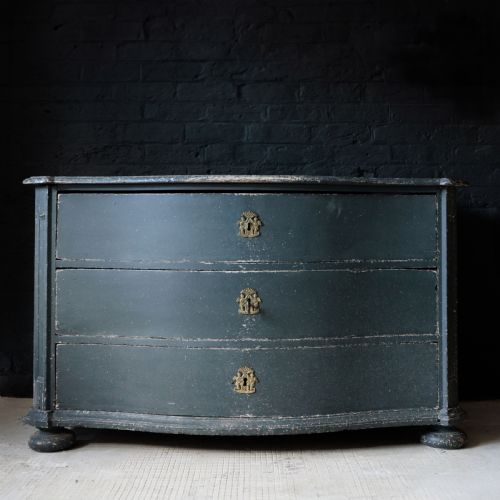
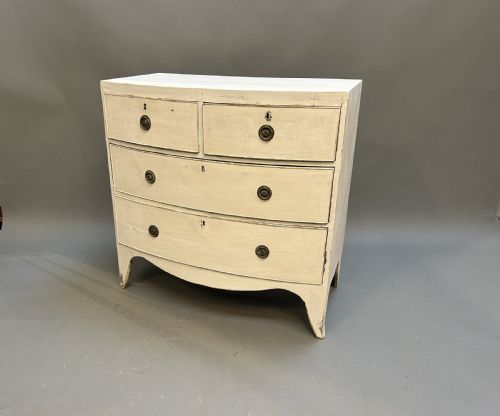
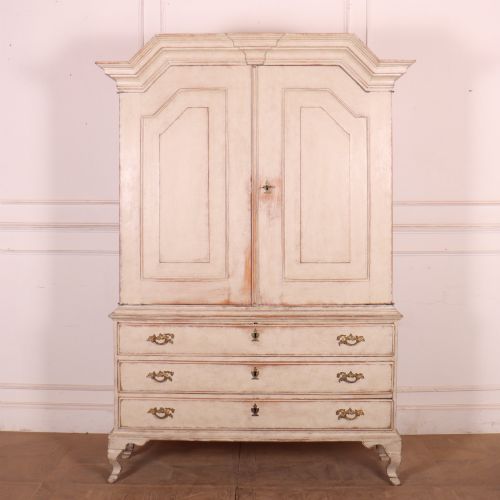
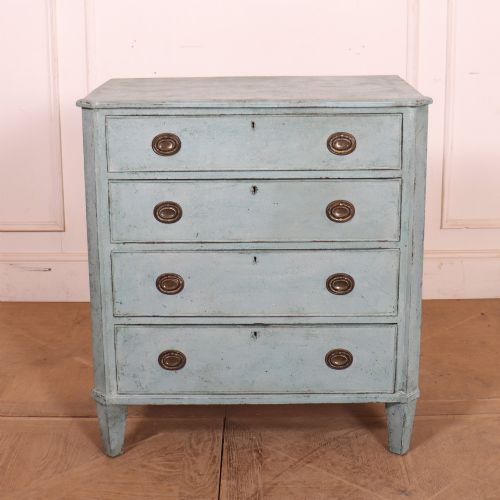
When you search for a gustavian painted chest, you encounter storage furniture originating primarily from eighteenth-century and nineteenth-century Sweden. These pieces take the form of commodes, drawer fronts with fluting, and linen cupboards finished in light, muted paint.
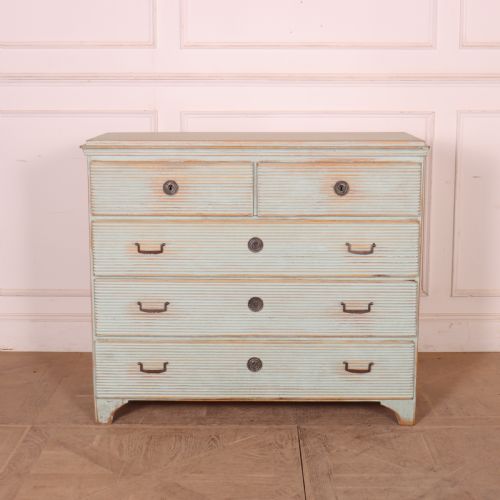
The pieces most commonly met on this page date from the nineteenth century and incorporate regional Scandinavian country interpretations of classical motifs. They stand on bracket feet or short legs, offering deep drawers housed within pine or oak carcases.
Makers often drew inspiration from French neoclassical design, translating royal forms into restrained provincial proportions. The resulting items combine utility with a distinct pale aesthetic suited to domestic interiors.
Materials and construction
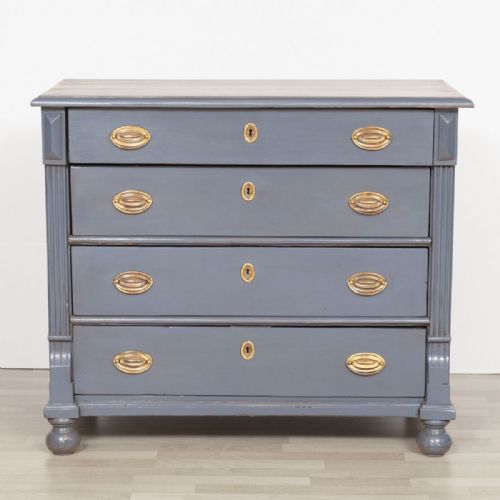
Carpenters built these carcases predominantly from solid pine and oak, utilising sturdy dovetail joints for drawer construction. Iron and brass hardware such as drop handles and lock escutcheons secured the functional elements.
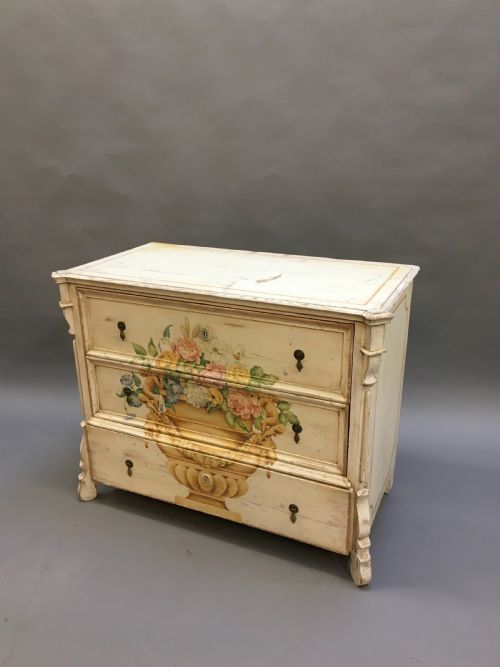
Surfaces received multiple layers of lead- or oil-based paint, frequently in pale greys, whites, or blacks, sometimes finished with faux marble tops. Hand-painted details and carved fluting defined the drawer fronts without relying on heavy veneers.
Some chests hid secret drawers behind the top moulding, perfect for stashing love letters or spare skeleton keys.
Variations in quality
Quality rests upon the crispness of the hand-carved details, such as fluted drawer fronts or serpentine curves, and the original integrity of the painted surface. Pieces retaining early layered paint finishes show superior craftsmanship compared to later redecorated surfaces.
Proportion and structural balance dictate the tier of a commode, with refined Gustavian proportions commanding greater design interest than heavier provincial rustic variants.
The Gustavian Painted Chest Glossary
- Commode
- A low chest of drawers or cabinet originating from French furniture design. These pieces often feature serpentine or bow fronts with multiple drawer tiers.
- Fluting
- Shallow, parallel concave grooves carved vertically into wood surfaces. This decorative technique appears on drawer fronts and pilasters.
- Serpentine
- A furniture front shape that curves inward centrally and bows outward at the sides. It requires skilled woodworking to execute cleanly.
- Escutcheon
- A flat plate of brass or iron surrounding a keyhole. It protects the surrounding wood from wear caused by the key.
Gustavian Painted Chest: Frequently Asked Questions
How do I style a gustavian painted chest?
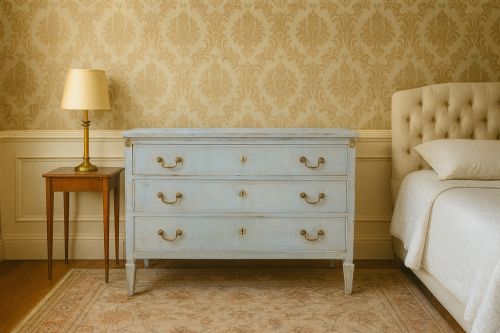
These pieces function well in bedrooms and living spaces as primary storage units for linens and clothing. Their pale painted finishes complement neutral walls and minimalist interior schemes.
Place a simple mirror or iron candlestick on the surface to maintain the restrained Scandinavian aesthetic without cluttering the profile.
What wood lies beneath the paint?
Carpenters primarily constructed these pieces using solid pine or oak timber. Ash and other regional hardwoods also appear in specific nineteenth-century variations.
Paint was applied directly to the timber carcase, sometimes over an initial gesso or priming layer to create a smooth base for subsequent coats.
How do I identify eighteenth-century pieces?
Eighteenth-century examples often exhibit deeper baroque or early neoclassical proportions, such as breakfront profiles and hand-forged iron hardware. Construction methods show hand-cut dovetails and pegged joinery.
Later nineteenth-century iterations lean toward simplified regional interpretations and standardised machine-sawn components within the carcase.
What is a faux marble top?
A faux marble top involves a painted finish applied to wood to imitate the veining and appearance of genuine stone. Artisans created these decorative surfaces using specialised glazing techniques.
This treatment provided the visual weight of stone without the heavy practical burden on the underlying chest carcase.