



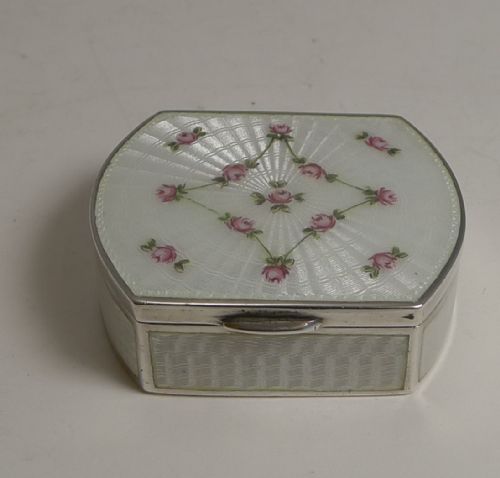
Guilloche Enamel Trinket Box
A guilloche enamel trinket box combines precision engine-turned metalwork with vibrant translucent colour to safely store small valuables.
Guilloche Enamel Trinket Box
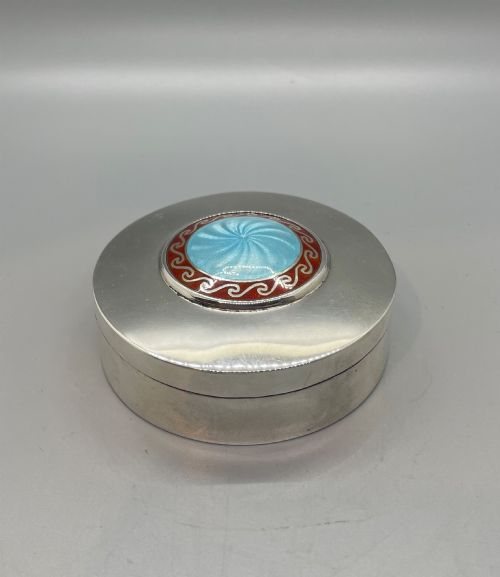
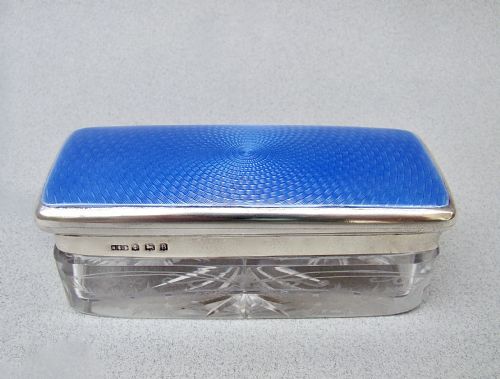
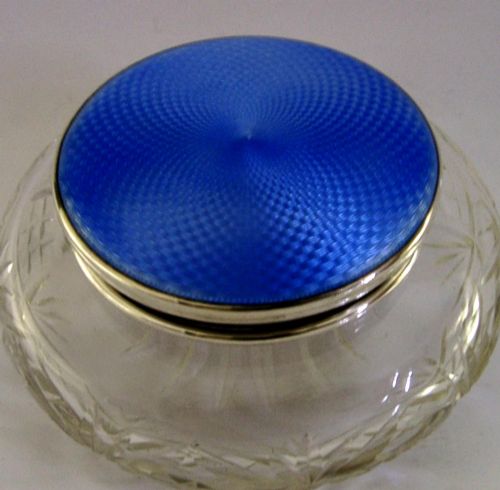
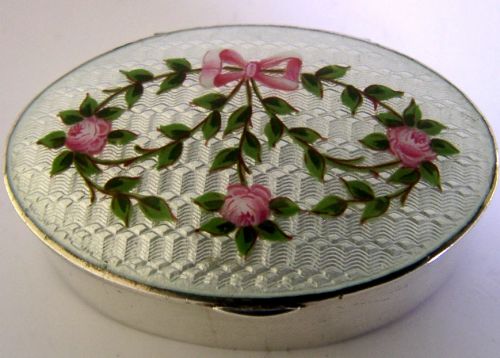
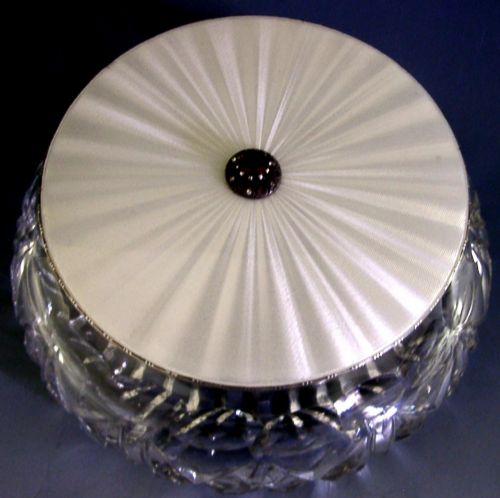
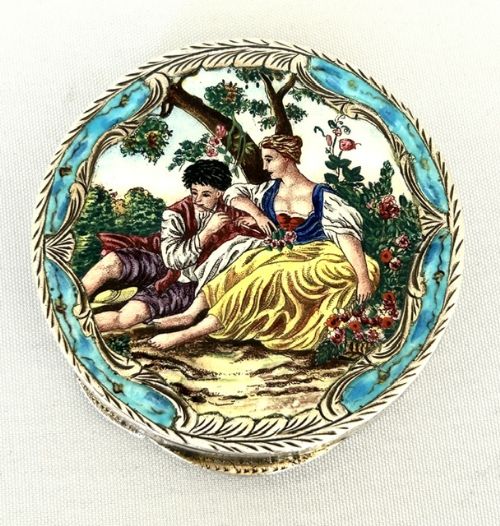
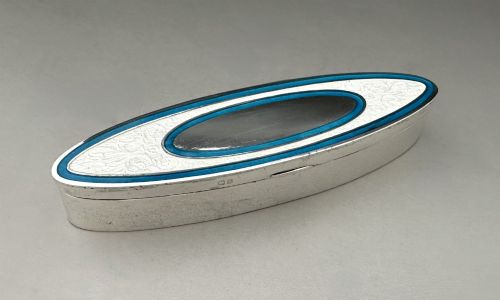
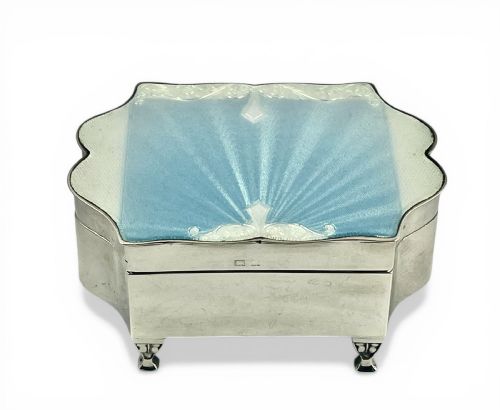
The objects originate from English, Austrian, Swiss, and French workshops, showing styles from neoclassical restraint to geometric mid-century modernism. Buyers will find variations including cut glass bodies topped with enamelled silver lids, as well as fully metal-cased boxes.
Assessing quality and execution
Quality rests in the complexity of the underlying machine-turned pattern and the clarity of the vitreous enamel layer. Superior examples display crisp, intricate geometric engine-turning that catches the light evenly beneath an unbroken, unclouded coloured surface.
The weight and gauge of the sterling silver or gold mounts also distinguish finer pieces from simpler utility jars. Maker attribution, particularly pieces bearing recognised assay marks from Birmingham or London, adds distinction to the surviving items.
Some tiny vintage pots served specifically for rouge, ready to slip into a beaded evening bag for quick nineteenth-century touch-ups.
Henry Clifford Davis·Saunders and Shepherd
The Guilloche Enamel Trinket Box Glossary
- Guilloche
- An ornamental technique where a mechanical lathe engraves precise, intricate geometric patterns into a metal surface. This forms the textured base visible beneath translucent enamel.
- Vitreous enamel
- A material made by fusing powdered glass to a substrate by firing, usually at high temperatures. The resulting smooth, durable coating resists scratching and retains its colour indefinitely.
- Vinaigrette
- A small ornamental box featuring an internal pierced grille, historically used to hold a sponge soaked in aromatic vinegar. These date from periods like the late 18th century and are typically formed in gold or silver.
- Sterling silver
- An alloy of silver containing ninety-two point five percent silver and seven point five percent other metals, usually copper. This standard metal forms the structural housing for the majority of these boxes.
- Engine-turning
- The mechanical process of cutting precise symmetrical patterns into metal using a specialised lathe. It creates the characteristic radiating or wavy background textures found on these lids.
Guilloche Enamel Trinket Box: Frequently Asked Questions
What is a guilloche enamel trinket box?
A guilloche enamel trinket box is a small lidded container made from metal, glass, or agate, featuring mechanical engine-turning beneath coloured vitreous enamel. They were produced as dressing table accessories for holding rings, pins, and small keepsakes.
Surviving examples date across the Edwardian era, the Art Deco period, and into the mid-twentieth century. English, Austrian, French, and Swiss makers contributed to the range of styles available.
How do I date an antique enamel box?
Dating relies on hallmarks stamped onto the silver or gold mounts, which indicate the assay office, metal purity, and date letter. Stylistic indicators like Edwardian floral motifs or geometric Art Deco lines also point to specific decades.
Makers' marks stamped into the metal help narrow down the production period further. Comparing the construction methods against known periods from the eighteenth century to the 1960s provides additional confirmation.
What were dressing table jars used for?
Dressing table jars held cosmetics, rouge, pins, and small pieces of jewellery during daily grooming routines. Their decorative enamel lids added colour and sophistication to nineteenth and twentieth-century dressing tables.
Some variants functioned as pill boxes or powder compacts intended for pocket or handbag use. The cut glass or metal bodies kept the contents protected while remaining accessible.
How should I clean my silver enamel box?
Cleaning requires gentle care to avoid scratching the soft vitreous enamel or damaging the delicate silver mounts. A soft, dry cloth removes dust, while specialised silver polish should be kept away from the enamel surface entirely.
Submerging antique enamel pieces in liquid cleaner is not recommended because moisture can seep beneath the bezel settings. Professional guidance is advised if the piece requires deeper restoration.