


Silver Art Deco Trinket Box
A silver art deco trinket box brings geometric lines and gleaming metal to the dressing table, offering a neat home for small keepsakes and jewellery.
Silver Art Deco Trinket Box
A silver art deco trinket box takes many forms across vanity jars, dressing table accessories, and small caskets intended to hold jewellery or pills. These pieces span from the Edwardian era through the nineteen-twenties and thirties into the forties, capturing the shifting aesthetic of twentieth-century design.
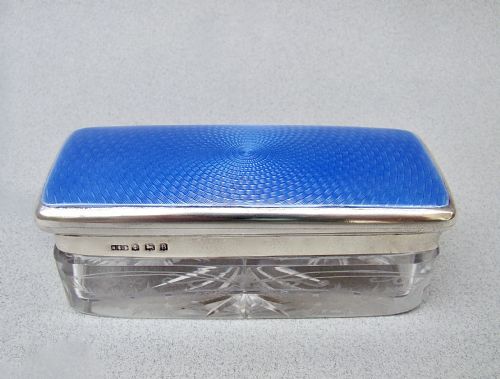
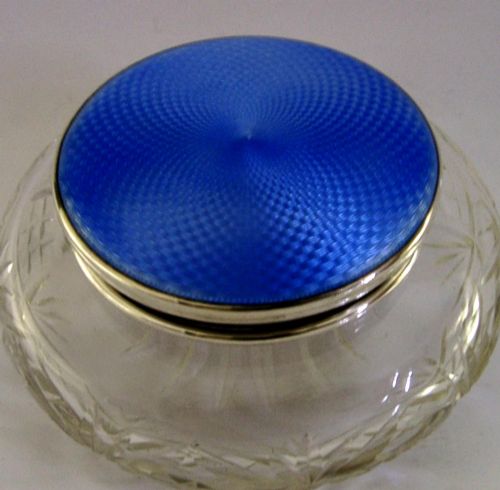
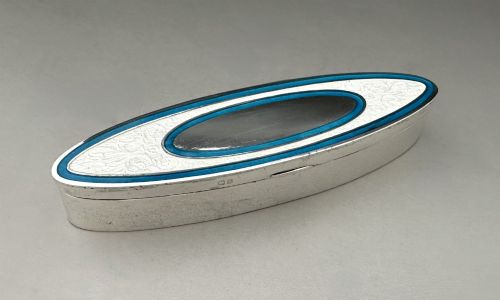
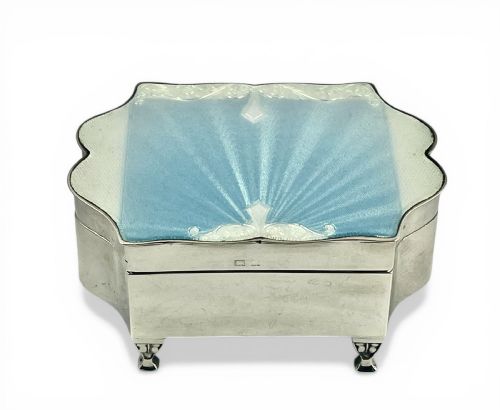
The version most commonly met on this page combines sterling silver mounts with coloured enamel, guilloche work, or cut crystal glass bodies. Makers across Birmingham, London, and continental workshops produced these small vessels for daily use on dressing tables and desks.
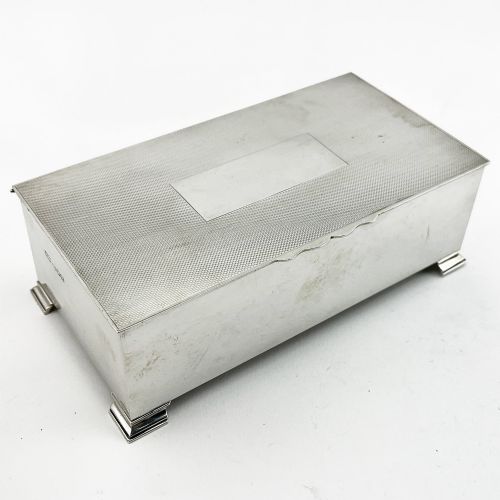
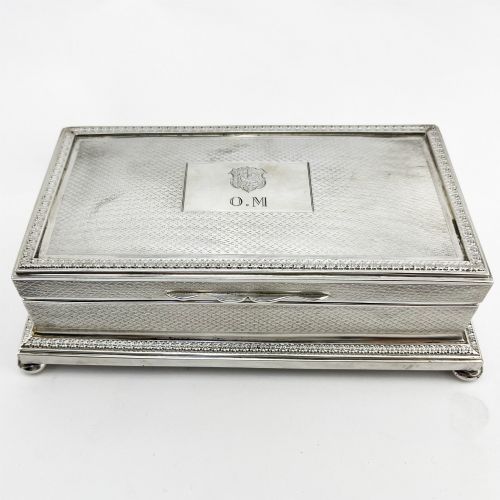
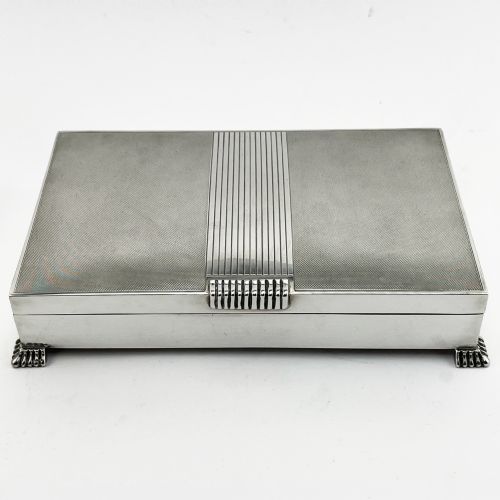
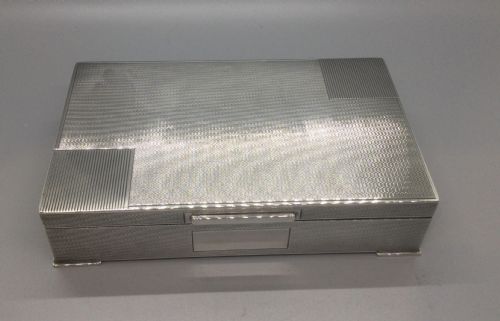
The selection ranges from compact pill boxes and rouge pots to larger solid silver table boxes and cigarette containers. Geometric motifs and clean profiles dominate, marking the transition from earlier Edwardian tastes into bold modernist statements.
Materials and construction
Makers utilised sterling silver and silver gilt for the structural mounts, hinges, and lids, often pairing the metal with glass, cut crystal, or ebonised wood bodies. Some pieces incorporate organic tortoiseshell or carved white onyx and lapis lazuli to build contrast within the geometric framework.
Enamel work forms a major part of the technique, particularly guilloche enamelling where translucent coloured layers sit over engine-turned metal grounds. Silversmiths stamped hallmarks into the metal to record the town of assay, such as Birmingham or London, alongside the year of production.
A few clever boxes even came equipped with a rising card tray for impromptu parlour tricks.
Judging the pieces
Quality rests upon the crispness of the geometric stamping and the integrity of the enamel work, where smooth, unbroken surfaces separate finer pieces from those with surface wear. The weight of the sterling silver and the precision of the hinge action reveal the original standard of manufacture.
The inclusion of specific designer names or high-grade materials like cut crystal and tortoiseshell elevates certain boxes above standard production items. Workshop attribution, particularly pieces associated with known silversmiths or Scandinavian and French makers, marks out superior examples.
Henry Clifford Davis·Mappin & Webb·Sigvard Bernadotte for Georg Jensen·William Griffiths
The Silver Art Deco Trinket Box Glossary
- Guilloche enamel
- A decorative technique where an intricate geometric pattern is engraved mechanically into metal beneath translucent coloured enamel. This process creates a shimmering wave or sunburst effect beneath the glass-like surface.
- Sterling silver
- A silver alloy containing ninety-two point five percent pure silver and seven point five percent other metals, usually copper. This standard provides the durability needed for boxes and dressing table accessories.
- Vanity jar
- A small container with a fitted lid, typically made from cut glass or crystal with a silver top. These jars sat upon dressing tables to hold creams, pins, or cosmetics.
- Hallmark
- A series of official marks stamped onto silver items to guarantee the purity of the metal. These stamps typically identify the maker, the assay office, and the year of production.
Silver Art Deco Trinket Box: Frequently Asked Questions
What were silver trinket boxes used for?
These small boxes held precious items such as rings, cufflinks, pins, and small cosmetics on a dressing table. Many were also designed specifically to contain cigarettes or pills.
Their presence reflected the orderly habits of the dressing room, keeping small valuables secure beneath hinged or lift-off lids.
How do I date a silver box?
Dating relies heavily on the hallmarks stamped into the silver, which record the assay office and the exact year letter. Stylistic markers such as guilloche enamel and sharp geometric lines also point toward the nineteen-twenties and thirties.
Earlier pieces often retain Edwardian influences, while items from the nineteen-forties reflect simpler wartime or post-war designs.
Are these boxes made of solid silver?
Most pieces feature sterling silver lids, mounts, or frames combined with other materials like cut crystal, glass, or wooden bodies. Some examples consist entirely of solid silver or silver gilt throughout the body and lid.
Checking the hallmarks confirms whether the entire construction or just the mounts are made of silver.
How should I care for enamel and silver?
Silver components benefit from gentle cleaning with a specialised soft polishing cloth to maintain the shine without scratching the metal. Enamel surfaces require extra care, avoiding abrasive cleaners and harsh dips that could damage the coloured glass layer.
Storing the boxes away from direct sunlight helps preserve the vibrancy of coloured enamels and tortoiseshell over time.