




Grey Upholstered Sofa
A grey upholstered sofa brings understated elegance to a room, offering deep comfort wrapped in neutral, subtle tones.
Grey Upholstered Sofa
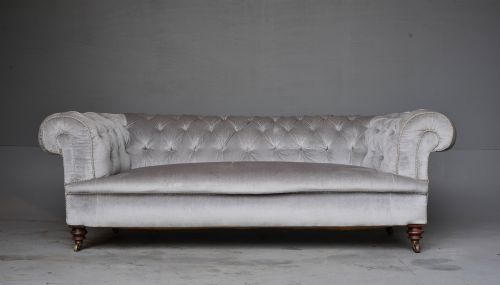
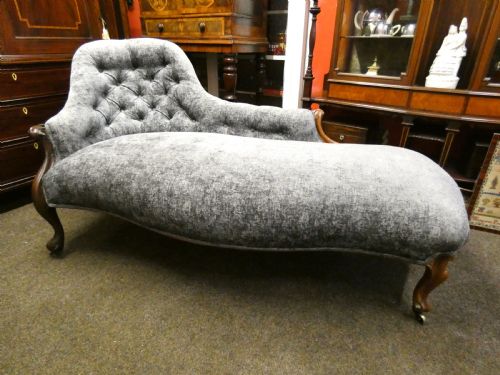
A grey upholstered sofa spans centuries of design, encompassing formal Victorian settees, relaxed Edwardian couches, and continental styles from the eighteenth and nineteenth centuries. When searching for a grey upholstered sofa, buyers encounter varied seating forms including chaise longues, window seats, daybeds, and two-seat settees.
The materials recorded in these seating pieces combine substantial wooden frames with tactile fabric coverings. Historic examples feature mahogany, oak, walnut, and painted or gilt wood, paired with velvet, linen, and standard textile upholstery.
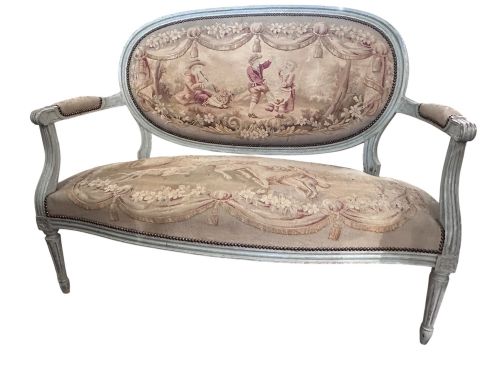
Stylistic influences range widely across the selections, incorporating Regency lines, Neoclassical proportions, Louis XV and Louis XVI designs, and Victorian Rococo Revival details. These diverse aesthetic traditions ensure that a grey upholstered sofa fits comfortably into both period interiors and modern spaces.
How they were made
Frames are constructed from sturdy timbers such as mahogany, oak, and walnut, providing structural integrity for daily use. Carpenters and cabinetmakers shaped these woods into fluted legs, carved details, and supportive structural armatures.
Surface treatments involve traditional methods, including painted finishes, gilding, and French polishing on exposed wooden elements. Upholstery methods rely on supportive interior webbing and springs, finished with durable fabric, velvet, linen, or caning.
Listings feature wooden frames in mahogany, oak, walnut, and painted or gilt finishes paired with velvet and linen.
What varies in quality
The distinction between standard examples and finer pieces lies in the precision of the woodwork and the crispness of applied carving. Superior frames exhibit deeply defined mouldings, hand-carved ornamentation, and balanced proportions executed by skilled makers.
Quality also manifests in the integrity of the underlying structure and the authenticity of surface finishes. Original painted or gilt treatments and well-preserved secondary woods distinguish more desirable items from later or heavily altered equivalents.
Howard and Sons
The Grey Upholstered Sofa Glossary
- Canapé
- An upholstered French sofa featuring an exposed wooden frame and decorative carved details. These pieces typically date from the eighteenth or nineteenth centuries.
- Chesterfield
- A traditional sofa style characterised by deep button tufting and rolled arms of equal height to the back. Historic versions provide firm, formal seating.
- Chaise longue
- An elongated upholstered chair designed for reclining, combining the functions of a chair and a daybed. They appear frequently in Victorian and nineteenth-century inventories.
- Settee
- A small upholstered bench with a back and arms, designed to seat two or more people. The term is often used interchangeably with sofa in historical listings.
- Rococo Revival
- A nineteenth-century design movement mimicking the ornate, asymmetrical scrolls and floral motifs of the eighteenth-century Rococo period. Furniture in this style displays exuberant carved wooden frames.
Grey Upholstered Sofa: Frequently Asked Questions
What is a grey upholstered sofa?
A grey upholstered sofa is a historic or period seating piece covered in neutral fabric, velvet, or linen. These items range from formal Victorian Chesterfields to French Louis XVI settees.
Buyers select these pieces to combine traditional craftsmanship with a versatile, understated colour palette that suits diverse interior schemes.
How do I date a grey upholstered sofa?
Dating relies on examining the stylistic markers of the wooden frame, such as neoclassical fluted legs, rococo curves, or Edwardian proportions. Secondary woods and construction joints also offer chronological clues.
Upholstery fabric often dates from later reupholstery work rather than the original manufacture date of the frame.
Where were these sofas used?
Historically, these seating forms occupied grand drawing rooms, country house halls, and private parlours. Daybeds and chaise longues were typically placed in bedrooms or quiet reception spaces for resting.
Window seats and smaller settees were positioned to take advantage of natural light or to provide intimate conversation areas.
How do I care for a vintage sofa?
Preserving vintage upholstery requires regular gentle vacuuming with a soft brush attachment to remove dust from fabric fibres. Protect exposed wooden frames from direct sunlight and excessive temperature fluctuations.
Professional cleaning is recommended for antique textiles to maintain the integrity of the original material.