

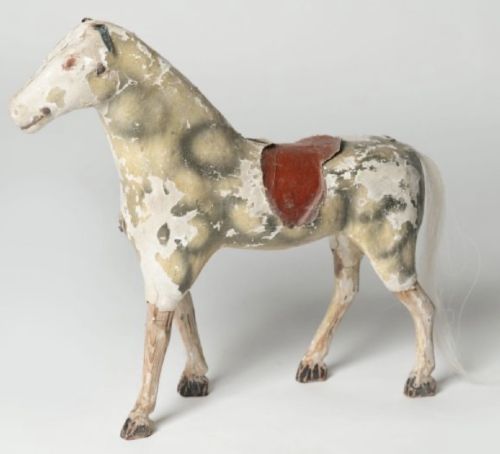
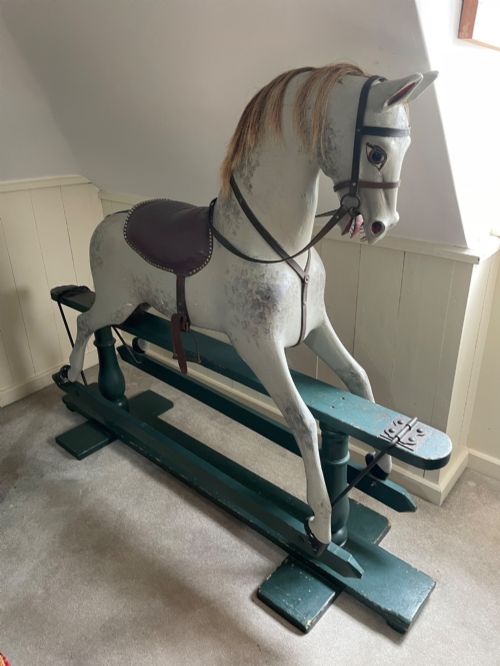
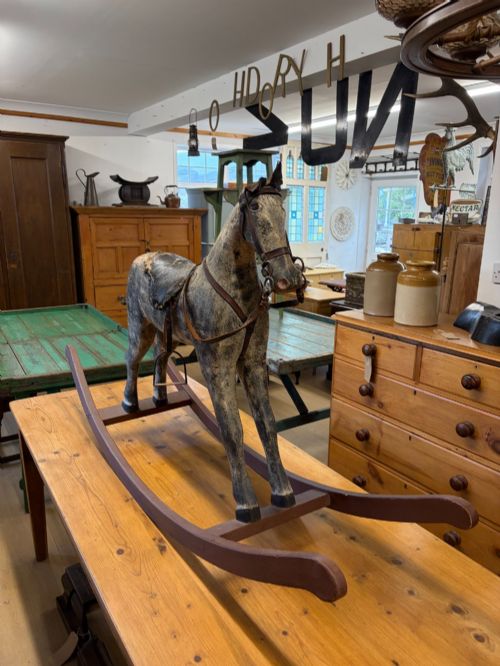
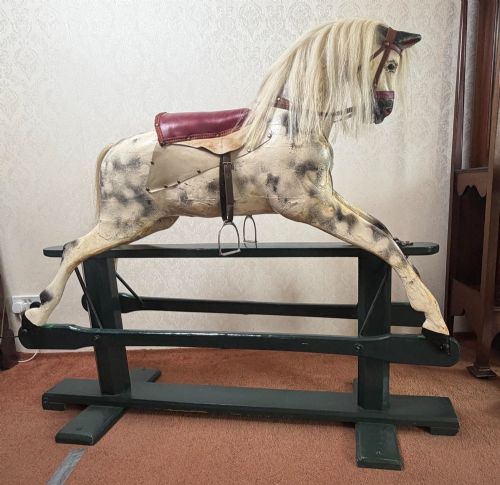
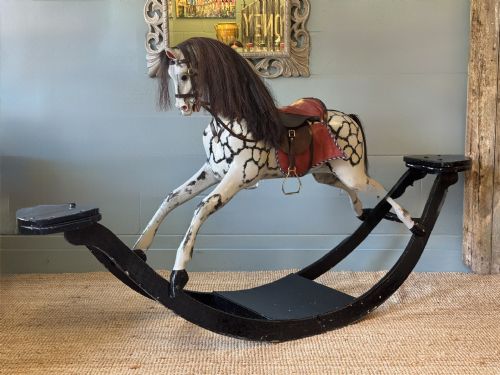

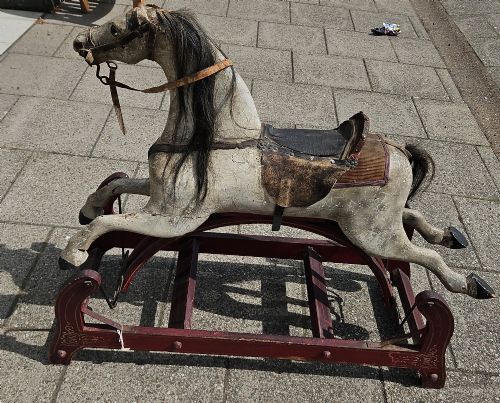


Grey Painted Wooden Horse
These grey painted wooden horse carvings bring the spirited presence of a traditional rocking horse or sculptural figure into a room.
Grey Painted Wooden Horse
A grey painted wooden horse typically takes the form of a carved rocking horse mounted on curved wooden rockers or a pine trestle base, alongside occasional paintings and wall sculptures. These pieces span the Victorian and Edwardian eras up to the mid-twentieth century, originating from British workshops and international makers.
Buyers encounter everything from large primitive rocking horses in original paint to smaller decorative sculptures and antique watercolours or oil paintings depicting horses. The most frequent survivors are sturdy wooden examples shaped by hand and finished with layered paint and horsehair.
Materials and construction
Makers constructed these figures primarily from carved pine and other solid woods, shaping the body and head to capture a natural stance. Iron and metal components reinforced the joints and supported the swinging mechanisms on rocking horses.
The surface finish relies on traditional paint layers, often built up to create a dapple or flat grey tone. Leather tack, glass eyes and real horsehair manes and tails completed the construction, adding texture and realism to the carved forms.
Grey Painted Wooden Horse Retail Price Guide 2026
Typical asking prices for grey painted wooden horse among the pieces listed under this phrase on Sellingantiques today, from the lower quarter to the upper quarter. They describe what is for sale here now, not the wider market.
Listings feature carved pine rocking horses alongside oil paintings, watercolours, and decorative wall sculptures from the Victorian and Edwardian eras.
Judging quality and character
Quality rests in the sculptural depth of the carving and the integrity of the original paint surface. Pieces retaining their early or original grey paint hold distinct visual merit compared to later repainted surfaces.
The strength of the underlying wooden frame and the retention of original components such as leather tack, glass eyes and horsehair determine the overall standard of preservation. Makers known for robust construction and balanced proportions elevate certain pieces above anonymous workshop output.
G & J Lines of London·F.H. Ayres·Lines Bros Sportiboy·Collinson & Sons Liverpool
The Grey Painted Wooden Horse Glossary
- Rocking horse
- A carved wooden toy or decorative figure mounted on curved wooden rockers or a safety stand. They were designed for children to ride or for display.
- Original paint
- The initial decorative finish applied to the wood by the maker or contemporary workshop. Surviving layers show genuine age and patination.
- Pine trestle base
- A sturdy wooden support frame holding the body of the horse steady. This design allowed the horse to rock smoothly without tipping.
- Horsehair
- Natural hair utilised for the mane and tail of the carved animal. It provides a tactile contrast to the painted wooden body.
Grey Painted Wooden Horse: Frequently Asked Questions
How do I date a grey painted wooden horse?
Dating relies on examining the construction methods, the type of wood used, and the style of the carving. Earlier nineteenth-century examples often display simpler hand-carved details and primitive forms.
Later pieces from the Edwardian period or the twentieth century incorporate more standardised framing and refined mechanical joints. The composition of the paint layers and any surviving maker marks also help narrow down the period of origin.
Are these horses suitable for children to ride?
Most antique rocking horses are treated primarily as decorative objects or collector pieces rather than active toys. Their historical materials and vintage joints require gentle handling to preserve their condition.
Sturdier mid-century examples on robust pine bases can sometimes handle light use, but fragile surface paint and horsehair manes are best protected from active play.
How do I care for the original paint?
Preserving the surface requires keeping the horse away from direct sunlight and fluctuating humidity levels. Dusting should be done gently with a dry, soft cloth.
Avoid using harsh chemical cleaners, liquid polishes, or abrasive materials that might lift or soften the historical paint layers and delicate horsehair.
Where should I display a wooden horse?
These large sculptural figures suit spacious living rooms, hallways, or studies where they can stand freely as focal points. Placing them away from heat sources protects the wood from warping.
Wall sculptures and framed paintings of horses pair well near the carved figures to create a cohesive equestrian theme in an interior space.