



Grey Painted Pine Table
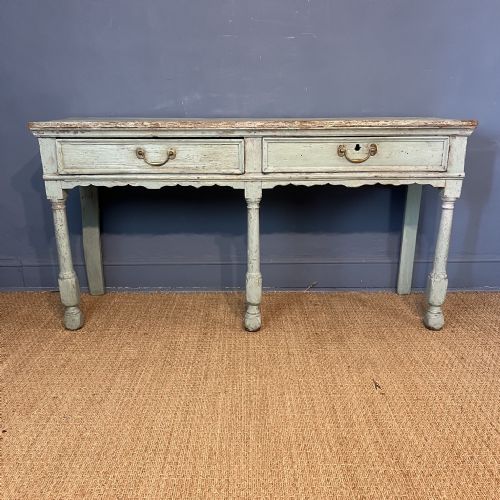
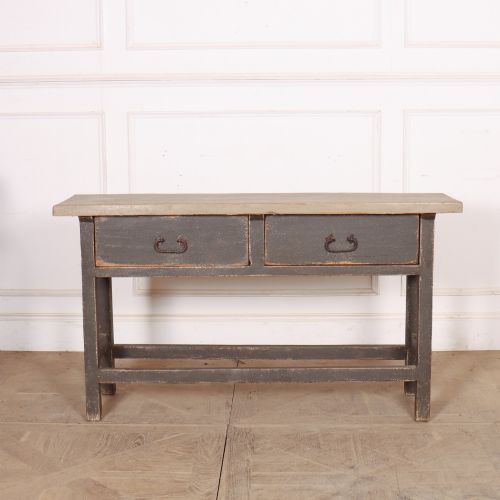
A grey painted pine table brings rustic utility and muted colour to a room, spanning styles from Scandinavian country to English vernacular.
Grey Painted Pine Table
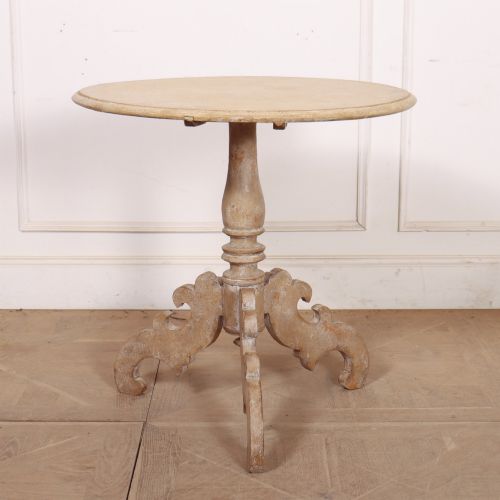
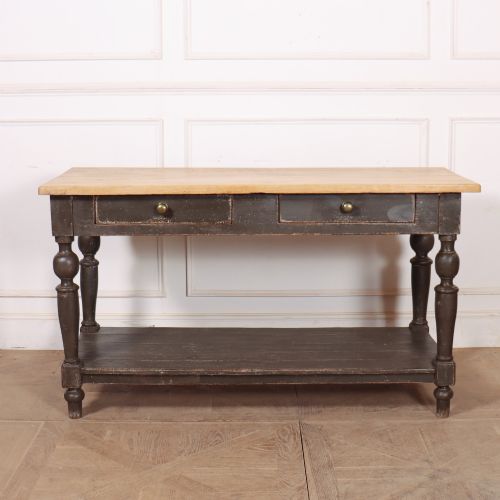
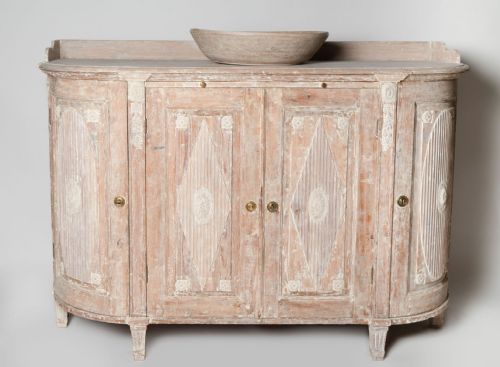
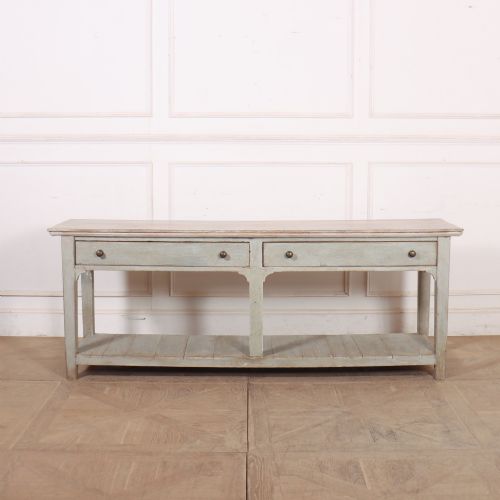
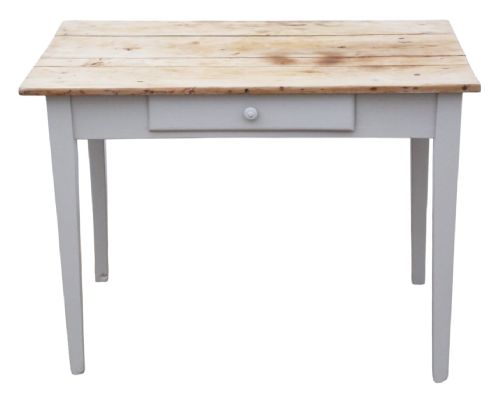
A grey painted pine table encompasses practical furniture designed for domestic service, spanning forms from side tables and dining tables to servers and bedside cabinets. These pieces emerge predominantly from the nineteenth century, alongside earlier eighteenth-century examples and later twentieth-century interpretations.
The aesthetic leans heavily towards regional European traditions, particularly Scandinavian country, Gustavian, French country, and English country styles. Buyers encounter various utilitarian formats, including drop-leaf tables, writing desks, and kitchen preparation tables, finished in muted paint.
Originating across different European regions, these tables demonstrate how softwoods were adapted for everyday utility through protective paint finishes. The inventory bridges simple farmhouse furniture and more refined continental decorative pieces.
Markers of quality
Quality rests upon the integrity of the timber framing and the preservation of the original or early paint surface. Tables that retain their structural soundness without excessive timber replacement hold greater appeal for traditional interiors.
The nuance lies in the proportion and joinery, distinguishing utilitarian workshop pieces from finer regional variants with turned legs, panelled doors, or integrated drawers.
Listings feature items constructed from pine, paint, brass, ceramic, and iron, spanning the eighteenth, nineteenth, and twentieth centuries.
The Grey Painted Pine Table Glossary
- Pine
- A softwood derived from conifer trees, widely utilised for European domestic furniture due to its availability and ease of working. It forms the primary structural carcass for these painted tables.
- Slagbord
- A traditional Scandinavian drop-leaf dining table design featuring swinging wooden gates or legs to support the extended leaves. This form facilitates flexible placement in smaller rooms.
- Scrub-Top
- A solid wooden table top left unpainted and untreated with modern varnishes, intended to be scrubbed clean with water and sand after food preparation. It contrasts with the painted apron and legs beneath.
- Potboard Dresser Base
- A low sideboard or buffet featuring an open lower shelf near the floor, historically used for storing pots and heavy kitchen utensils. This form provides substantial storage beneath a working surface.
- Gustavian
- A Swedish neoclassical design style characterised by restrained classical motifs, pale painted finishes, and simplified symmetry. It emerged during the late eighteenth century and influenced nineteenth-century cabinet making.
Grey Painted Pine Table: Frequently Asked Questions
How do I clean a painted pine table?
Maintain painted surfaces by dusting with a dry microfibre cloth and wiping gently with a damp cloth when necessary. Avoid harsh chemical cleaners that might soften or remove historic paint layers.
For unpainted scrub-tops, use mild soap and warm water with a soft brush, following the grain of the wood. Dry the surface thoroughly afterwards to prevent moisture damage.
Where should I place a side table?
Side tables and lamp tables suit hallways, living rooms, and bedrooms as functional surfaces for lighting or small objects. Their modest proportions allow them to fit into alcoves or beside seating.
Keep these tables away from direct heat sources and strong sunlight to protect the pine timber and the painted finish from drying out or fading.
How do I identify the period of pine furniture?
Examine the construction methods, tool marks, and fixings used in the assembly of the table. Hand-cut dovetails and older screw types often indicate nineteenth-century or earlier origins.
Paint analysis and style characteristics also help date a piece, though many vernacular items continued to be made using traditional designs well into the twentieth century.
Are these tables suitable for daily dining?
Dining tables and preparation tables in this selection provide sturdy surfaces for everyday meals and kitchen tasks. Protect the painted or timber tops with placemats and coasters to prevent heat rings and liquid stains.
Routine use develops a patina on the wood and paintwork, which contributes to the character of antique vernacular furniture over time.