


Grey Marble Pier Table
A grey marble pier table brings architectural weight to a hallway, offering a cool stone surface supported by carved wood or gilt frameworks.
Grey Marble Pier Table
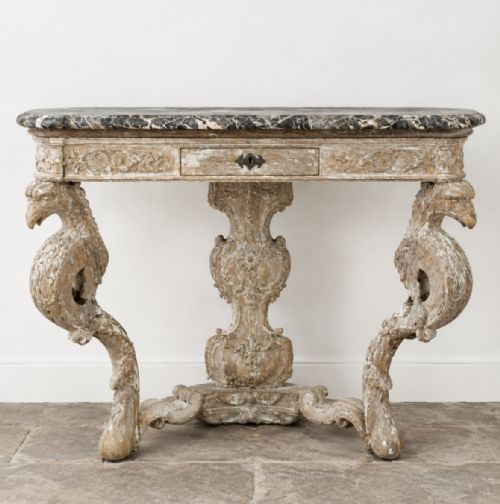
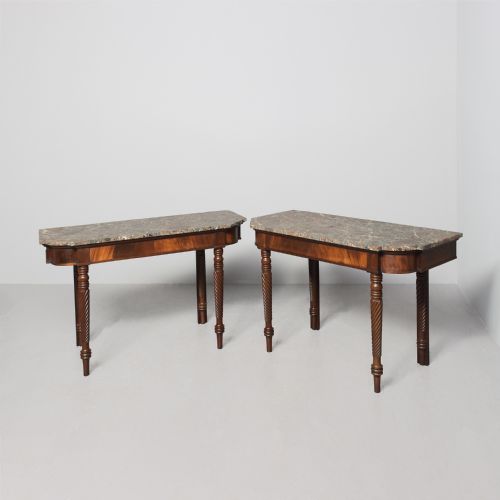
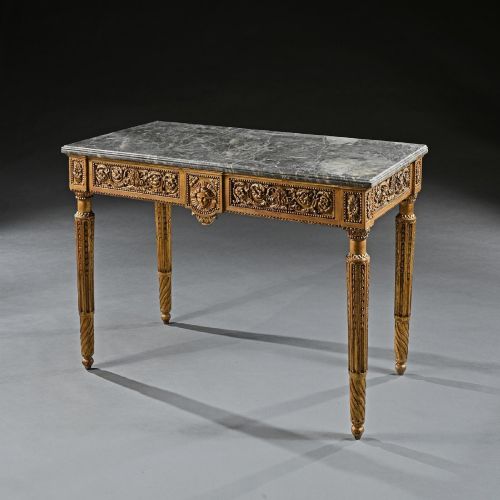
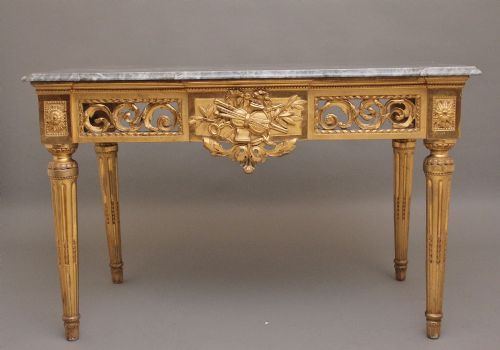
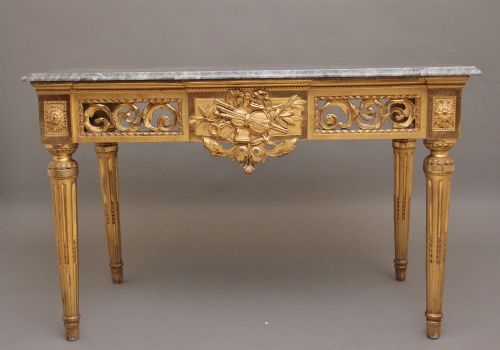
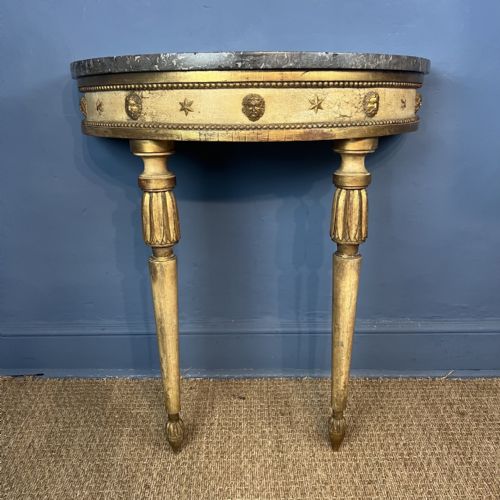
A grey marble pier table sits flush against a wall, typically between windows or beneath a mirror, functioning primarily as a console table. The form appears across several periods, most notably in eighteenth-century Italian and nineteenth-century French designs.
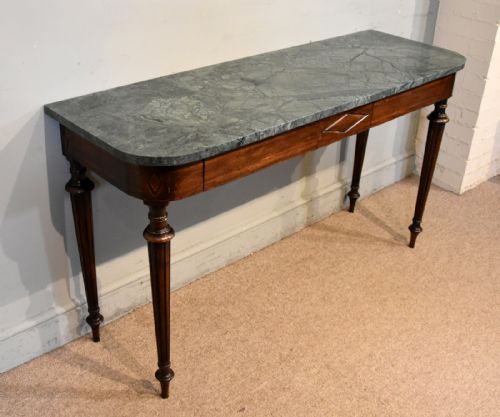
These console tables combine substantial stone tops with decorative wooden bases in mahogany, walnut, giltwood, and painted finishes. Neoclassical, Regency, and French Rococo styles dominate the selections available.
Makers designed these pieces to anchor formal interiors, utilising the durability of marble alongside ornate carvings. Buyers encounter both English and continental examples spanning the eighteenth and nineteenth centuries.
How they were made
Craftsmen shaped heavy slabs of grey marble to fit the precise dimensions of wooden console frames, often securing them with brackets or allowing them to rest within moulded edges. Giltwood and carved wood frames received hand-applied gold leaf or paint finishes.
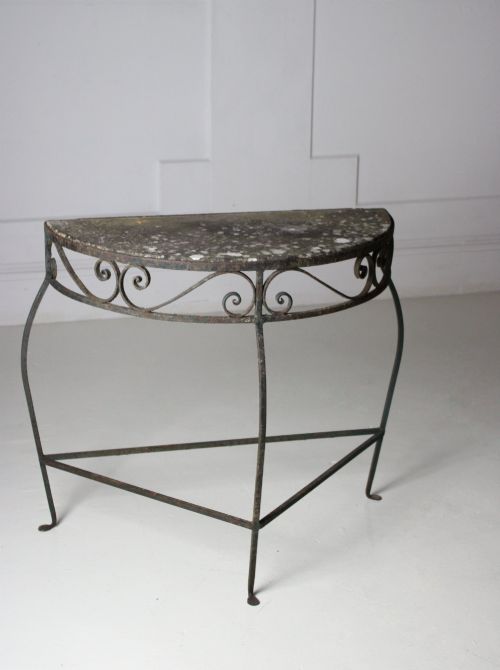
Carpenters utilised timbers such as mahogany, walnut, and oak to construct the structural supports, employing traditional joinery for stability under heavy stone tops. Wrought iron also appears as a structural material in specific twentieth-century pieces.
Listings feature console tables spanning from the eighteenth century through the nineteen-thirties, utilising marble, giltwood, mahogany, and walnut.
What varies in quality
The refinement of the wood carving and the depth of the giltwood or painted finish dictate the standard of the base. Hand-chiseled details and balanced proportions distinguish finer eighteenth-century Italian and French workshops from standard production.
The choice of marble slab, its figuring, thickness, and integration with the frame determine the overall integrity of the piece. Superior examples feature well-matched stone surfaces paired with substantial timber construction.
The Grey Marble Pier Table Glossary
- Console table
- A table designed to stand against a wall, traditionally fixed to the wall or supported by front legs. These tables often feature decorative marble tops and ornate friezes.
- Giltwood
- Timber that has been coated with a thin layer of gold leaf or gesso and gold paint. This finish provides a bright, reflective surface popular in Neoclassical and Rococo designs.
- Neoclassical
- A style spanning the eighteenth and early nineteenth centuries characterised by classical symmetry, straight lines, and motifs drawn from ancient Greece and Rome.
- Trumeau
- An architectural term for a mirror or panel placed between windows, often integrated above a console table in French interior design.
Grey Marble Pier Table: Frequently Asked Questions
Where should I place a console table?
These tables suit hallways, living rooms, and dining spaces where floor space is limited against a flat wall.
Their shallow depth allows them to function effectively without obstructing walkways while displaying decorative objects on top.
How do I clean a marble top?
Wipe the stone surface using a soft cloth dampened with warm water and mild, pH-neutral soap.
Avoid acidic cleaners, vinegar, or harsh abrasives that can etch or dull the polished marble finish over time.
What styles are available?
The selection includes Neoclassical, French Rococo, Regency, and William IV designs from the eighteenth and nineteenth centuries.
Finishes range from carved giltwood and painted wood to exposed mahogany, walnut, and oak.
Are these tables freestanding?
Most console tables are designed to stand against a wall, and historical examples often relied on wall fixings for stability.
Buyers should verify whether a specific piece requires anchoring depending on the weight of the marble top and the leg configuration.