
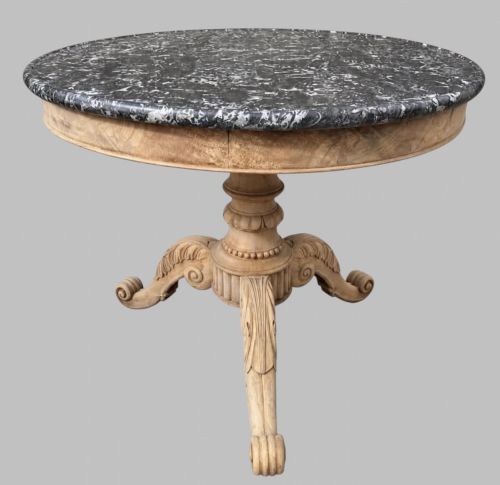
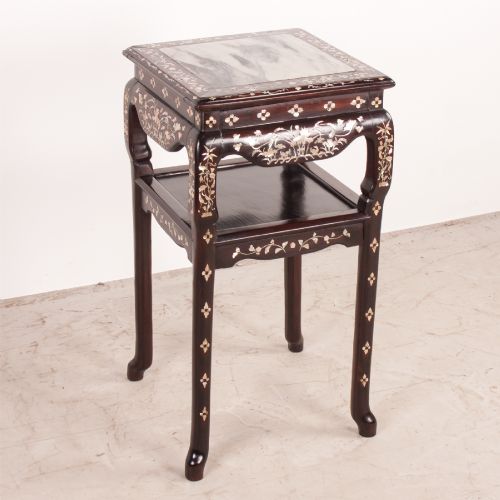
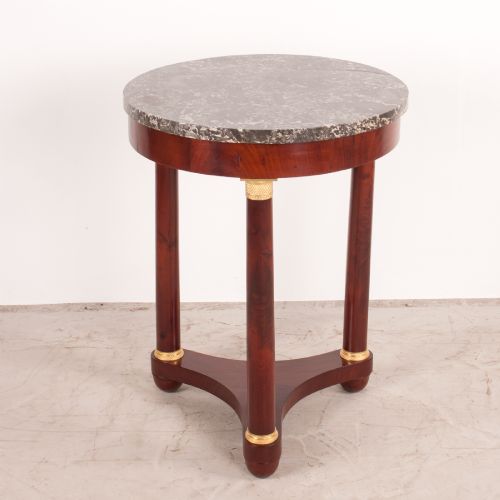
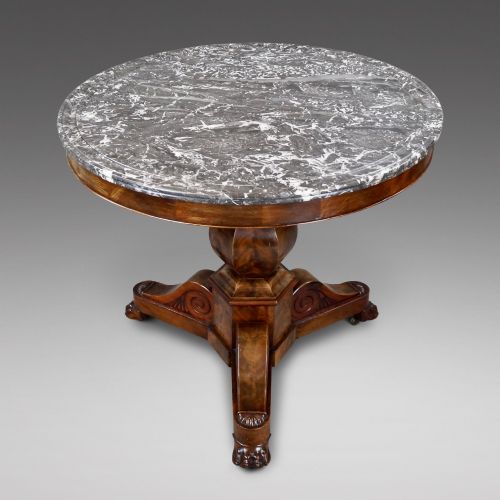


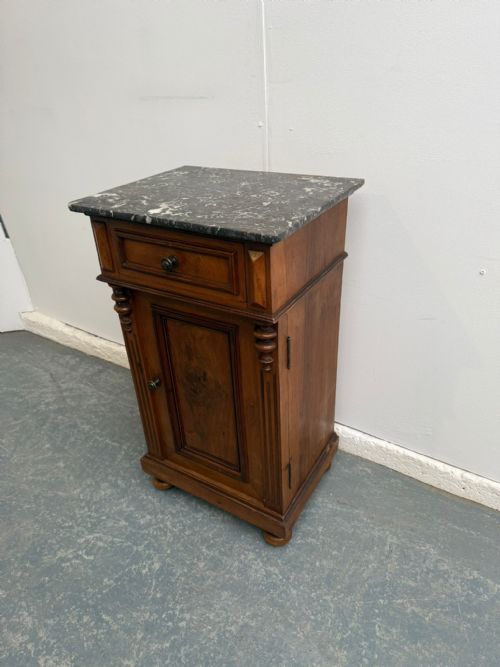

Grey Marble Pedestals
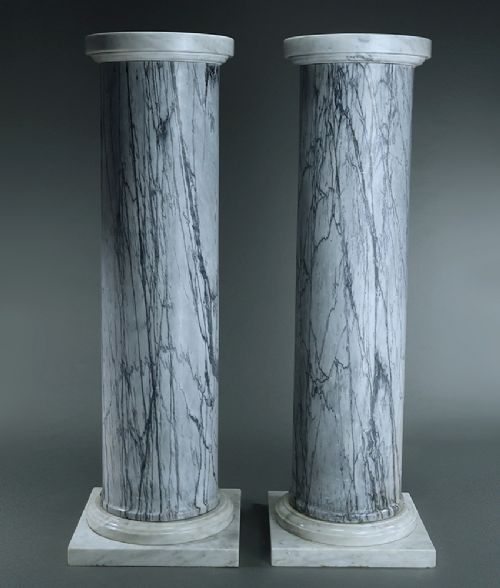
Grey marble pedestals are solid stone supports for display, prized for their cool veining and weighty presence in a room.
Grey Marble Pedestals
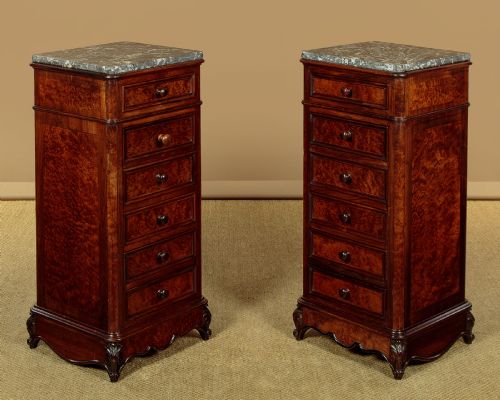
The evidence spans the nineteenth century through the early twentieth century, taking in periods such as the Victorian era, French Empire, Louis Philippe and Neoclassical styles. Buyers often encounter these stone supports in pairs designed to elevate busts, urns or decorative objects.
Distinctions in quality
Quality in these stone supports rests on the depth and character of the natural veining within the marble and the precision of the turning. A superior piece displays harmonious natural colour variation rather than dull, uniform greys.
The sculptural execution of associated capitals, bases and mounts separates ordinary items from finer examples. Solid stone construction and careful assembly provide the stability required for heavy display pieces.
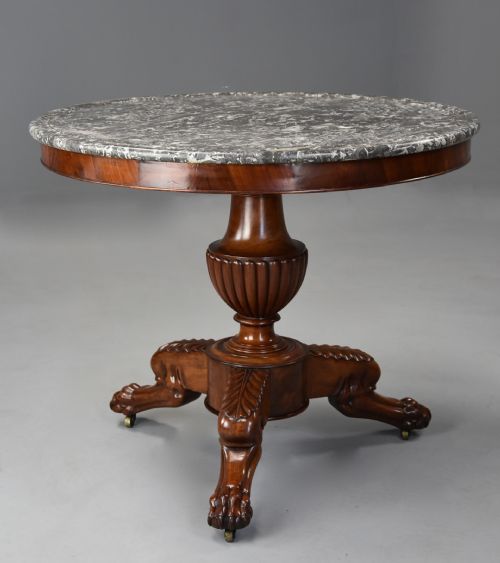
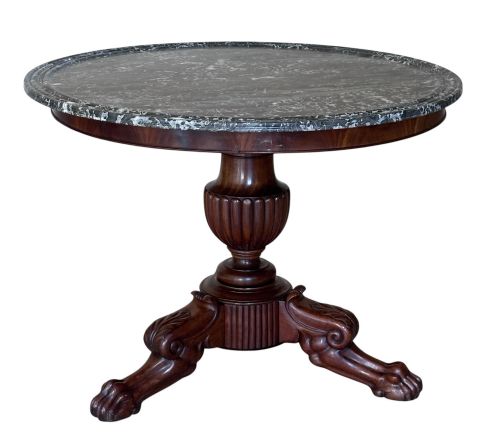
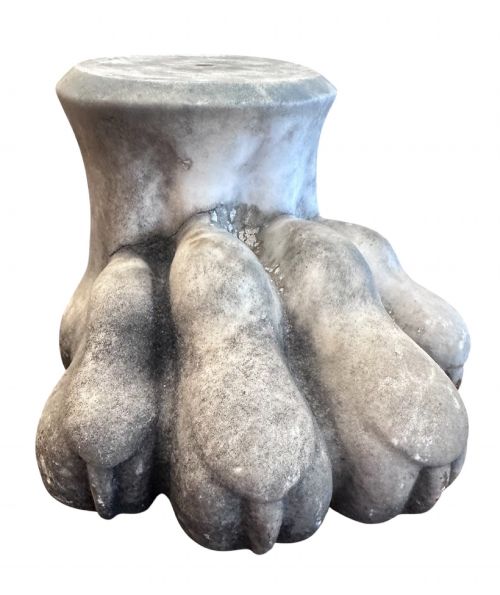
Early nineteenth-century artisans occasionally carved fierce stone lions' paws to anchor the base of a weighty marble column.
Zwiener Jansen Sucesseur
The Grey Marble Pedestals Glossary
- Guéridon
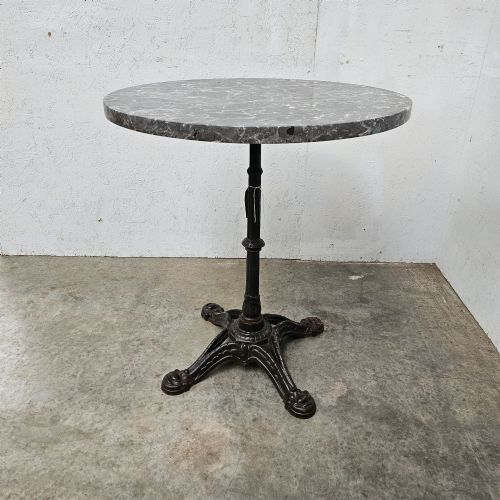
- A small circular table on a central pillar, frequently topped with marble. These pieces share period characteristics with standalone pedestals.
- Socle
- A short plain plinth or pedestal supporting a column, vase or bust. It provides a stable base for the display object.
- Scagliola
- A composite substance made from glue, selenite and pigments, laid down and polished to imitate marble and other stonework. It appears on columns and urns.
- Bardiglio
- A grey marble featuring darker clouding and veining, originating from Italy. It is commonly found in nineteenth-century architectural elements.
- Plinth
- The heavy lower square base of a column or pedestal. It distributes the weight of the stone above evenly to the floor.
Grey Marble Pedestals: Frequently Asked Questions
What were grey marble pedestals used for?
These stone supports served to elevate heavy decorative items, bronze busts, urns and lamps within period interiors. Raising these objects granted them greater prominence in nineteenth-century reception rooms and entrance halls.
Today they serve a similar purpose in domestic settings, providing a stable platform for sculpture or plants while introducing natural stone texture to a room.
How do I style a pedestal at home?
Place a single column in an empty corner to draw the eye upward, or utilise a matched pair to frame a doorway or fireplace. Keep the items placed on top proportionate to the diameter of the top surface.
Allow the natural grey veining of the marble to complement rather than compete with surrounding wooden furniture and neutral wall colours.
Are these pedestals solid stone?
The evidence shows pedestals and columns formed from solid marble, alabaster and Bardiglio, alongside alternative materials like scagliola and painted plaster. Heavier examples are carved directly from natural mineral blocks.
Buyers should examine the specific material notes in each listing to confirm whether a piece is solid stone or an architectural composite like scagliola.
How do I identify the period of a pedestal?
Dating relies on stylistic clues such as Neoclassical motifs, French Empire brass mounts, or the specific turning methods visible in nineteenth-century manufacturing. Comparing the form to dated tables and columns helps narrow down the decade.
Makers' marks or stamps, when present, provide definitive evidence of origin and workshop attribution during the Victorian and Napoleon III periods.