
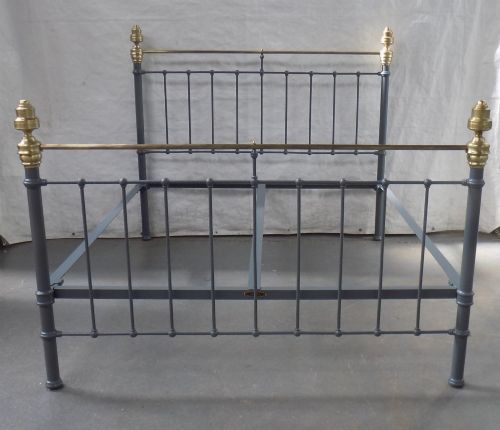


Grey Iron Bed Frame
A grey iron bed frame brings sturdy construction and period character to a bedroom.
Grey Iron Bed Frame
A grey iron bed frame offers a durable sleeping platform rooted in nineteenth-century metalwork. These pieces span single, double, king, and super king sizes, frequently incorporating iron, steel, and painted metal finishes in neutral tones such as charcoal.
Most examples originate from the Victorian era and the nineteen hundreds, capturing classic styles alongside Portuguese traditional forms. Buyers often encounter standard bedsteads, four poster designs, and pairs of beds that can be joined together for flexible arrangements.
How they were made
Makers utilised cast iron for structural components and decorative shaping, often combining it with wrought iron and steel. Brass and nickel accents appear on knobs, mounts, and finials to contrast against the dark or painted metal frames.
Surfaces received protective and decorative treatments including paint in neutral shades and charcoal tones. Construction techniques combined heavy metal casting with secure mechanical joints designed to support large mattress sizes.
Listings feature pieces spanning the Victorian period through to nineteen hundred, utilising cast iron, brass, wrought iron, and painted metal.
What varies in quality
The refinement of the casting work distinguishes standard frames from exceptional ones, with detailed shaping and ribbon reed motifs marking out superior pieces. The presence of complementary brass or nickel mounts elevates the visual appeal of a bedstead.
Proportion and scale dictate the desirability of a frame, from lower height four poster configurations to extra wide king sizes. The structural integrity of the ironwork and the preservation of the original painted finish determine the overall standard.
The Grey Iron Bed Frame Glossary
- Bedstead
- The framework of a bed, including the headboard, footboard, and side rails. This term often appears interchangeably with bed frame in older listings.
- Cast iron
- A sturdy alloy poured into moulds to create decorative and structural components. It forms the primary body of many nineteenth-century beds.
- Ribbon reed
- A decorative moulding technique resembling bundled reeds or ribbons. It adds textural detail to the iron framework.
- Four poster bed
- A bed with four vertical columns supporting a tester or canopy frame. Lower height variations offer this silhouette for standard ceiling heights.
- Nickel
- A silvery metal used for plating or detailing hardware and mounts. It provides a bright contrast to painted iron surfaces.
Grey Iron Bed Frame: Frequently Asked Questions
How do I fit a modern mattress?
Most antique metal bed frames accommodate standard modern mattress dimensions when paired with a suitable platform or slat base. It is sensible to check the internal width and length measurements before purchasing.
Some larger frames offer extra wide king or super king proportions that suit contemporary mattress sizes comfortably.
Can these beds be dismantled?
Nineteenth-century iron beds were constructed to be taken apart for transport and relocation. The side rails typically wedge into slots on the headboard and footboard.
This modular construction makes moving a heavy metal bed frame through doorways and up staircases straightforward.
How do I clean the painted finish?
A soft, dry cloth removes dust and everyday debris from painted iron surfaces without disturbing the finish. Avoid harsh chemical cleaners that might strip or damage the original paint.
Gentle dusting preserves the integrity of neutral tones and charcoal paintwork over years of daily use.
Are pairs difficult to find?
Matching pairs of Victorian iron beds occasionally appear in listings and can often be joined together to form a larger sleeping area. This versatility suits guest rooms or shared spaces.
Checking the dimensions of both frames ensures they align correctly when placed side by side.