




Grey Horse Artwork
Grey horse artwork captures the character and muscle of equines through centuries of British sporting and rural tradition.
Grey Horse Artwork
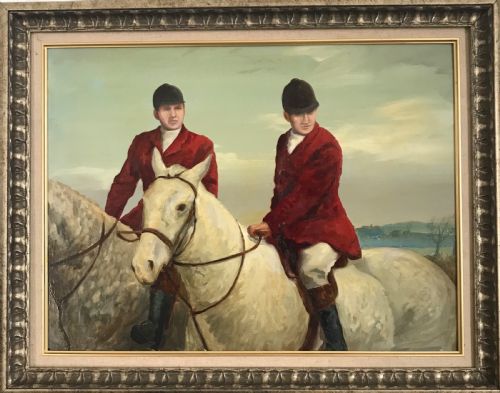
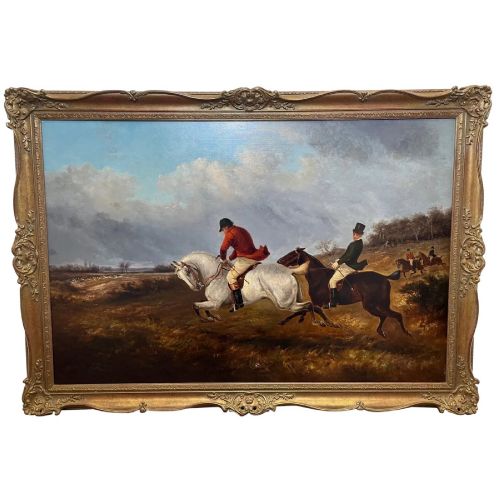
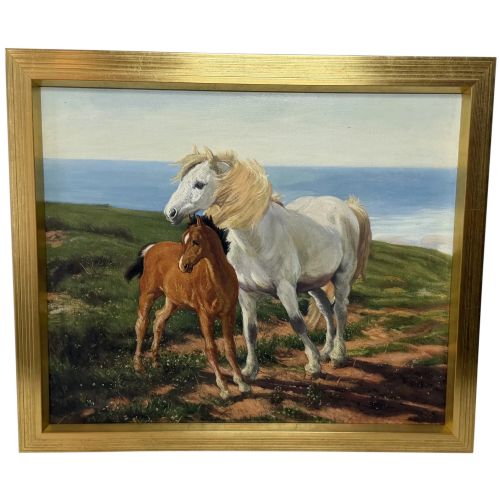
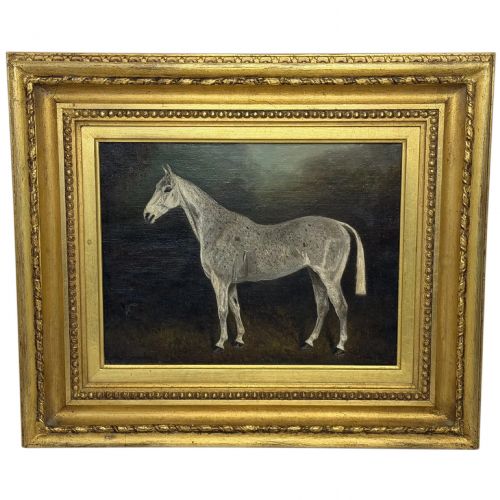
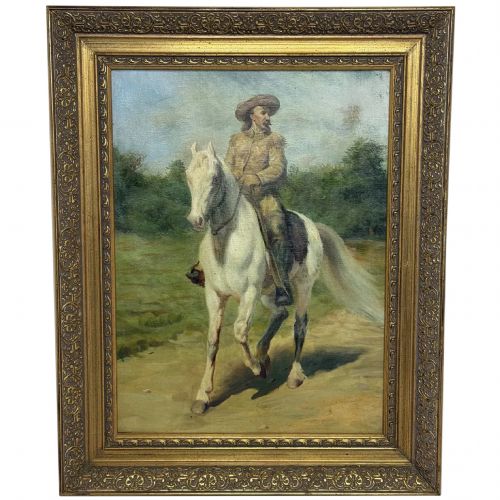
When searching for grey horse artwork, collectors encounter a diverse selection of pieces ranging from 1800 to the mid-twentieth century. The selection spans traditional British sporting scenes, Victorian hunt portraits, and mid-century pastoral compositions.
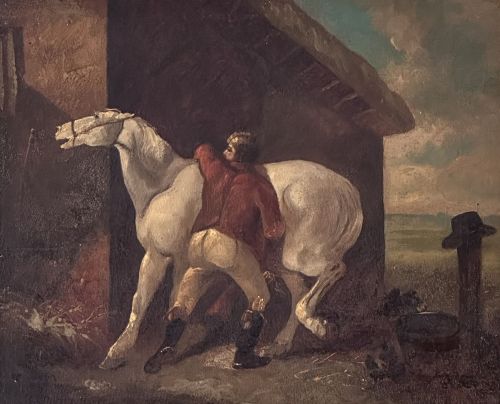
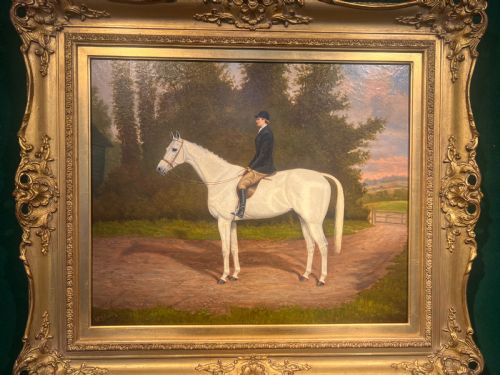
Most pieces on this page are oil paintings or watercolours depicting mares, hunters, and workhorses in stables or open landscapes. These works originate from periods including the Georgian era, the Victorian reign, and the Edwardian decades.
Buyers find individual portraits of named animals like Grisette at Nantwich alongside broader rustic scenes featuring grooms and hounds. The assortment mixes detailed equestrian studies with looser modernist interpretations on canvas and paper.
Materials and techniques
Artists rendering grey horse artwork employed oil on canvas or board to build rich layers of tone, particularly suited to capturing the dappled coats of grey mares and stallions. Watercolour and pastel on paper offered a lighter touch for rapid sketches and detailed rural studies.
Supports range from traditional woven canvas and heavy art paper to prepared wood panels. Pigments were worked with brushes of varying stiffness to define muscular form, harness leather, and the textures of turf and stable straw.
Grey Horse Artwork Retail Price Guide 2026
Typical asking prices for grey horse artwork among the pieces listed under this phrase on Sellingantiques today, from the lower quarter to the upper quarter. They describe what is for sale here now, not the wider market.
Several artists captured horses sharing the frame with terriers, hounds, and carts laden with winter timber.
Factors that distinguish quality
Quality in these equine pieces rests on the artist's command of anatomy, posture, and light across the animal's flank. Superior examples demonstrate a precise understanding of horse movement, bone structure, and the subtle tonal shifts in a grey coat.
Compositional balance and the integration of the animal within its landscape setting elevate a standard rural record into a compelling visual piece. Finer works possess confident brushwork or sure pastel lines that convey weight, temperament, and atmosphere without stiffness.
Thomas Smythe·John Rattenbury Skeaping·Basil Nightingale·Clifton Tomson·William J Hodgson·John Baragwanath King
The Grey Horse Artwork Glossary
- Watercolour
- A paint consisting of pigment suspended in a water-based solution, applied to paper to create translucent washes.
- Oil on Canvas
- A painting medium using pigments bound with drying oils, spread across stretched fabric to allow deep blending and rich texture.
- Equestrian
- Pertaining to horses, horse riding, or the representation of horses in art.
- Pastel
- A dry art medium in the form of a stick, made of powdered pigment and a binder, used on tinted or textured paper.
- Chromolithograph
- A multicoloured print produced through a specialised lithographic process involving multiple stones or plates.
Grey Horse Artwork: Frequently Asked Questions
What subjects appear in these works?
These pieces portray horses in various settings, including stable interiors, hunt gatherings, and rural working environments with grooms or carts.
Many focus on specific named animals or working breeds like hunters and heavy draft horses within British landscapes.
How do I display works on paper?
Works executed in watercolour or pastel require framing behind glass to protect the delicate surface from moisture and physical damage.
Keep them away from direct sunlight to prevent the fading of pigments on paper or board supports.
How are different periods identified?
Dating relies on stylistic clues, framing methods, artist signatures, and the materials used for the support.
Victorian and Georgian pieces often display specific conventions in costume and landscape treatment distinct from mid-century modern interpretations.
Are these pieces original works?
The selection includes unique hand-painted oils and watercolours alongside period prints like chromolithographs.
Each listing specifies the exact medium, whether brush-applied paint or printed ink on paper.