



Grey Harbour Landscape Painting
A grey harbour landscape painting captures misty maritime scenes and bustling coastal quays through muted tones and weathered maritime charm.
Grey Harbour Landscape Painting
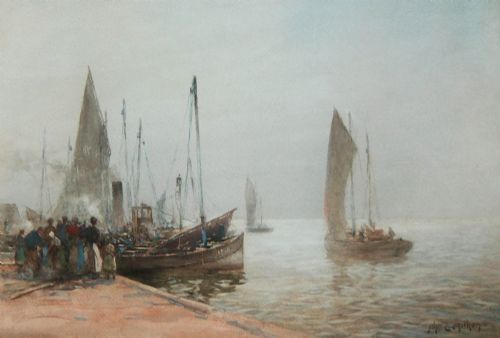
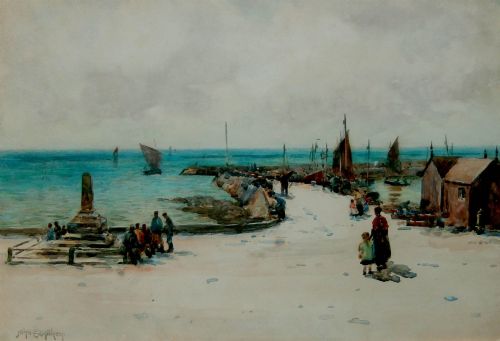
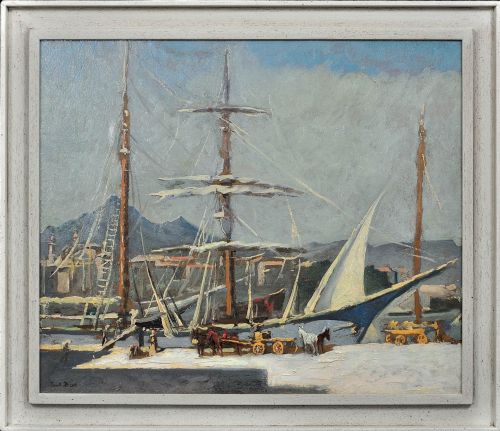
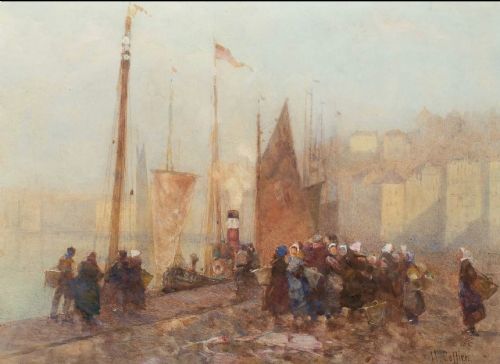
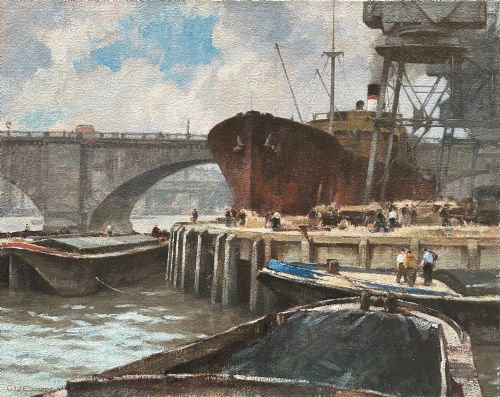
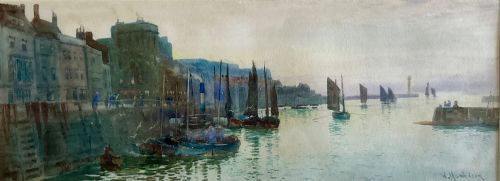
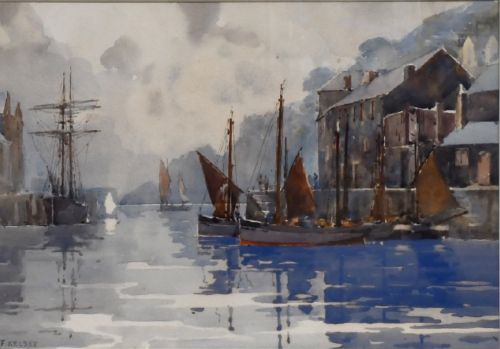
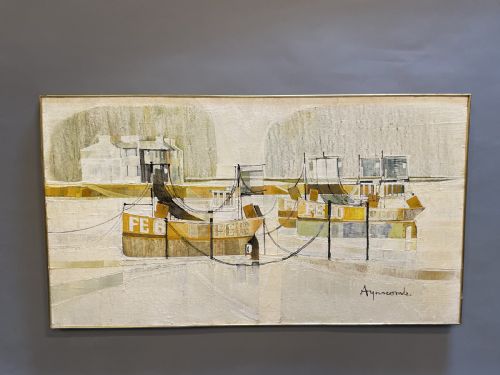
A grey harbour landscape painting depicts coastal waters, piers, and fishing boats rendered in subdued, atmospheric tones. These works capture maritime scenes from British and continental ports, often focusing on moody skies and overcast coastal light.
The selections available here span from the 19th century through the mid-20th century, encompassing Edwardian, Victorian, and mid-century modern aesthetics. Buyers will frequently encounter watercolours and oil paintings on canvas or board depicting familiar fishing ports and industrial waterways.
How they were made
Artists employed watercolour pigment on paper to achieve fluid, translucent washes that mimic grey sea mists and damp coastal air. These watercolours often rely on the white of the paper to generate highlights on churning water and overcast skies.
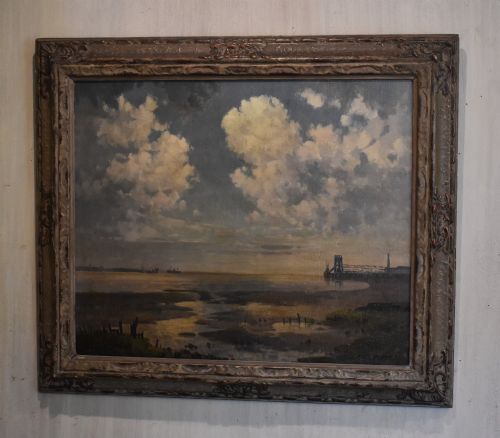
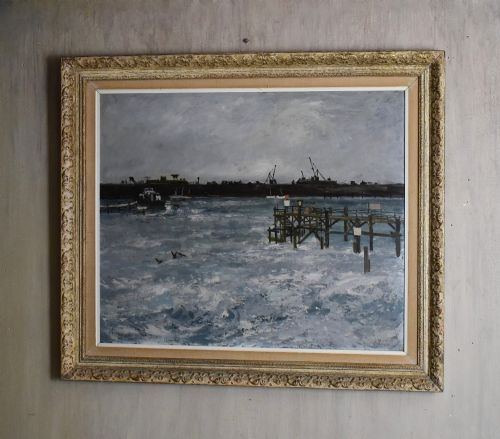
Oil paint was applied to canvas or wood boards, utilising the viscous medium to build textured surfaces representing choppy waves, stone quays, and the dark hulls of moored vessels. This technique allowed painters to layer muted greys, blues, and earth tones for atmospheric depth.
The listings span multiple periods from the 19th century through the 1960s, featuring oil paints, watercolours, canvas, and wood boards.
What varies in quality
The strength of composition and spatial depth separates standard coastal sketches from more compelling works. Stronger pieces use the architecture of the harbour - masts, rigging, and stone walls - to guide the eye across the canvas.
Handling of atmospheric light distinguishes the handling of tone, where subtle gradations of grey create convincing mist, smoke, and overcast weather rather than flat, uniform washes of colour.
James E. Aitken·Clive Browne·Hector Caffieri·William Matthison·Frank Wasley
The Grey Harbour Landscape Painting Glossary
- Watercolour
- A paint consisting of colour suspended in a water-soluble binder, traditionally applied to paper to create transparent washes of tone.
- Oil on Canvas
- A painting technique utilising pigments bound in drying oil applied to a stretched woven fabric surface, allowing for rich texture and blending.
- Post-Impressionism
- An art movement extending beyond Impressionism while retaining its use of vivid or distinct brushwork, focusing on deeper structural expression.
- British Impressionism
- A painting style adopted by British artists focusing on everyday scenes, natural light, and looser brushstrokes during the late 19th and early 20th centuries.
Grey Harbour Landscape Painting: Frequently Asked Questions
What is a grey harbour landscape painting?
These works are maritime artworks focusing on coastal scenes, docks, and shipping rendered in subdued, overcast palettes. They depict ports ranging from British fishing villages to French coastal towns.
Artists used mediums such as watercolour and oil paint to capture the atmospheric conditions of grey seas, misty air, and industrial maritime activity.
How were these marine paintings used?
Historically, these framed watercolours and oil paintings served as interior decoration for homes and maritime offices, celebrating local coastal industries and travel.
Collectors and residents hung them to bring depictions of familiar seaside havens, trading ports, and bustling quays into domestic spaces.
How do I style a marine painting?
These pieces suit both traditional and modern interiors, often placed above mantelpieces or along hallway walls where their muted tones complement neutral colour schemes.
Pairing them with simple wooden or gilt frames helps anchor the artwork within existing room decor without overwhelming the subtle palette.
How do I date an antique painting?
Dating relies on examining the stretcher materials, paper types, framing styles, and the artist's active period recorded on the canvas or reverse.
Signatures, stylistic movements like Post-Impressionism, and specific historical locations depicted in the title also provide reliable chronological markers.