


Vintage French Maritime Art
Vintage french maritime art captures coastal life and naval history across canvases, models, and decorative objects.
Vintage French Maritime Art
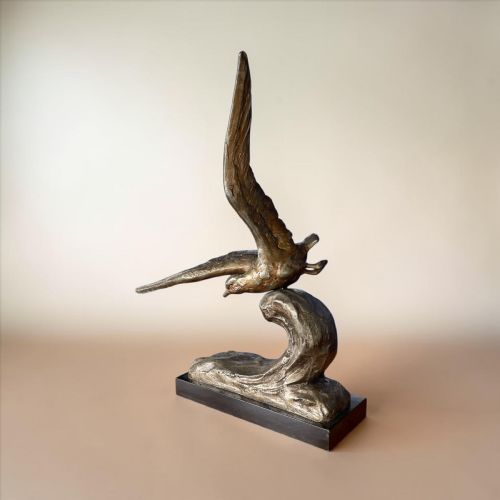
Vintage french maritime art encompasses oil paintings, watercolours, posters, and sculptures focusing on the sea, harbours, and coastal towns of France. Buyers discover works ranging from nineteenth-century academic scenes to mid-century modernist interpretations of Brittany and the Riviera.
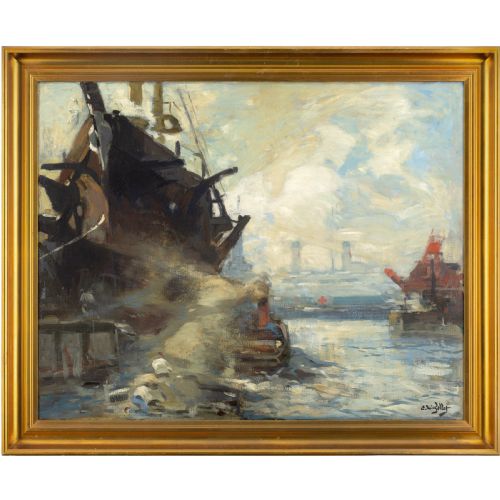
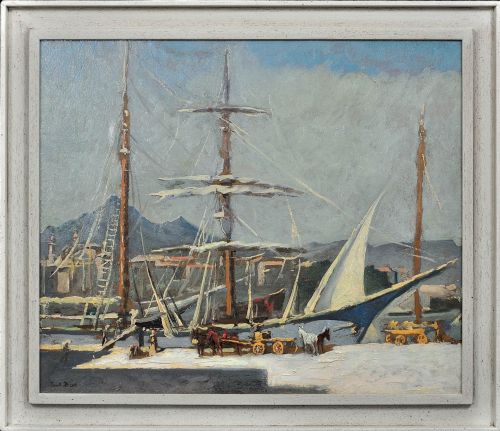
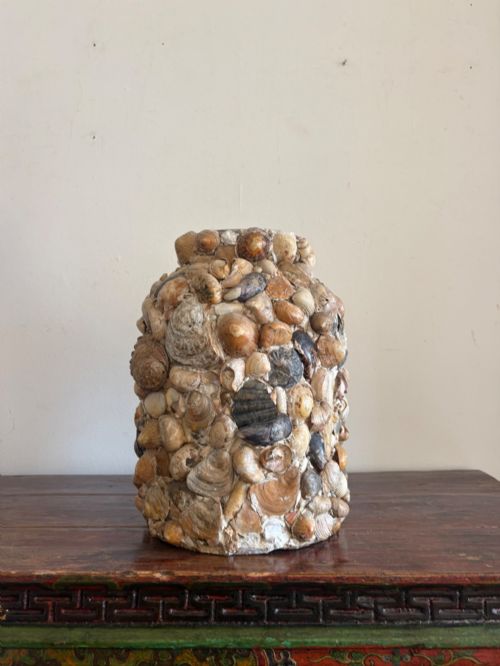
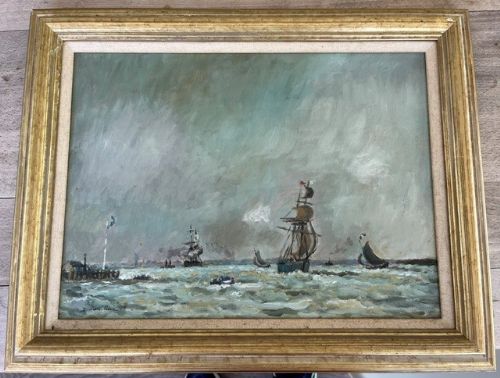
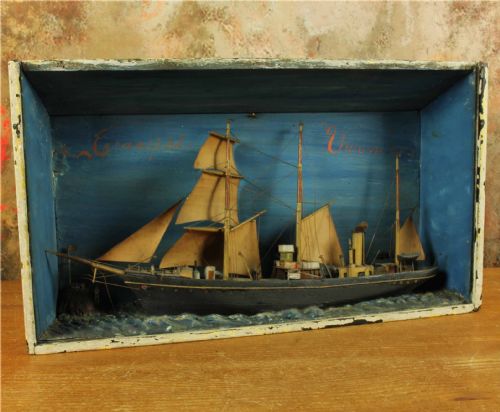
Oil paintings on canvas and board dominate the selection, often depicting bustling ports like Marseille, Le Havre, and Toulon. Alongside flat works appear sculptural items including carved wooden yacht models, shadow box dioramas, and folk art shell-decorated jars.
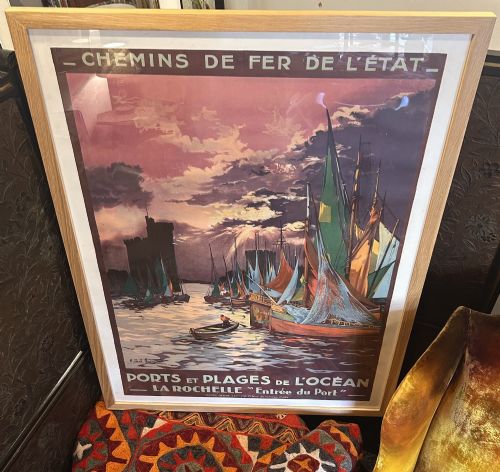
The periods represented stretch from the late nineteenth century through the 1960s, capturing shifts from impressionism and post-impressionism to art deco and mid-century modernism. These pieces reflect a sustained national fascination with coastal industries, sailing vessels, and seaside leisure.
Materials and construction
Canvas, wood, and oil paint form the core physical medium for the pictorial works in this category, accompanied by paper for posters, watercolours, and gouache. Artists utilised impasto techniques to build texture on seascapes, while illustrators employed flat lithographic inks for railway and travel publicity.
Three-dimensional objects display traditional craft methods, utilising carved sycamore, glass, and assembled wooden components housed within glazed shadow boxes. Shell-decorated folk art utilises organic materials cemented onto ceramic or glass vessels to create intricate coastal souvenirs.
Listings feature oil paintings on canvas and board alongside watercolours, gouache works, posters, shadow box dioramas, and decorative shell jars spanning the 1880s to the 1960s.
Assessing quality in maritime pieces
The strength of composition and brushwork distinguishes accomplished studio paintings from standard topographical records. Superior canvases demonstrate a confident handling of coastal light and atmospheric perspective, particularly in impressionist and post-impressionist depictions of water and sky.
Physical preservation and original framing significantly influence the standard of surviving works. Items retaining their period glass, unblemished oil surfaces, and untouched structural elements command greater appreciation among collectors than heavily restored examples.
Eugène-Louis Gillot·Paul Bret·Elisabeth Bardon·Louis Suire·Jean-Baptiste Olive·Raymond Picque·William Lee Hankey·Fred Pailhes·Armand Guillaumin·Charles Euphrasie Kuwasseg·Henri Cadiou
The Vintage French Maritime Art Glossary
- Impasto
- Paint applied thickly to a canvas, standing out in relief from the surface. This technique allows artists to capture the physical churn of waves and the texture of maritime clouds.
- Diorama
- A three-dimensional scene enclosed within a case or shadow box. In maritime contexts, these typically house handmade model boats accompanied by painted backdrops.
- Post-Impressionism
- An artistic movement following impressionism that explored emotional response and structural form rather than purely optical effects. Painters in this style used expressive brushwork for coastal scenes.
- Gouache
- An opaque water-based paint producing a flat, matte finish. It appears frequently in nineteenth and early twentieth-century coastal studies and sailor tributes.
Vintage French Maritime Art: Frequently Asked Questions
How do I identify a 19th-century French marine painting?
Nineteenth-century works generally display traditional academic rigging details, darker tonal palettes, and subjects focused on ironclads, merchant barques, or historic ports. Signatures are often accompanied by period framing techniques.
Examining the reverse of the canvas or board may reveal nineteenth-century framer stamps, inventory numbers, or exhibition labels that help confirm the era of production.
What is a ship diorama?
A ship diorama is a handmade model boat enclosed within a wooden or glazed box, often incorporating a painted canvas backdrop of the sea and sky. French sailors and coastal craftsmen produced these detailed tributes.
The enclosed format protected fragile rigging and delicate components from dust and damage in domestic settings.
How should I display maritime art at home?
These pieces suit spaces with natural light that complements coastal palettes, particularly studies of Brittany and the Riviera. Oil paintings benefit from wall placement away from direct heat sources to protect the canvas and paint layers.
Three-dimensional items like yacht models or shell jars require stable surfaces such as sideboards or mantels where their structural details remain visible from multiple angles.
What subjects are common in mid-century French marine art?
Mid-century works shift away from strict naval documentation toward expressive interpretations of harbours, fishing boats, and abstract coastal rhythms. Artists working through the 1940s and 1950s focused on simplified forms and Mediterranean light.
Scenes of unloading ships, regattas, and quiet quaysides reflect the period's interest in post-impressionist and modern aesthetic languages.