

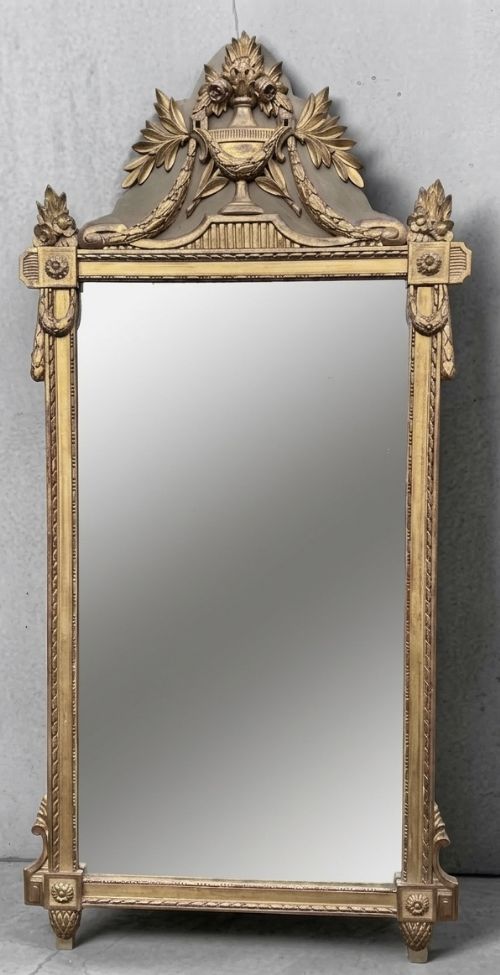
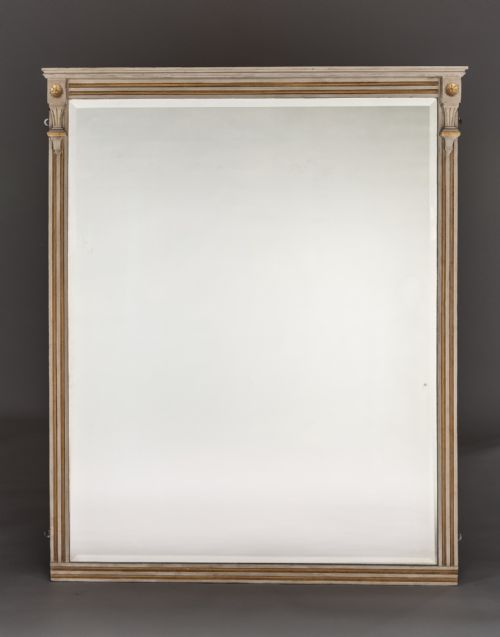


Grey Gilt Mirror
A grey gilt mirror brings architectural depth and reflective light to a room, offering the weathered elegance of painted timber warmed by gold leaf.
Grey Gilt Mirror
When you search for a grey gilt mirror, you are looking at wall and overmantel looking glasses that combine painted grey surfaces with gilded highlights. These pieces span the nineteenth century, drawing on French and English traditions of interior decoration.
You are most likely to meet large Victorian overmantels and French trumeau mirrors on this page. They range from cushion mirrors with carved wood and gesso frames to substantial mantel pieces featuring decorative relief panels.
The styles represented lean heavily towards the neoclassical and the revival tastes of the nineteenth century. Makers of the period utilised painted finishes alongside parcel gilt details to frame mercury glass plates.
How they were made
Frames are constructed from wood, frequently enhanced with moulded gesso to build up decorative reliefs and scrolling motifs. Carved timber serves as the foundation for both English overmantels and French trumeau mirrors.
The surfaces receive a painted grey ground, often applied in layers, combined with parcel gilt or gold leaf applied to raised details. Mercury glass provides the reflective plate in period examples, offering a characteristic mottled depth.
Grey Gilt Mirror Retail Price Guide 2026
Typical asking prices for grey gilt mirror among the pieces listed under this phrase on Sellingantiques today, from the lower quarter to the upper quarter. They describe what is for sale here now, not the wider market.
The listings span the nineteenth century, featuring styles from Louis XV Rococo to Victorian Neoclassical.
What varies in quality
Quality rests in the crispness of the carved wood and gesso ornaments against the painted ground. Finer examples display hand-carved relief panels and well-balanced proportions that suit high mantelpieces.
The integrity of the original paint and gold leaf separation distinguishes standard production from superior work. Original mercury glass plates with natural foxing hold greater appeal than modern replacements.
The Grey Gilt Mirror Glossary
- Trumeau mirror
- A decorative wall glass set into a wood-paneled wall or featuring an upper painted or carved panel above the glass. These originate largely from French interior design traditions.
- Overmantel mirror
- A large horizontal looking glass designed specifically to hang above a fireplace mantel. They often feature extended frames to anchor the visual weight of a chimney breast.
- Parcel gilt
- A decorative technique where only specific raised details, carvings, or mouldings of an object are gilded with gold leaf. The remaining surface is painted, in this case with grey pigment.
- Gesso
- A plaster-like mixture applied to wood frames and carved to create relief ornament before gilding or painting. Its smooth surface accepts fine detail work.
- Mercury glass
- A silvered glass type produced in the nineteenth century by pouring a liquid mercury amalgam between double-walled blown glass. It creates a distinctive cloudy and reflective surface.
Grey Gilt Mirror: Frequently Asked Questions
Where should I hang a grey gilt mirror?
These mirrors suit placement above a fireplace mantel or as a focal point on a principal living room wall. Their height and reflective surface help bounce natural light around the space.
Ensure the wall structure can support the weight of substantial wood and gesso frames, particularly for large Victorian overmantels.
How do I identify a nineteenth century mirror?
Look for construction indicators such as hand-cut timber joinery, heavy gesso ornament, and original backboards. Mercury glass plates often show characteristic spotting and dark oxidation spots known as foxing.
Stylistic cues like Louis XVI neoclassical lines or Victorian classical revival motifs also point to nineteenth century origins.
Are the glass plates original?
Many nineteenth century mirrors retain their original mercury glass plates, identifiable by uneven reflection and atmospheric foxing. Some pieces have received replacement mirror plates over time for clearer reflection.
Check the silvering on the reverse and the edges of the glass for signs of age and wear.
How do I care for the painted and gilded surface?
Dust the frame gently with a dry, soft cloth to prevent buildup on the gesso and carved details. Avoid liquid cleaners or chemical polishes that can damage the fragile gold leaf and painted grey finish.
Keep the mirror away from direct moisture and extreme temperature fluctuations to protect the antique wood.