


Grey Coastal Painting
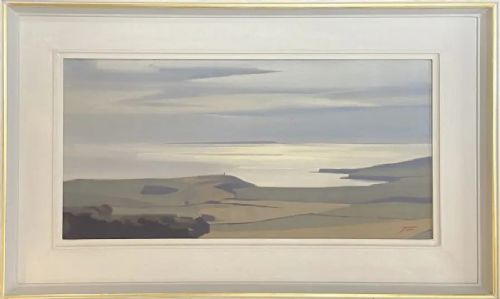
A grey coastal painting captures the subdued light and moody maritime weather of British and European shores through the decades.
Grey Coastal Painting
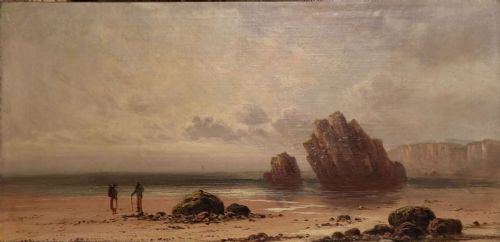
A grey coastal painting is a marine artwork focusing on beaches, harbours, cliffs, and shipping lanes rendered in muted tones. You will most frequently encounter works dating from the nineteenth century through to the mid-twentieth century.
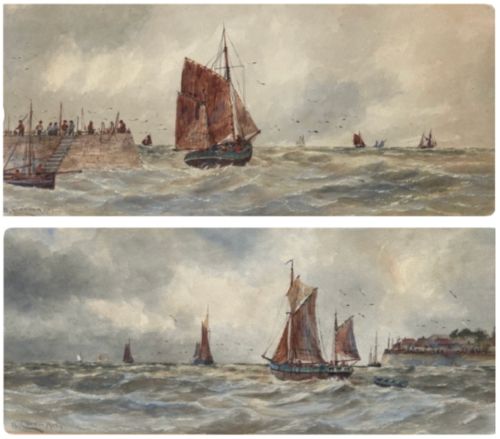
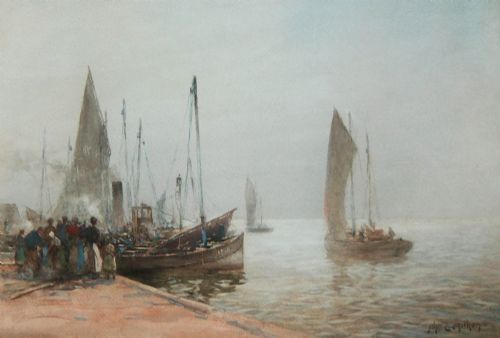
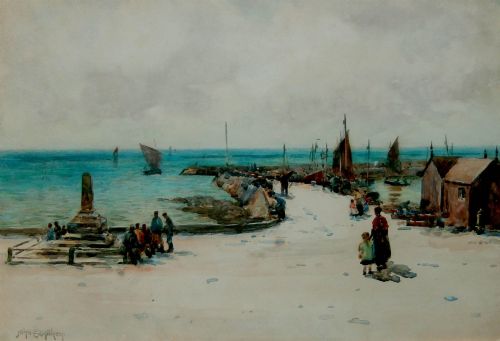
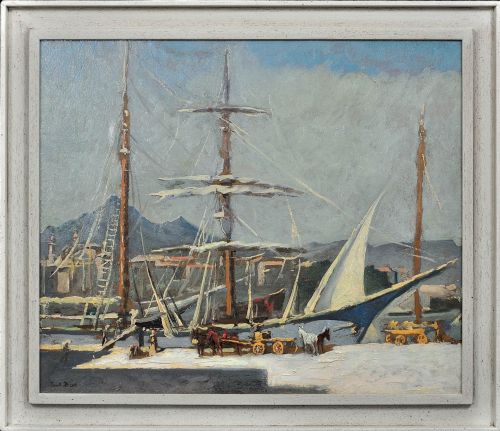
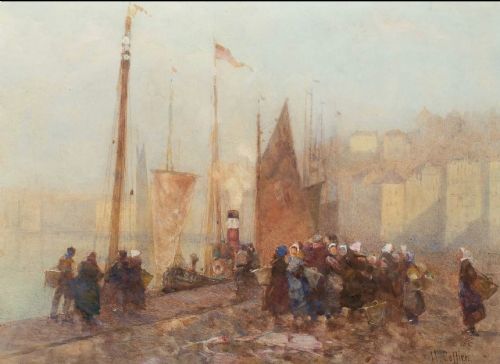
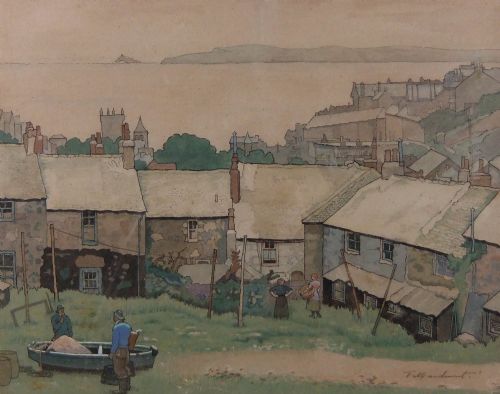
The pieces on this page span Victorian maritime scenes and Edwardian watercolours to mid-century modern and British Impressionist interpretations. They portray specific locations ranging from Yorkshire fishing ports and Scottish castles to French and Italian harbours.
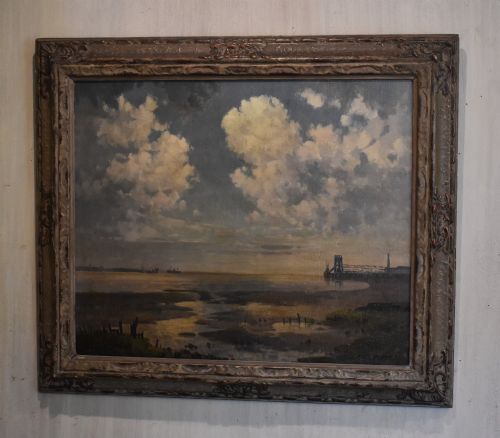
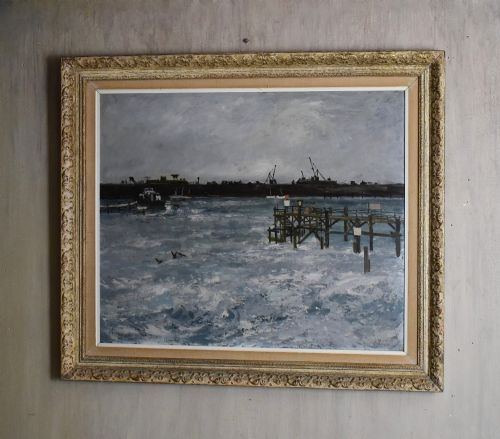
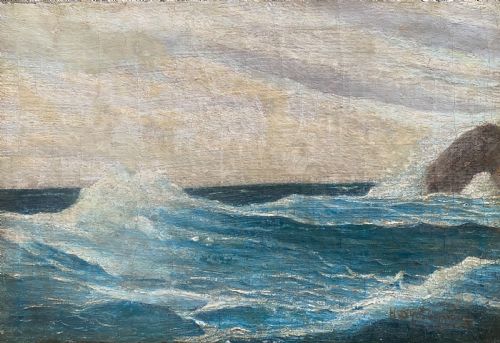
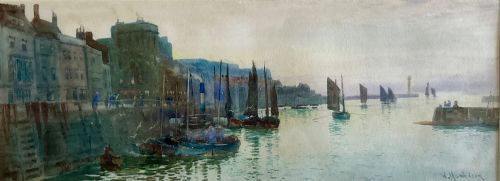
These works capture the atmospheric qualities of the sea rather than bright holiday weather, often showing overcast skies, choppy waters, and working boats. They take the form of watercolours on paper and oil paintings on canvas or board, framed for preservation.
How they were made
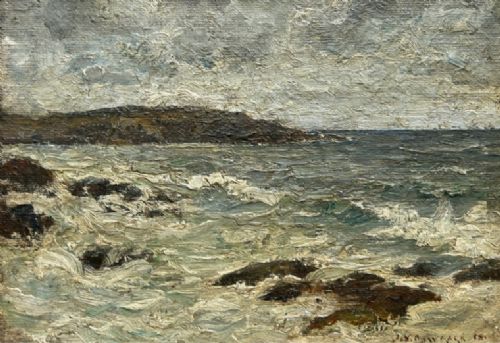
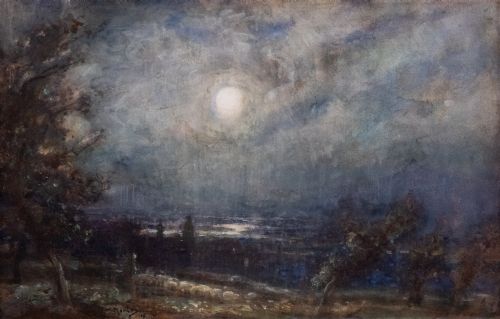
Artists painted these scenes utilising oil paint or watercolour pigment applied to canvas, stretched board, or heavyweight paper. Oil paints allowed for thick, textured impasto strokes that built up the weight of heavy seas and rocky shores.
Watercolour works relied on washes and precise brushwork to capture the translucent quality of overcast light on water and sand. Supports included traditional wood panels and framed canvases, often protected beneath glass when executed on paper.
The inventory records coastal views from British, French, Italian, and Norwegian waters by named artists and regional painters.
What varies in quality
Quality in these works rests on the artist's ability to command atmospheric depth and movement with limited tonal ranges. The handling of light on slate-grey water and the surety of the brushwork separate accomplished plein-air studies from routine studio output.
Provenance and documentation also distinguish the works, as signed pieces with identified geographical locations or recorded artist exhibitions carry greater historical weight. The integrity of the original period framing and the preservation of the pigment further define the standing of each piece.
Kenneth Cozens·William Cannon·James E. Aitken·John E. Aitken·Thomas William Morley·Clive Browne·Peter Brannan·Paul Bret·Hector Caffieri·James Fry·Thomas Maidment·Dubovsky·William Matthison·Frank Kelsey·John Moxon·Charles William Adderton·Raymond Picque·Thomas Bush Hardy·Ernest Dade·Edward Seago·Arthur Tucker·Robert Leslie Howey·Herbert Royle·Tom Clough·William Greaves
The Grey Coastal Painting Glossary
- Impasto
- Paint applied thickly to a canvas or board, standing out in relief to give texture to crashing waves or rocky cliffs. This technique adds physical depth and catches light across the surface of the work.
- Seascape
- A painting depicting the sea, coastal views, shipping, and maritime activities. It forms the primary subject matter for these coastal works.
- Watercolour
- A painting method in which the paints are made of pigments suspended in a water-based solution. Artists use it on paper to achieve luminous, transparent effects.
- Provenance
- The chronology of the ownership, custody, or location of a historical artwork. A clear provenance helps confirm the authenticity and attribution of the piece.
- Sea stack
- A geological landform consisting of a steep and often vertical column or columns of rock in the sea. They frequently appear as dramatic focal points in nineteenth-century coastal compositions.
Grey Coastal Painting: Frequently Asked Questions
What periods do these paintings cover?
The listings span from the early nineteenth century through the Victorian era and the Edwardian period into the mid-twentieth century.
They reflect shifts in British and European art movements, moving from traditional maritime documentation towards Impressionism and mid-century modernism.
Where were most of these scenes painted?
Many depict British coastal locations, including Yorkshire fishing villages, Scottish castles, and southern English harbours.
Others record European shorelines in France, Italy, and Norway, capturing working boats and maritime traffic.
How should I care for a watercolour coastal painting?
Watercolour works on paper require protection from direct sunlight to prevent fading of the pigments and yellowing of the paper.
They should be framed behind glass with acid-free mounts and kept in rooms with stable humidity levels.
What is the difference between an oil and watercolour coastal painting?
Oils are painted on canvas or board using heavy, pigmented paint that allows for textured brushwork and deep impasto waves.
Watercolours utilise pigment on paper, producing lighter, more translucent depictions of light, mist, and sea spray.