


Coastal Village Artwork
Coastal village artwork brings harbours, fishing boats and cliffside cottages straight into your home through the eyes of Victorian, Edwardian and mid-century painters.
Coastal Village Artwork
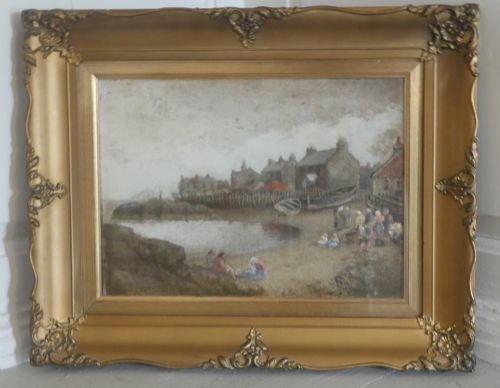
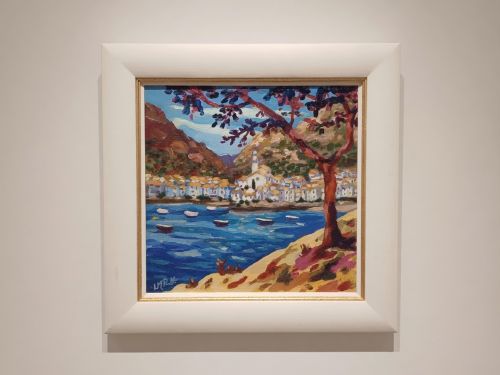
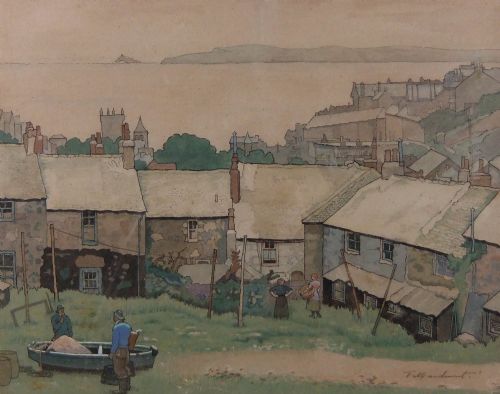
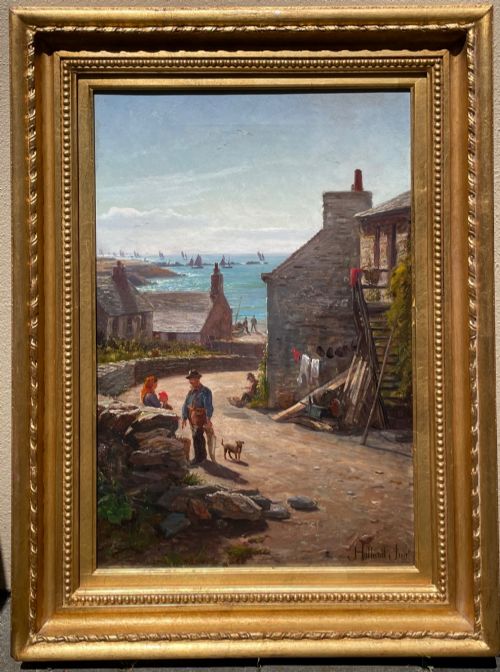
When you search for coastal village artwork, you encounter paintings and watercolours that capture maritime settlements, harbours and fishing communities from the nineteenth century onwards. These works range in style from Victorian realism and the Newlyn and St Ives schools to British impressionism and later twentieth-century interpretations.
The subjects span specific locations across Britain and beyond, including St Ives, Staithes, Polperro, Port Erin, and Arabian landscapes. You find scenes showing fishing boats, harbour walls, cliffs, and daily coastal life recorded in media that have survived across the decades.
How they were made
Artists created these works utilising oil paint on canvas or wood panels, as well as watercolour and gouache on paper. Many watercolours and drawings benefit from protective glass framing, preserving the delicate pigments of nineteenth and twentieth-century coastal views.
Makers applied oil paint with varied brushwork to render sea spray, stone harbours and fishermen, while watercolourists employed fluid washes on paper to capture changing light over sea and shore.
Donkeys appear quietly by the water's edge in North Wales, sharing the coastline with bustling fishing fleets.
What varies in quality
Quality depends on the surety of the draughtsmanship and the artist's ability to render atmospheric light, whether portraying a bustling Yorkshire harbour or a quiet Manx port. Stronger pieces show confident handling of medium, from crisp watercolour washes to richly textured oil on canvas.
The distinction also lies in the historical and regional significance of the school or artist, with works associated with recognised groups such as the St Ives or Newlyn painters offering deeper artistic context.
Edward Mills·Lucy Pratt·Thomas Maidment·John Holland·George Turland Goosey·Arthur Tucker·James Watson·George Gregory·John McDougal·Percy Brooke·William Lee Hankey·Denys Garle·Carleton Grant·John J. Hamer
The Coastal Village Artwork Glossary
- Watercolour
- A painting method in which the paints are made of pigments suspended in a water-based solution. Paper serves as the primary support for these transparent washes.
- Gouache
- An opaque water-based paint that includes a white pigment added to the mixture, creating solid areas of colour and sharp highlights on paper.
- Impressionism
- A style of painting that focuses on the accurate depiction of light and its shifting qualities. British practitioners adapted these principles to coastal and rural subjects.
- Newlyn School
- An art colony of painters based in Cornwall during the late nineteenth and early twentieth centuries. They favoured plein-air realism depicting local fishing communities.
- St Ives School
- An association of artists working in the Cornish coastal town, embracing both traditional marine painting and later modernist developments.
Coastal Village Artwork: Frequently Asked Questions
What periods do these pieces date from?
The works span from the Victorian era and the nineteenth century through Edwardian times and the mid-twentieth century.
Later works extend past nineteen sixty, reflecting evolving styles in British painting.
Where were these coastal scenes painted?
Artists painted locations around the British Isles, including Yorkshire, Cornwall, Scotland, Wales, and the Isle of Man.
Selected works also depict international subjects such as Arabian landscapes.
How should I care for a watercolour?
Watercolours on paper require protection from direct sunlight to prevent the fading of delicate pigments.
Displaying them behind glass in stable indoor environments helps preserve the paper and medium.
What is the difference between oil and watercolour here?
Oil paintings utilise oil paint applied to canvas or wood, offering textured brushwork and robust surfaces.
Watercolours use water-soluble pigments on paper, producing lighter, transparent effects that usually require glazing.