


Green Wool Runner
A green wool runner brings depth and texture to a hallway, offering a durable and grounding foundation for high-traffic floors.
Green Wool Runner
When you search for a green wool runner, you are exploring long floor coverings designed to traverse narrow spaces like corridors, stairs and galleries. The selection spans various historical periods including the seventeenth, eighteenth and nineteenth centuries, alongside pieces from the early twentieth century.
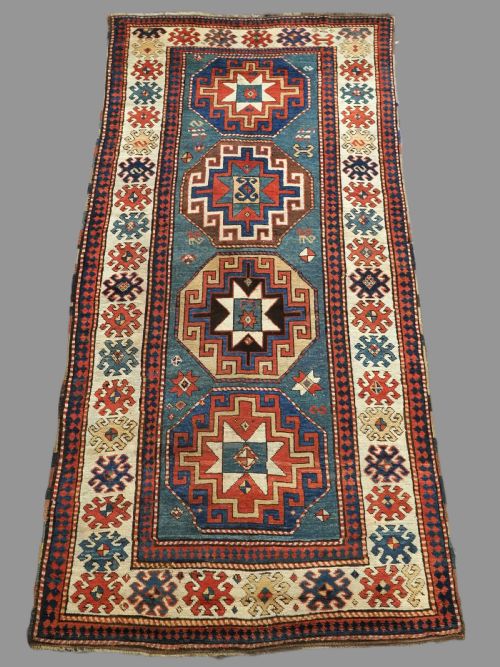
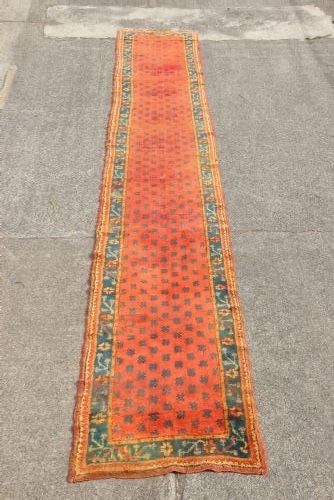
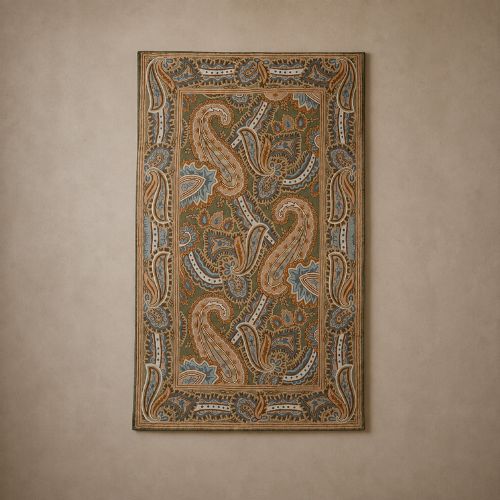
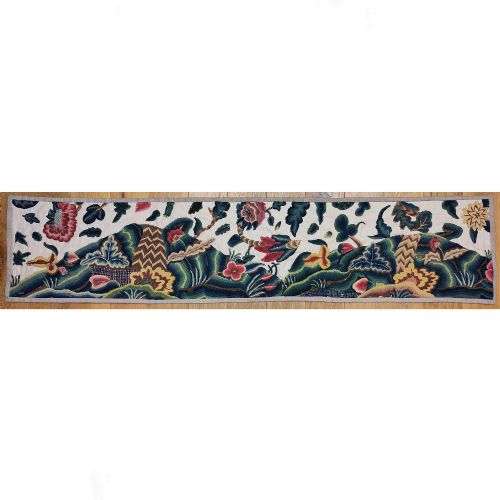
The objects presented here encompass diverse regional traditions and forms, ranging from Turkish Oushak and Anatolian prayer rugs to Caucasian Kuba and Seychour carpets, as well as European tapestry panels and crewelwork textiles. While the search points specifically to wool, the broader category includes wool combined with cotton, linen, jute and burlap across runner rugs and wall hangings.
Buyers are most likely to encounter antique room-size carpets and tribal runners that share similar dimensions or colour palettes, reflecting the widespread use of olive green backgrounds and traditional regional dyeing techniques in historical textile production.
Factors of quality
Quality in these textiles depends heavily on the fineness of the weave, the integrity of the foundation materials and the precision of the design execution. Tighter knots and denser wool piles generally indicate greater durability and a higher standard of craftsmanship.
The depth and complexity of the regional motifs, from Caucasian geometric patterns to Anatolian floral fields, distinguish standard workshop production from exceptional examples. Preservation of the original edges, pile height and natural dye saturation further separates superior specimens from heavily worn pieces.
Several textiles double as wall hangings, proving that centuries ago, people also grew tired of cold stone walls.
The Green Wool Runner Glossary
- Runner
- A long, narrow carpet format traditionally used in hallways, corridors and on staircases. These pieces balance proportions to fit restricted architectural spaces.
- Kilim
- A flat-woven carpet or rug produced without a pile, common in Anatolian and Bessarabian traditions. These textiles feature crisp geometric designs resulting from the slit-weave technique.
- Pile
- The upright or looped yarn that forms the soft surface of a carpet. Density and length of the pile influence both comfort and wear resistance.
- Crewelwork
- A type of embroidery executed with wool yarn on a linen or cotton ground. Historic panels often depict elaborate floral and paisley motifs.
- Warp
- The stationary lengthwise threads stretched on a loom prior to weaving. The foundation provides structural stability for the finished textile.
Green Wool Runner: Frequently Asked Questions
Where should I place a long runner?
These narrow floor coverings suit corridors, entrance halls and narrow passages where furniture is absent. They protect wooden floorboards while softening acoustics in high-traffic areas.
Ensure you measure both the length and width of your hallway carefully, leaving an even border of exposed floor around the perimeter for a balanced appearance.
How do I care for antique wool textiles?
Regular gentle vacuuming without a rotating brush prevents dust accumulation within the wool pile. Professional cleaning suited for historic textiles maintains the integrity of the natural fibres.
Keep these pieces out of direct sunlight to prevent fading of the dyed wool, and rotate them periodically to ensure even wear across the surface.
What is the difference between a kilim and a carpet?
Kilims are flat-woven textiles without a raised pile, created by interlocking coloured weft threads through the warp. Carpets feature a dense, knotted pile that stands upright from the foundation.
Because they lack pile, kilims have a thinner profile and smoother texture, whereas piled carpets offer greater cushioning underfoot.
How can I identify the origin of an antique rug?
Origin is determined by studying specific stylistic motifs, knotting structures, colour palettes and finishing techniques characteristic of particular weaving regions. Caucasian, Anatolian and Persian pieces each display distinct geometric or floral vocabularies.
Comparing the border designs and structural materials helps narrow down whether a piece originates from the Caucasus, Turkey or wider European workshops.