
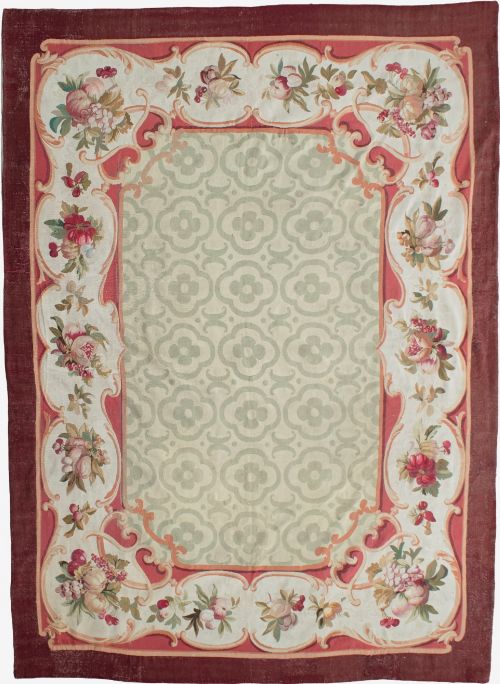


Green Wool Area Rug
A green wool area rug brings organic colour and dense texture into a room, drawn from historic carpet traditions spanning Anatolia, Persia, and Europe.
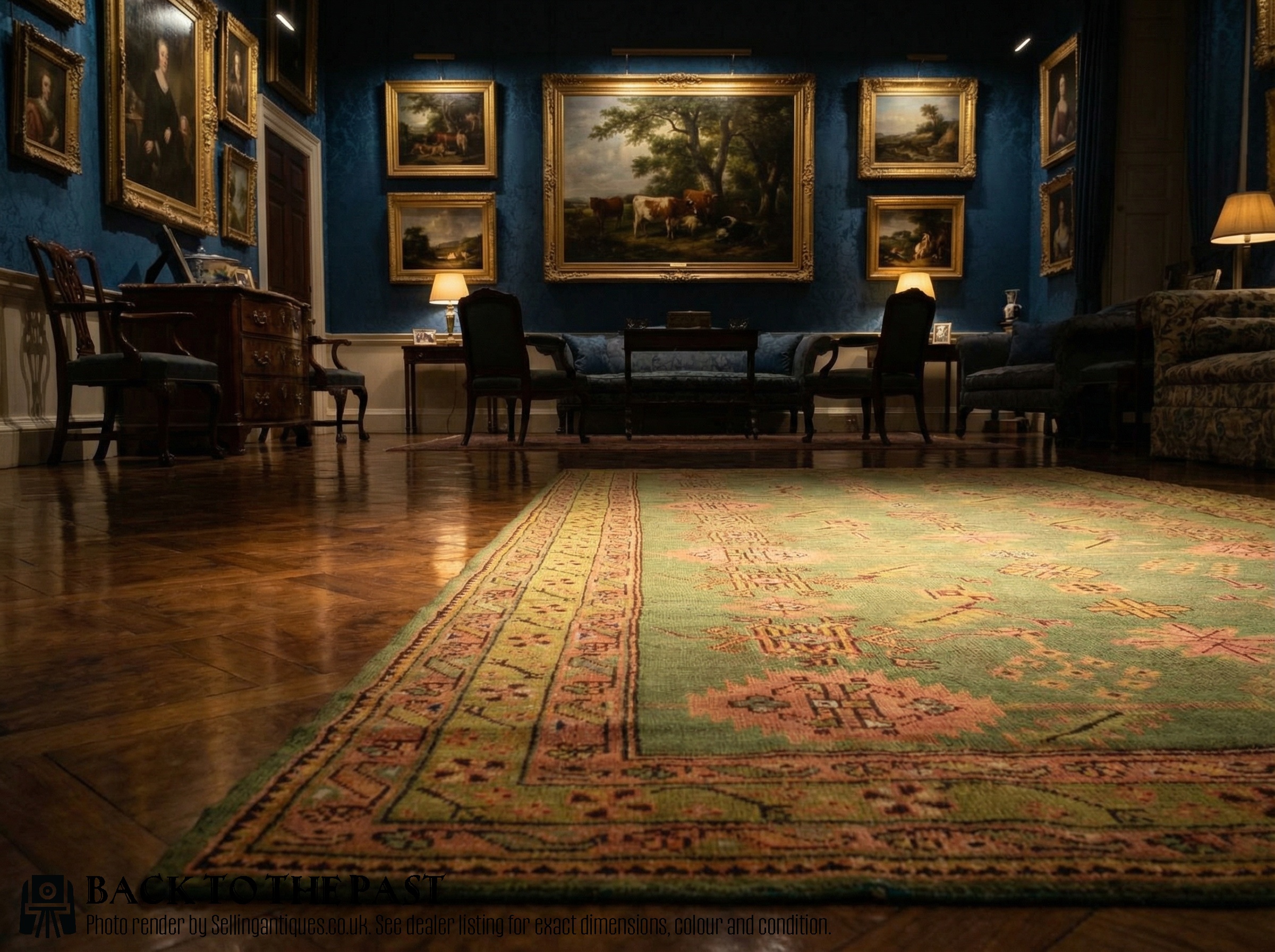
Green Wool Area Rug
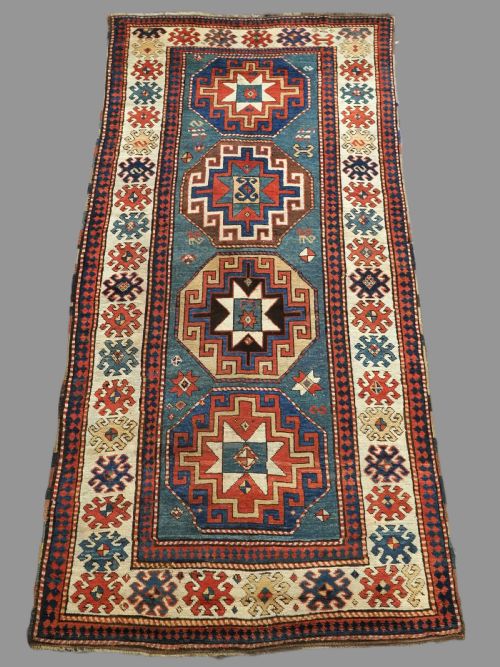
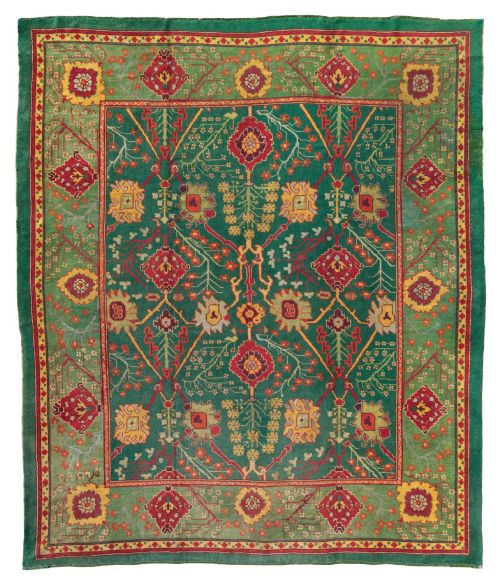
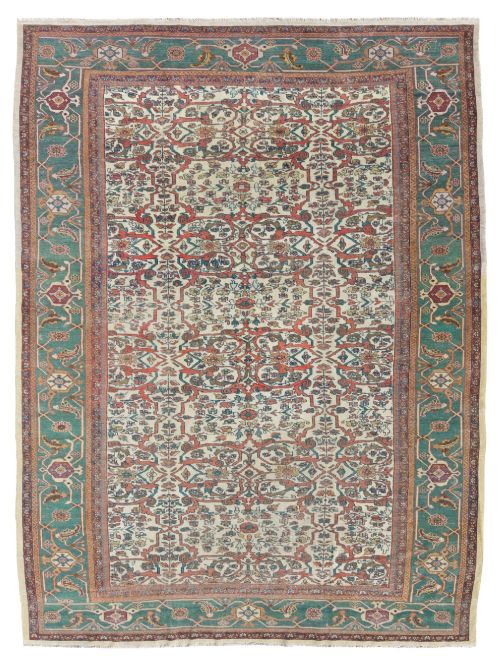
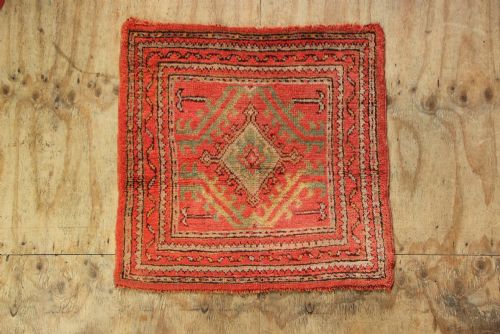
A green wool area rug encompasses antique woven floor coverings from diverse origins including Ushak, Mahal, Sultanabad, and Caucasian weaving centres. These pieces range from compact village prayer rugs to large salon carpets produced across the nineteenth and early twentieth centuries.
Buyers searching for a green wool area rug encounter varied formats such as square Oushaks, runner proportions, and room-size Persian carpets. The selection draws on materials including wool, cotton, and angora wool, reflecting traditional regional weaving techniques.
How They Were Made
These textiles are constructed primarily from wool and cotton, utilising hand-knotted and flatweave techniques handed down through generations of regional artisans. Natural fibres form the pile and foundation, ensuring durability and structural integrity across centuries of use.
Dyers employed natural sources to achieve distinct ground colours, producing characteristic pistachio, aquamarine, and deep green fields that define many regional styles. Wewers incorporated structural foundations of cotton alongside wool pile to stabilise intricate geometric and floral compositions.
Listings feature periods spanning from the eighteenth century through the 1920s, utilising wool, cotton, and angora wool across numerous regional styles.
What Varies in Quality
Quality rests in the precision of the weave and the depth of the dye work, separating standard village productions from master workshop carpets. The choice of wool, such as fine angora wool, alters the handle and visual lustre of the pile significantly.
The sophistication of the design execution and the scarcity of specific ground colours dictate the standing of individual pieces. Well-balanced proportions and retained pile integrity elevate certain carpets above comparable examples from the same period.
The Green Wool Area Rug Glossary
- Kilim
- A flatwoven carpet or rug produced without a pile, common in Anatolian and Bessarabian traditions. These pieces rely on interlocking weft techniques to create crisp geometric patterns.
- Prayer rug
- A small format rug featuring a mihrab or niche design, historically used for individual devotion. Examples often originate from Ghiordes, Kayseri, and other Anatolian weaving centres.
- Pile
- The vertical or slanted yarn surface of a carpet that forms the soft upper layer. It is created by knotting wool or angora yarn around the foundation warps.
- Field
- The central background area of a carpet enclosed by the borders. In these pieces, the field frequently displays scarce green, pistachio, or aquamarine colourways.
Green Wool Area Rug: Frequently Asked Questions
Where were these rugs made?
These carpets originate from traditional weaving regions including Anatolia, Persia, the Caucasus, India, and European centres like France and Spain. Each area developed distinct regional motifs and knotting structures over centuries.
Production methods varied from nomadic village workshops to large commercial manufactories in cities like Ushak, Mahal, and Amritsar. This diverse geography yields a wide range of aesthetic traditions.
How do I care for wool rugs?
Wool rugs require gentle regular vacuuming without a rotating brush bar to protect the delicate pile and foundation fibres. Professional cleaning by specialists in antique textiles is essential for maintaining the integrity of natural dyes.
Positioning the rug away from direct, harsh sunlight prevents the fading of green and botanical ground colours. Using an appropriate underlay reduces friction between the floor and the woven foundation during daily use.
What styles are available?
Available styles span Ottoman Turkish, Persian, Caucasian, and European designs, incorporating both geometric village patterns and elaborate floral compositions. Pieces range from Karabov and Kazak tribal formats to classical Sultanabad and Ziegler carpets.
Specific regional subgroups include Oushak, Ghiordes prayer rugs, and Arts and Crafts productions from Donegal. This variety allows for integration into diverse interior spaces.
How are periods identified?
Periods are determined through a careful examination of structural materials, knot density, dye analysis, and stylistic conventions specific to known workshops. Nineteenth and early twentieth-century pieces often display characteristic wear patterns and regional wool qualities.
Stylistic markers, such as specific medallion layouts or border arrangements, link individual rugs to established manufacturing eras like the late eighteenth or late nineteenth century.