




Green Woodland Landscape Artwork
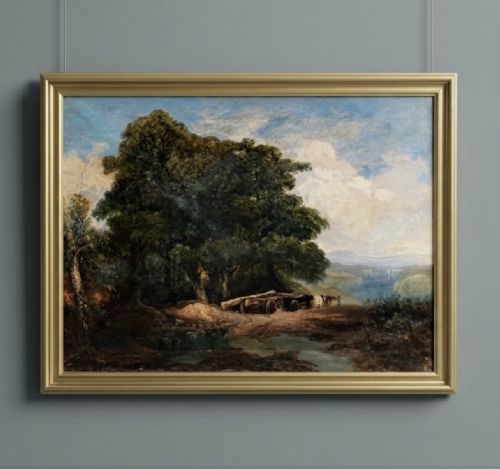
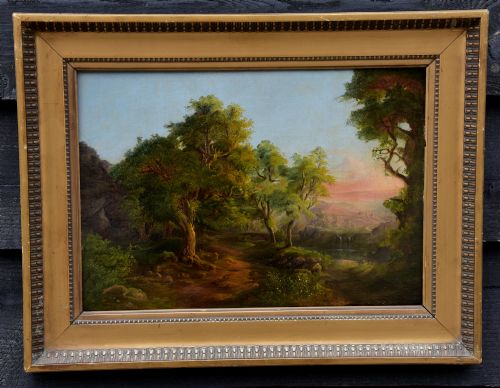
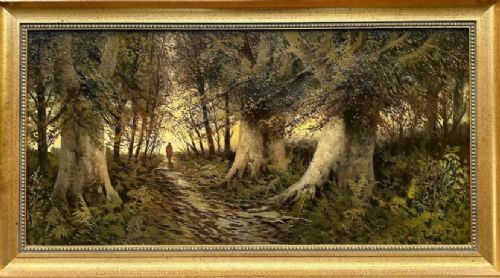
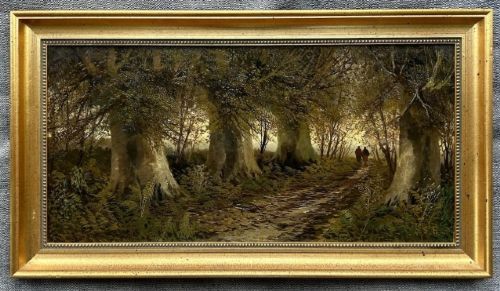
Green woodland landscape artwork brings the quiet of the forest indoors through centuries of painted trees and dappled light.
Green Woodland Landscape Artwork
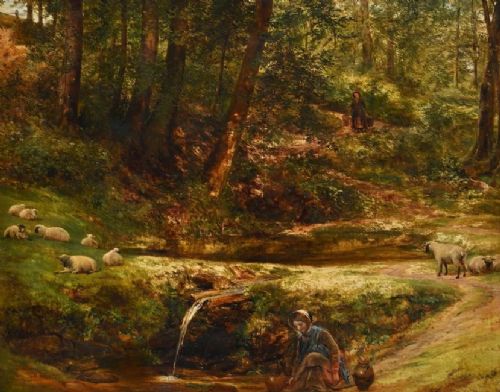
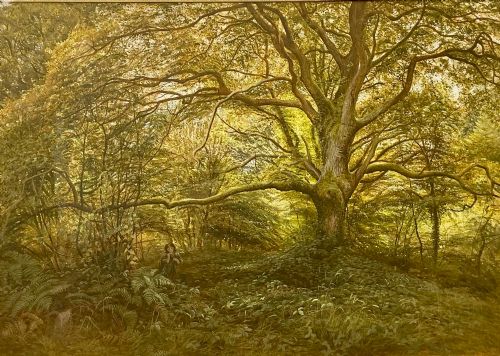
Green woodland landscape artwork captures trees, paths, and forest floors across oils, watercolours, and collotypes. Buyers searching this phrase encounter nineteenth-century romantic oils alongside early twentieth-century watercolours and mid-century interpretations.
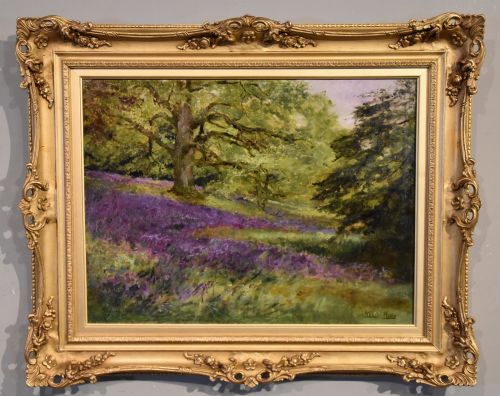
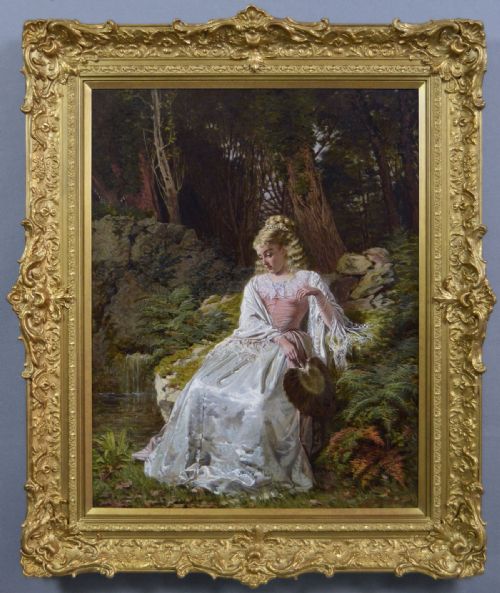
The works span Victorian forest scenes, British Impressionism, and Edwardian views of bluebells and sunlit glades. Canvases and boards dominate the selection, often signed by listed artists who recorded the British countryside.
How they were made
Painters applied oil paint to stretched canvas, wooden board, or thick paper, building texture with brushwork and palette knives. Watercolours on paper utilise fluid washes of pigment to capture transparent light through leaves and branches.
Makers framed these scenes in wood, sometimes incorporating gold leaf accents to catch the room's illumination. Early twentieth-century examples also include collotype prints reproducing detailed forest imagery.
Materials across these listings include canvas, wood, paper, gold leaf, oil paint, and watercolour.
What varies in quality
Quality rests upon the artist's handling of light and depth within the wooded canopy. Stronger works command attention through confident brushstrokes and harmonious tonal balances of green and brown.
The stability of the canvas, the preservation of the original paint layer, and the clarity of the watercolour wash distinguish finer creations from simpler decorative views.
Richard Sebastian Bond·William H Myers·Thomas W Lascelles·Richard Redgrave·Bonomi Edward Warren·Henry Yeen King·Thomas Bromley Blacklock·Thomas Edward Roberts·James Mallard Bromley·Henri Joseph Harpinies·John Wright Oakes·James Proudfoot·Rowland Henry Hill·Edmund George Warren·Abraham Hulk Jnr·Alfred W Parsons·Ernest Higgins Rigg·Edward H Holder·George F Wetherbee·John Falconar Slater·Lester Sutcliffe
The Green Woodland Landscape Artwork Glossary
- Canvas
- A heavy woven fabric stretched across a wooden frame to serve as a painting surface. It provides a resilient and textured ground for oil pigments.
- Collotype
- A planographic printing process using gelatin coated plates. It produces rich continuous tone reproductions popular in the early twentieth century.
- Oil on board
- A painting executed on a rigid wooden panel rather than flexible cloth. Boards offer a firm support often utilised for smaller outdoor studies.
- Watercolour
- A paint consisting of water-soluble pigments applied to paper. It relies on the white of the paper shining through thin translucent washes.
- Barbizon School
- A nineteenth-century art movement focused on direct observation of nature and forest scenery. Practitioners painted outdoors to capture realistic woodland atmospheres.
Green Woodland Landscape Artwork: Frequently Asked Questions
How do I care for an oil painting on canvas?
Keep the canvas away from direct sunlight and damp conditions to prevent paint cracking or warping of the wooden stretcher.
Dust the surface gently with a soft dry brush without applying pressure to the impasto layers.
Can I hang watercolours in a bright room?
Watercolours are sensitive to ultraviolet light and can fade when exposed to strong sunlight over extended periods.
Protect them behind UV-filtering glass and position them on walls away from direct windows.
What is the difference between oil and watercolour forest scenes?
Oils use thick pigments suspended in drying oils, allowing for rich textures and deep shadows beneath the trees.
Watercolours rely on transparent washes that capture the light and airy feel of an open woodland canopy.
How do I identify a nineteenth-century forest painting?
Look for the stretcher construction, canvas texture, and artist signatures typical of Victorian and romantic landscape traditions.
Examine the back of the frame for old exhibition labels, dealer stamps, or handwritten inscriptions.