
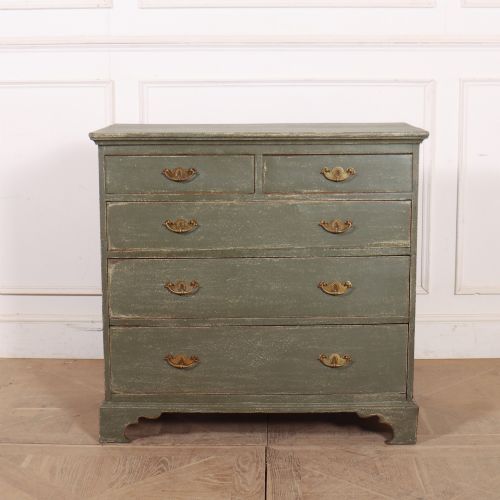
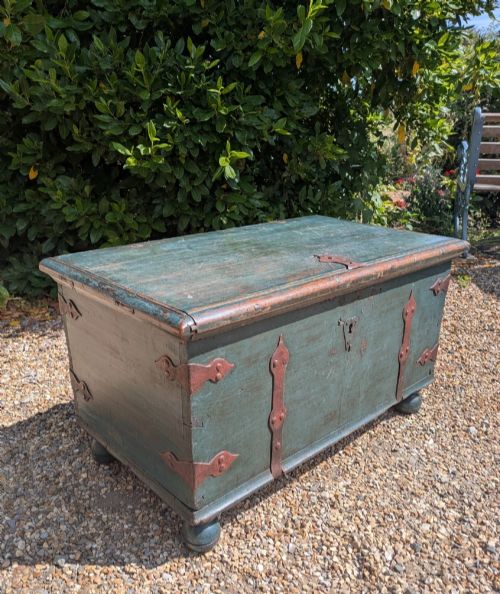
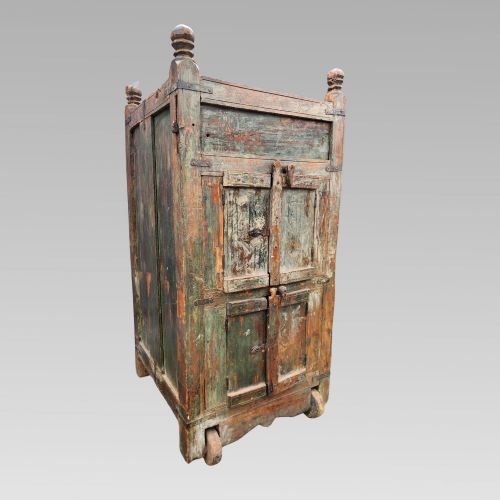
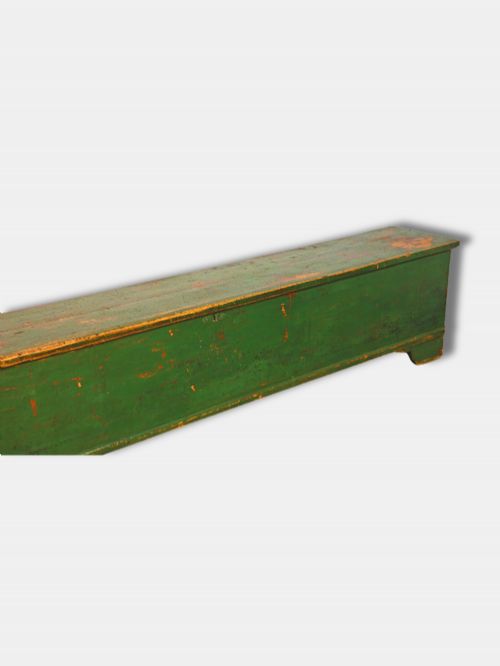




Green Wooden Chest
A green wooden chest brings centuries of practical storage and characterful painted or natural timber surfaces into a room.
Green Wooden Chest
A green wooden chest encompasses a varied selection of antique blanket boxes, coffers, storage trunks, and chests of drawers originating from English, Swedish, Dutch, and Romanian makers. These items served functional domestic purposes, from storing garments and blankets to securing valuables and dowries in traditional households.
The versions most commonly met on this page are constructed from pine or oak and finished in layers of historic green paint, ranging from soft sage tones to deep verdigris shades. Examples include rustic marriage chests, dome-topped strong boxes, and sturdy blanket chests dating primarily from the eighteenth and nineteenth centuries.
How they were made
Carpenters utilised solid domestic timbers such as pine and oak, joining boards with dovetail corners, tongue-and-groove joints, or sturdy framing to withstand heavy daily use. Surfaces were frequently treated with multiple coats of lead-based or oil paints, providing both protection for the wood and a distinct decorative finish.
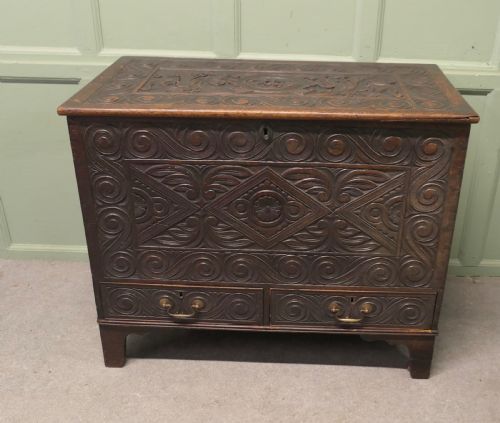
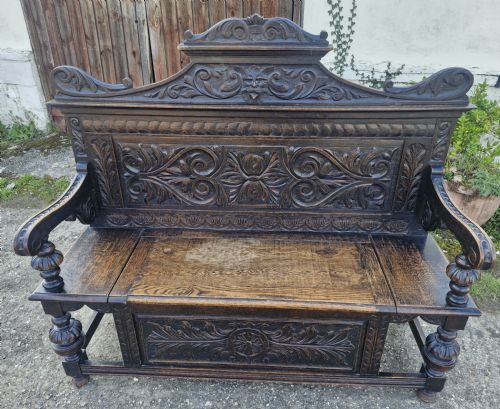
Metalwork played a vital structural role, featuring hand-forged iron strapwork, hinges, and brass carrying handles fixed securely to the timber. Carved details on oak panels were executed by hand using gouges and chisels, often incorporating traditional motifs like the green man or geometric strapwork.
Several chests carry the scars of genuine historic travel, retaining old transit labels and the distinct scent of century-old wool and beeswax.
What varies in quality
The integrity of the original surface finish largely dictates the standing of a piece, separating items retaining genuine early pigment from those stripped or later repainted. Original patination, showing natural wear, minor chips, and the softening of edges through generations of handling, holds higher regard.
Construction methods and the retention of original hardware also define the standard. Strong boxes and coffers featuring untouched hand-forged iron strapwork, working locks with original keys, and unwarped timber lids represent the superior tier of craftsmanship within this category.
The Green Wooden Chest Glossary
- Cooffer
- A large wooden chest traditionally used for holding valuables or documents. These sturdy containers often feature heavy lids and iron locking mechanisms.
- Kist
- A traditional regional term for a wooden chest or blanket box, commonly associated with Scottish and northern English vernacular furniture. They served as primary storage for textiles and personal possessions.
- Strapwork
- Flat bands of metal, often iron or brass, fixed across the exterior of a chest to reinforce the wooden joints and provide security. On better examples, these bands are hand-forged with shaped terminals.
- Marriage chest
- A specially commissioned box created to mark a wedding, frequently inscribed with dates, initials, or symbolic painted motifs. They often utilised pine or oak and served to transport a bride's dowry.
- Dome top
- A rounded lid construction designed to shed water and dust more effectively than a flat surface. This traditional profile is frequently seen on nineteenth-century travel trunks and strong boxes.
Green Wooden Chest: Frequently Asked Questions
What were green wooden chests used for originally?
These chests functioned as primary storage vessels in homes, holding heavy woollen blankets, winter clothing, and household textiles away from damp conditions and pests.
Stronger variants with heavy iron strapwork and locks were used to secure valuable family documents, currency, and silver items against theft.
How do I care for an antique painted chest?
Keep the piece away from direct sunlight and steady sources of artificial heat to prevent the historic pine or oak timber from drying out and splitting.
Dust the surface gently with a dry, soft cloth and avoid applying modern chemical polishes or cleaners that might soften or lift the original paint layers.
Are the green painted finishes original?
Many surviving examples retain their authentic early or original paint layers, often showing characteristic crazing, minor losses, and a chalky or hard texture developed over decades.
Closer inspection under natural light reveals whether the pigment has aged naturally into the wood pores or if later decorative layers have been applied.
How do I distinguish an eighteenth-century chest from a Victorian one?
Eighteenth-century examples typically display hand-cut joinery, pegged tenons, and heavier board thicknesses with more rustic surface undulations from pit-sawing.
Victorian pieces often incorporate more uniform machine-sawn timber dimensions, standardised hardware fixings, and occasionally crisper mechanical carving styles.