




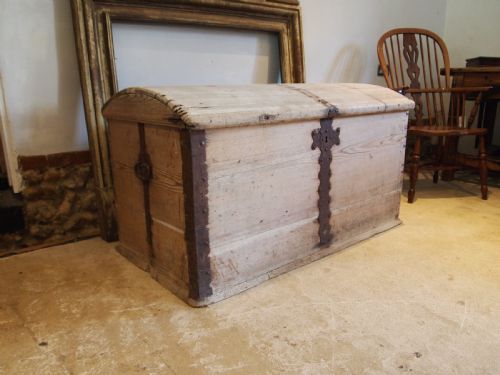


Domed Lid Box
A domed lid box offers secure storage with a curved profile, and collectors choose them for their craftsmanship and period materials.
Domed Lid Box
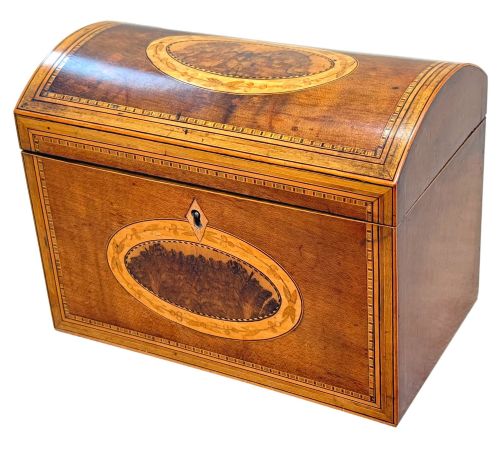
When you search for a domed lid box, you encounter a wide variety of forms ranging from small tea caddies and decorative caskets to large shipping trunks and blanket chests. These containers served practical purposes for storage and travel across the eighteenth and nineteenth centuries.
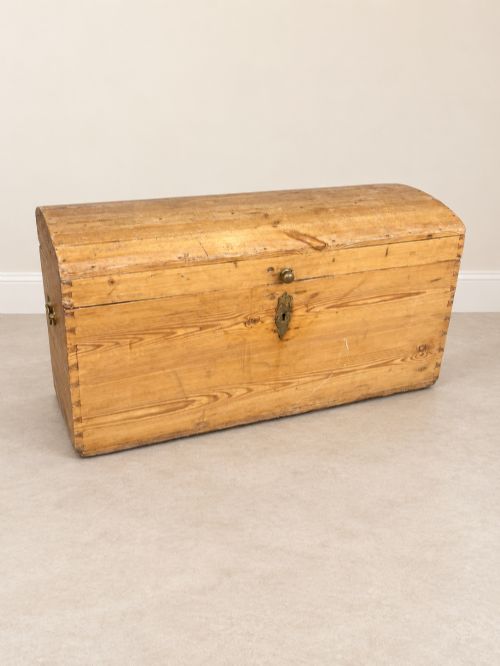
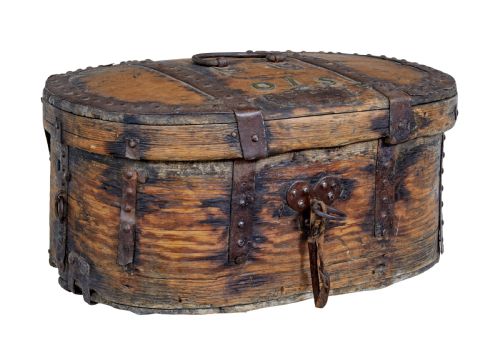
The most common examples you meet on this page are pine and oak boxes originating from Scandinavian folk art traditions or English workshops. They appear in styles spanning the Georgian and Victorian periods, often displaying painted finishes or robust iron bindings.
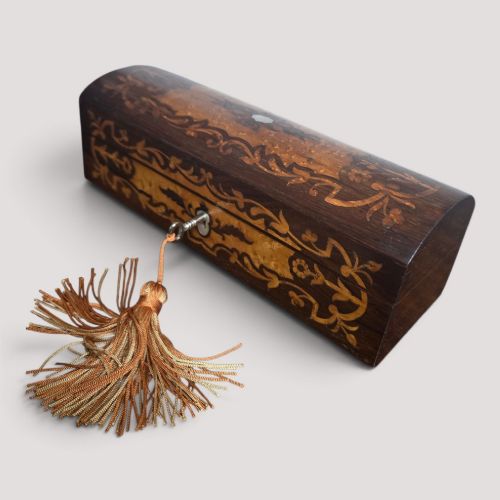
Smaller variants such as tea caddies and stationery boxes sit alongside heavy carriage trunks and marriage chests. Each piece demonstrates the specific utility required by its original owner, whether for household provisions or personal valuables.
Materials and construction
Maker construction relies heavily on native timbers such as oak, pine, mahogany, and walnut, frequently enhanced by burr veneers, marquetry inlay, or painted decoration. Iron and brass hardware, including hinges, strapwork, and carrying handles, provide structural reinforcement.
Carpenters joined panels using traditional methods suited to the scale of the object, from fine dovetailing on mahogany tea caddies to heavy iron bindings on baroque oak boxes. Painted surfaces on Scandinavian pine pieces utilise local pigments directly on the wood.
Domed Lid Box Retail Price Guide 2026
Typical asking prices for domed lid box among the pieces listed under this phrase on Sellingantiques today, from the lower quarter to the upper quarter. They describe what is for sale here now, not the wider market.
Some trunks doubled as makeshift seating on long carriage journeys across Scandinavia.
Quality variations
Quality rests in the selection of timber and the precision of the joinery, distinguishing utilitarian storage containers from high-status decorative pieces. Finer walnut and mahogany examples display careful grain matching and intricate marquetry, whereas utilitarian pine trunks rely on robust construction and iron work.
The survival of original surface treatments, whether polished wood or early paint, defines the integrity of a piece. Finer examples retain their original hinges, locks, and internal linings without modern replacements.
Betjemann And Sons·Mappin And Webb
The Domed Lid Box Glossary
- Tea caddy
- A small box designed to store tea leaves safely under lock and key. These containers often feature internal compartments for different varieties of tea.
- Cellaret
- A lockable container used for holding bottles of wine or spirits. They appear in mahogany and other dense timbers from the Georgian period.
- Marquetry
- The art of applying pieces of veneer to a structure to form decorative patterns. Craftsmen utilise various coloured woods to create intricate pictorial designs.
- Strapwork
- Ornamental metal bands applied to the exterior of a box or chest for reinforcement. Wrought iron or brass straps add both strength and visual contrast.
- Marriage chest
- A large storage box commissioned or gifted to mark a wedding. These often bear dates, initials, or specific painted folk art motifs.
Domed Lid Box: Frequently Asked Questions
What were domed lid boxes used for?
Domed lid boxes served diverse domestic and travel functions depending on their scale. Small variants held tea, spices, or jewellery, while larger versions stored stationery, documents, or clothing.
The curved lid provided extra vertical clearance for bulky contents. This design also helped shed dust and moisture when used on travels.
How do I date a wooden box?
Dating relies on examining the timber species, construction methods, and hardware. Georgian pieces often feature mahogany or oak with hand-cut dovetails, while Victorian items introduce walnut veneers and stamped brass.
Surface finishes also offer clues to age. Original paintwork, patination, and hand-forged iron hinges distinguish older pieces from later reproductions.
How do I clean an antique wooden box?
Maintenance requires gentle dusting with a dry, soft cloth to protect the historic surface. Avoid modern household cleaners, abrasive pads, or excessive water.
Applying occasional microcrystalline wax helps nourish dry wood and maintains the patina. Professional conservation is recommended for fragile painted surfaces.
Are these boxes suitable for daily use?
Most antique boxes function well for storing small items like letters, trinkets, or accessories. Sturdier trunks provide practical blanket storage in modern living spaces.
Care should be taken with delicate items such as tea caddies with original paper linings or boxes with working brass locks and keys.