
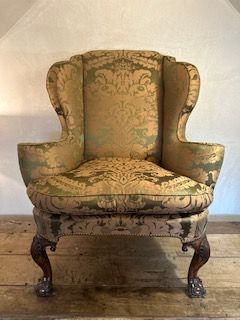
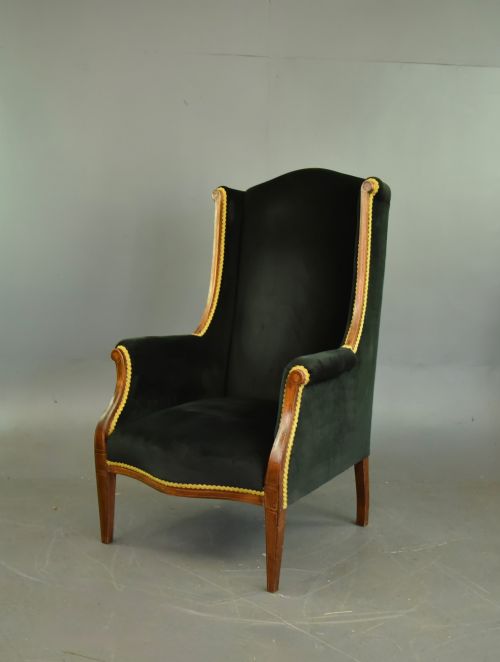
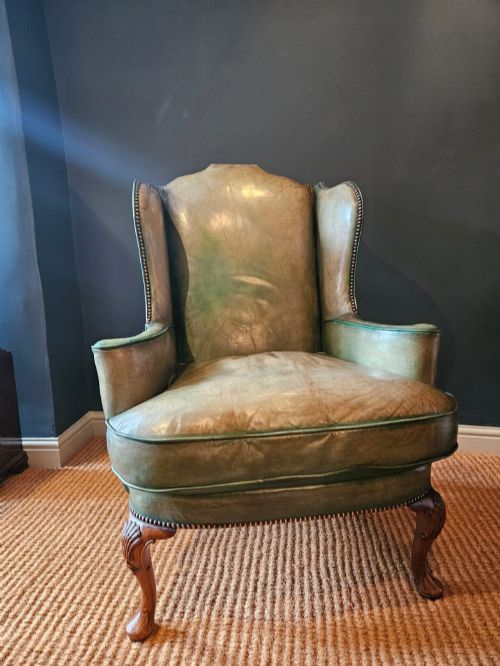
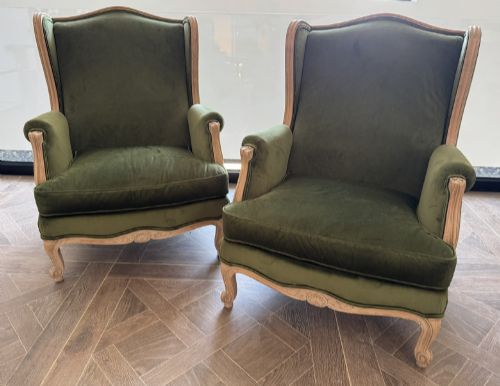


Green Wingback Chair
A green wingback chair brings draught-excluding comfort and period presence to a room, offering deep seating and protective side panels.
Green Wingback Chair
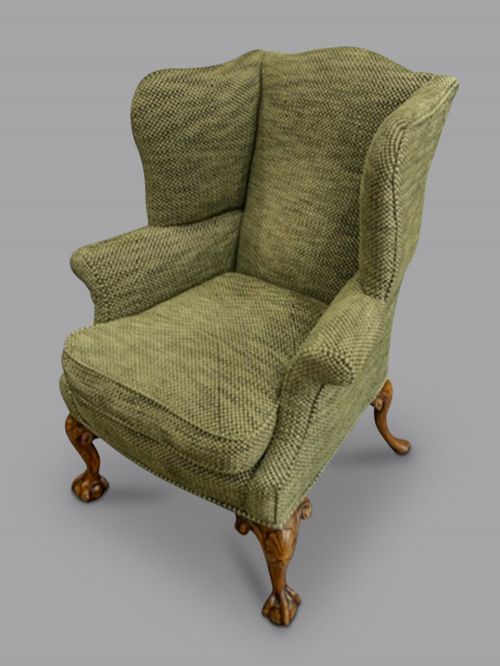
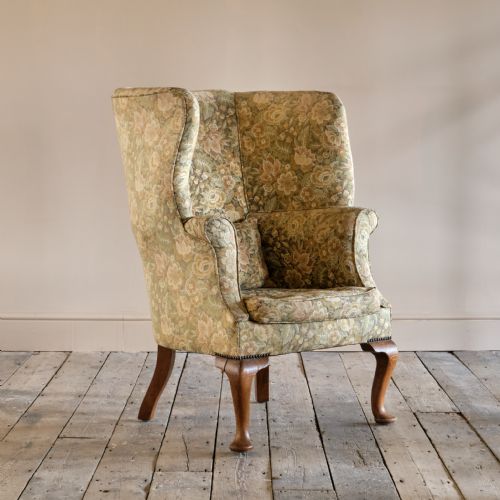
A green wingback chair is a traditional fireside seat designed with characteristic protective side panels to shield the sitter from draughts. These armchairs appear in various historical iterations, ranging from 18th-century walnut and mahogany examples to Edwardian and Victorian interpretations.
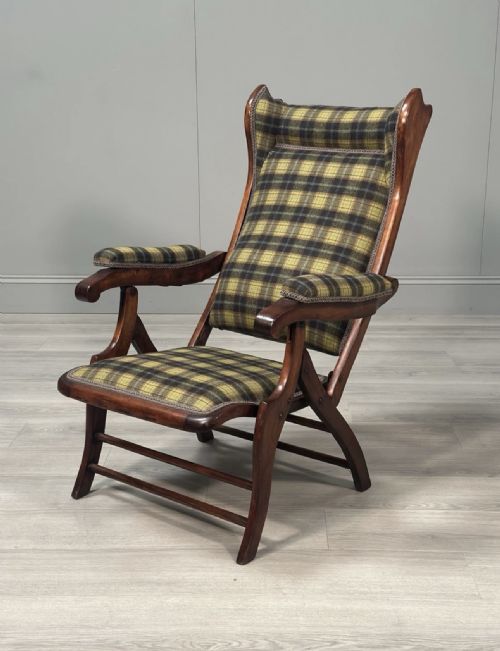
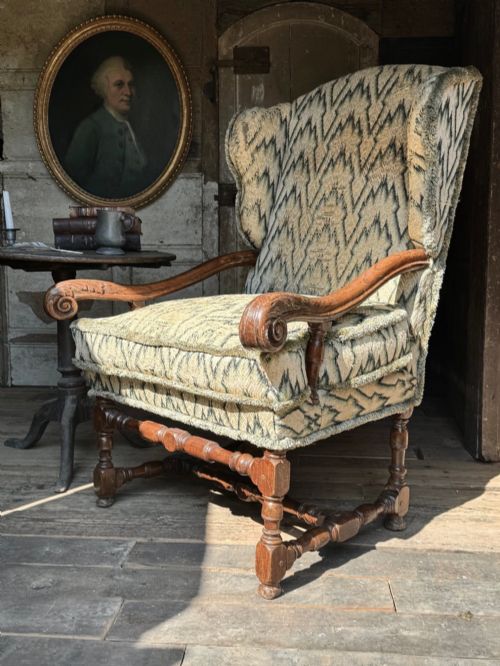
The green wingback chair category also encompasses revival styles such as Queen Anne, Georgian, and Jacobean forms, alongside French chateau pieces. Buyers frequently encounter versions upholstered in velvet, hide, and tapestry fabric.
Makers historically constructed these armchairs for libraries, drawing rooms, and studies where comfort near an open hearth was paramount. The current selection includes both restored originals and frames awaiting fresh upholstery.
Materials and Construction
Traditional frames utilise hardwoods such as mahogany, walnut, and oak to provide a sturdy structural skeleton for the upholstered body. Joinery techniques from the 18th and 19th centuries ensure stability across cabriole legs and straight wooden supports.
Upholstery methods combine supportive internal webbing and stuffing with surface textiles including velvet, leather, and tapestry fabric. Brass detailing and button-back tufting frequently appear on higher-grade pieces from the Georgian and Victorian periods.
Early wingbacks doubled as personal micro-climates, trapping fireplace heat in their upholstered ears while everyone else froze.
Assessing Quality and Execution
The calibre of a green wingback chair rests upon the proportion of the wings and the integrity of the underlying hardwood frame. Finer examples retain their original timber legs, whether carved cabriole or straight mahogany, without excessive structural alteration.
Upholstery choices also dictate the distinction between pieces, with historic hide, silk velvet, and traditional ticking demonstrating superior historical adherence compared to modern replacements.
Howard And Sons
The Green Wingback Chair Glossary
- Cabriole leg
- A furniture leg that curves outward at the knee and tapers inward to an ankle, common in 18th-century designs.
- Wingback
- An armchair style featuring protective flaps attached to the arms and back to contain heat and block draughts.
- Hide
- Untanned or tanned animal skin used for heavy-duty upholstery, seen on traditional library and gentleman's armchairs.
- Tapestry fabric
- A heavy woven textile often utilised for period upholstery, displaying pictorial or decorative patterns.
Green Wingback Chair: Frequently Asked Questions
What is a wingback chair?
A wingback chair is an upholstered fireside armchair featuring characteristic side panels attached to the backrest. These wings were originally designed to shield the occupant's head and face from cold draughts in large, heated rooms.
Over the centuries, the form evolved through various revival movements while retaining its core protective silhouette. Today, these chairs serve as prominent seating additions in studies, libraries, and living spaces.
How do I date a wingback chair?
Dating requires an examination of the exposed timber framework, leg style, and construction methods. Earlier 18th-century examples often feature walnut or mahogany with hand-carved cabriole legs, while later Victorian and Edwardian versions display different turning and joinery techniques.
Upholstery materials and internal stuffing also provide chronological clues, though many antique frames have been recovered multiple times over their lifespan.
Where should I place a green wingback chair?
These armchairs suit spaces where traditional furniture creates a focal point, such as beside a fireplace or in a reading corner. Their substantial scale and high backs make them ideal for anchoring empty room corners or pairing with a sofa.
Green upholstery tones integrate naturally with wooden library shelving, neutral wall colours, and traditional interior palettes.
Can I reupholster an antique wingback chair?
Reupholstering is a common practice for antique frames that require modern fabric updates or structural reinforcement. Many pieces appear on the market specifically designated for re-upholstery to suit individual interior schemes.
Retaining traditional stuffing materials and springing methods during the process helps preserve the historic integrity of the chair.