
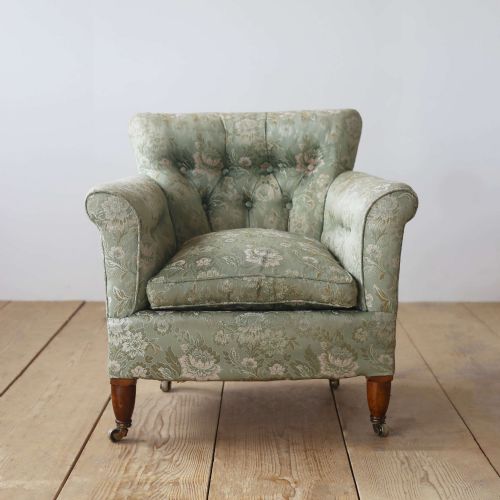

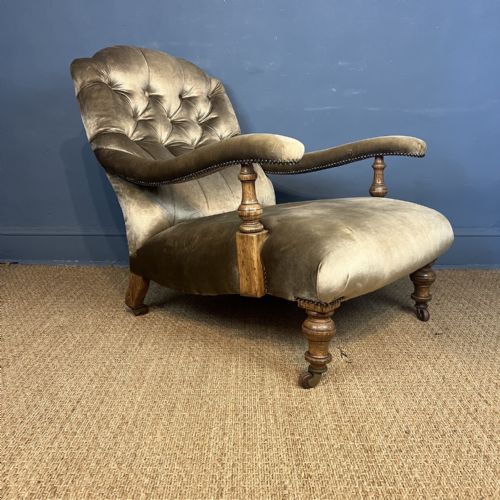
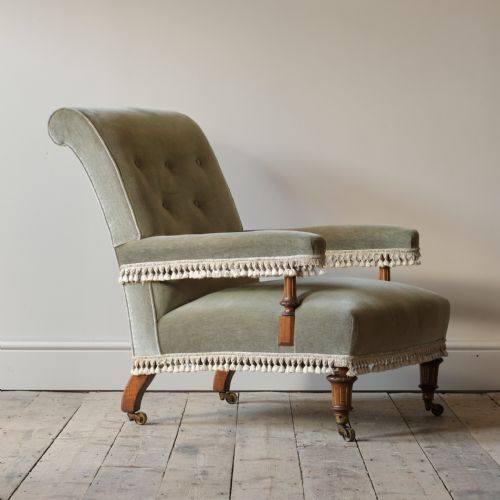
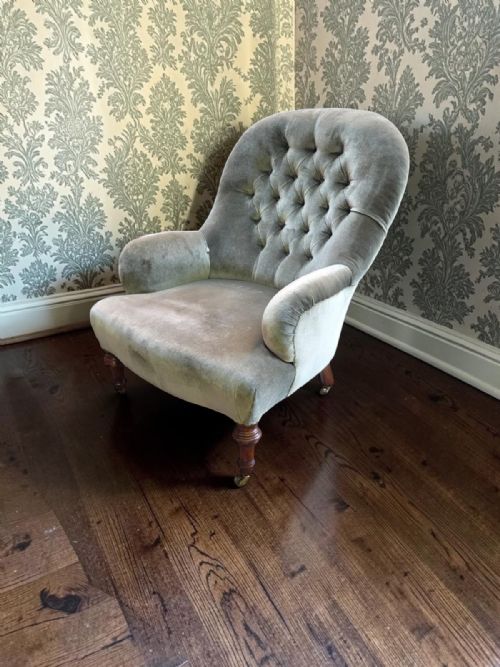
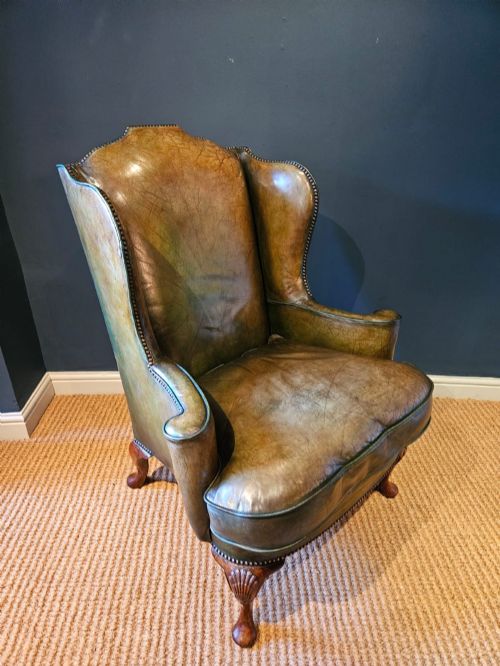
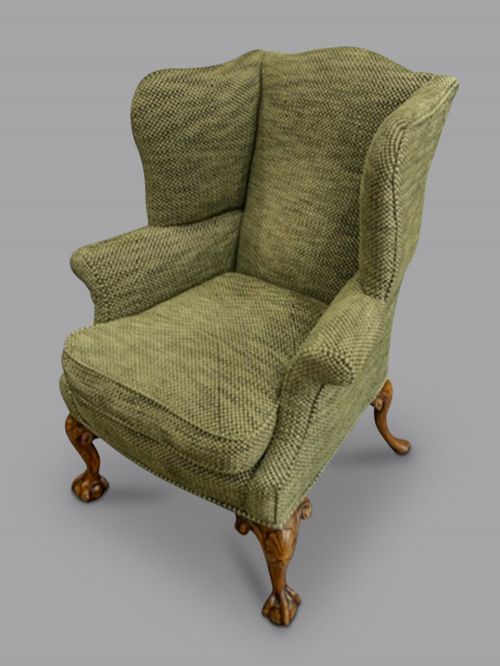
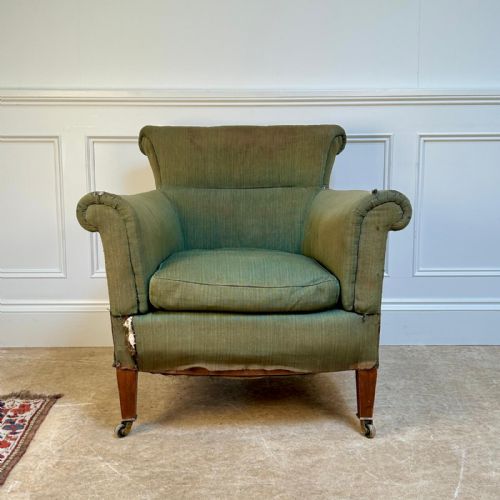
Green Fireside Armchair
A green fireside armchair brings deep comfort and traditional colour to a room, drawing on centuries of upholstery and woodwork.
Green Fireside Armchair
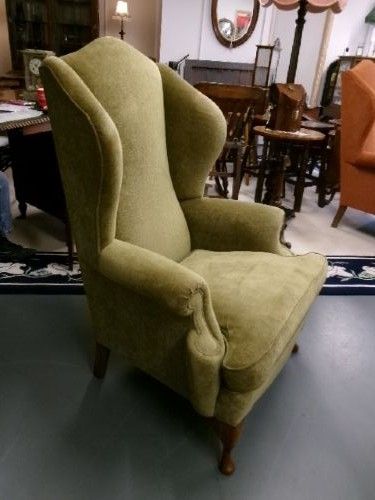
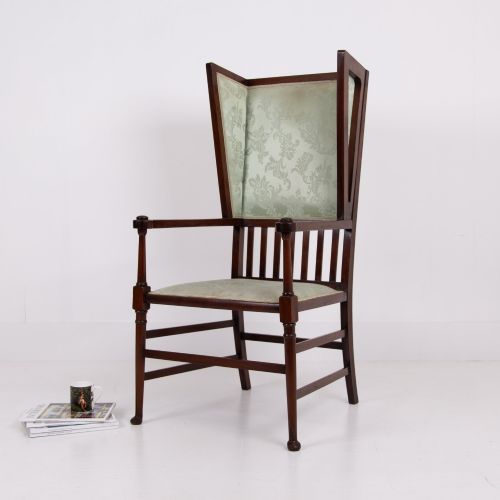
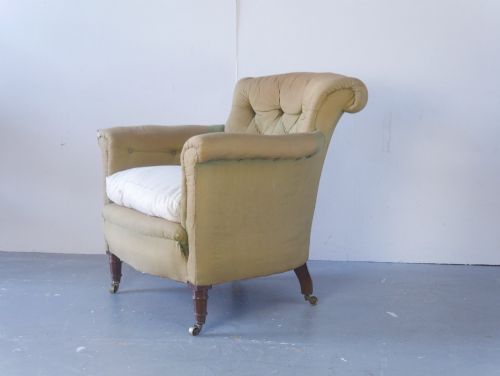
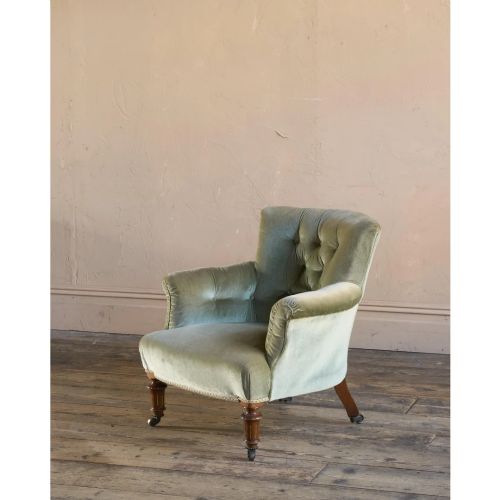
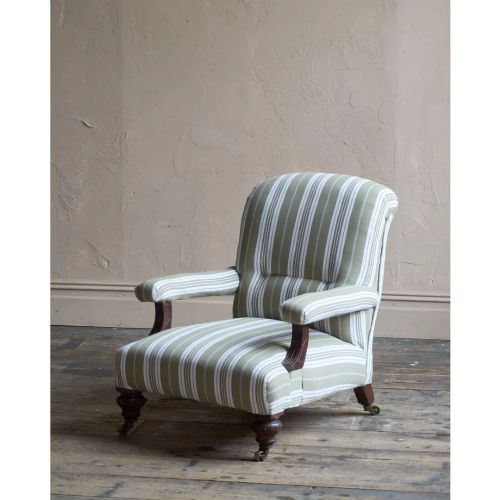
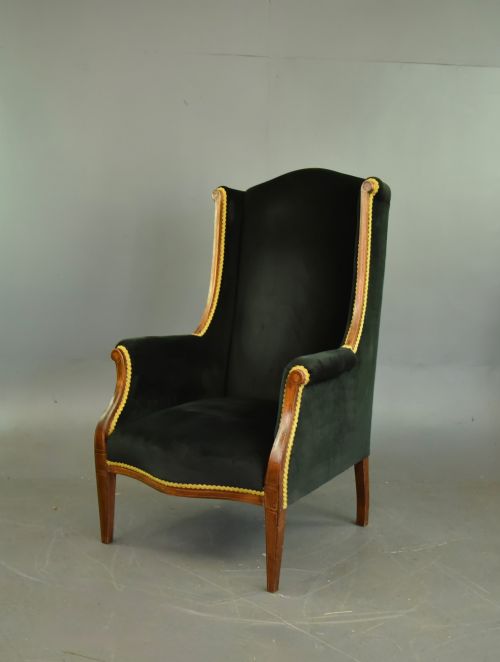
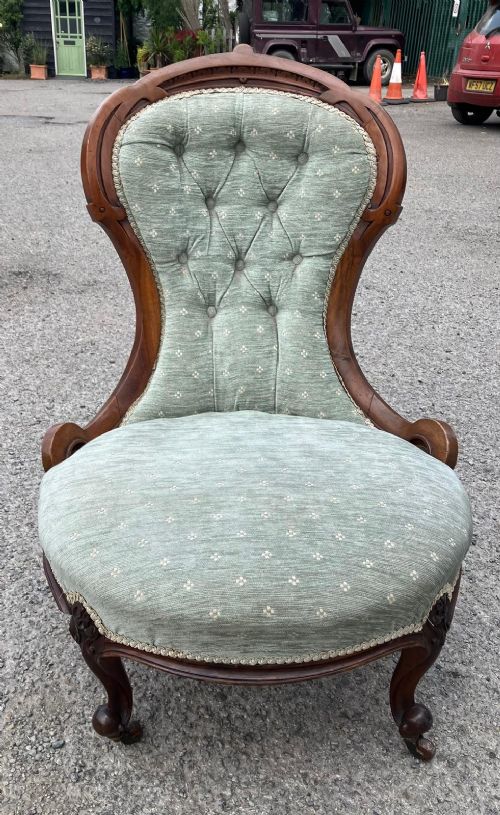
A green fireside armchair encompasses upholstered seating designed for warmth and comfort by the hearth, drawing from various historical periods including Victorian and Edwardian eras. Buyers searching for a green fireside armchair encounter forms ranging from high-backed wing chairs to low nursing chairs and deep-seated gentleman's chairs.
The pieces listed span multiple centuries, showing styles from George III and Regency through to William IV and the early twentieth century. Makers such as Gillows, Hampton & Sons, Howard and Sons, and C. Hindley & Sons appear among the records, alongside styles like Queen Anne and Bridgewater.
Woodwork frames in mahogany, walnut, oak, and rosewood support textile, velvet, fabric, and leather upholstery. The selection presents diverse iterations of fireside seating, uniting period craftsmanship with upholstered comfort.
Materials and Construction
Frames rely on hardwoods such as mahogany, walnut, oak, and rosewood, shaped into cabriole legs, barley twist frames, and scroll arms. Joinery techniques secure these wooden structures to withstand decades of regular use.
Upholstery incorporates textile, velvet, fabric, and leather, often finished with button backs or decorative inlay on the wooden components. Internal webbing and stuffing provide the resilience required for traditional fireside seating.
Some gentleman chairs arrive with such generous proportions that a small family pet easily hides beneath the scroll arms.
Judging Quality and Execution
The refinement of the wood carving and the integrity of the frame define the upper tier of these armchairs. Superior examples display precise joinery, well-figured timber such as walnut or mahogany, and balanced proportions.
The execution of the upholstery and the choice of covering materials, whether leather, velvet, or specialised fabric, dictate the finish and longevity of the piece. Subtle details like scroll arms, inlay work, and robust cabriole legs separate standard examples from masterworks.
Gillows·Hampton and Sons·Howard and Sons·C. Hindley and Sons
The Green Fireside Armchair Glossary
- Wingback armchair
- A fireside chair featuring protective side wings designed to shield the sitter from drafts. These panels extend upwards from the arms to enclose the head and shoulders.
- Bergère armchair
- An enclosed armchair with cane or upholstered sides and back. The wooden frame typically remains partially exposed around the perimeter.
- Cabriole leg
- A furniture leg that curves outward in a convex arc and then bends inward in a concave arc, terminating in a foot. This form derives from classical animal leg shapes.
- Button back
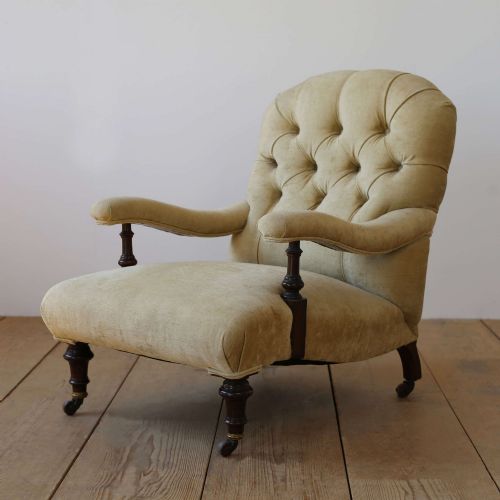
- An upholstery style where depressions are formed in the padding by stitching buttons at regular intervals. This technique secures the stuffing and creates a textured surface.
- Gentleman's chair
- A sturdy, generously proportioned armchair from the Victorian period. These pieces often feature low seats and padded armrests designed for relaxed sitting.
Green Fireside Armchair: Frequently Asked Questions
What defines a fireside armchair?
A fireside armchair is designed for comfort near a hearth, often featuring high backs or wings to retain heat and block drafts.
These chairs combine supportive wooden frames with deep upholstery in materials like leather, velvet, or fabric.
How do I identify a Victorian armchair?
Victorian armchairs often feature dark hardwoods such as mahogany or rosewood, combined with button-back upholstery and scroll arms.
They frequently display robust frames, cabriole legs, or barley twist turnings characteristic of the nineteenth century.
Are these chairs suitable for daily use?
These chairs are built with durable hardwood frames and traditional joinery designed to support regular seating.
Many examples maintain structural integrity across generations, though older upholstery may benefit from professional assessment.
What is a wingback armchair?
A wingback armchair includes protective side panels attached to the arms and back to keep out drafts near an open fire.
This traditional silhouette has remained popular across Georgian, Victorian, and Edwardian periods.