


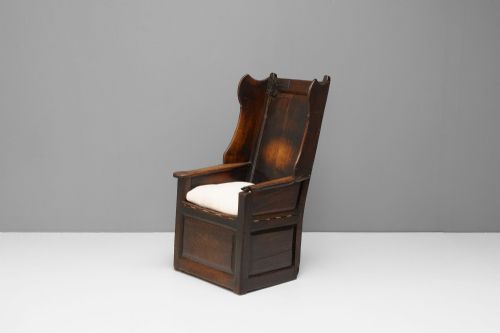


English Country Wing Chair
An English country wing chair anchors a fireside with high protective panels, offering substantial comfort through centuries of traditional seating design.
English Country Wing Chair
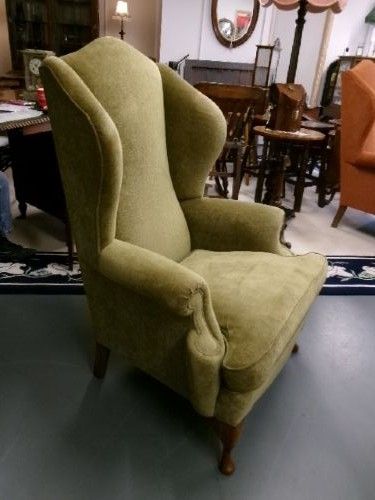
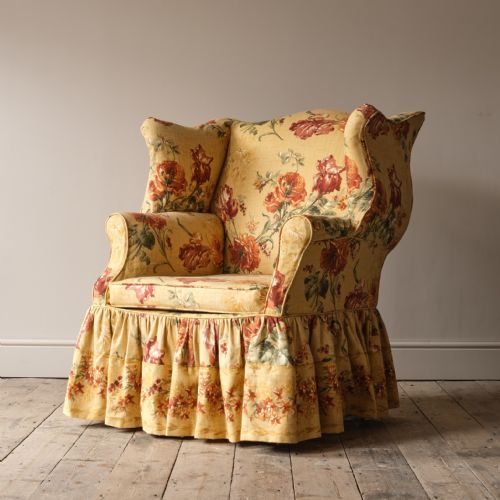
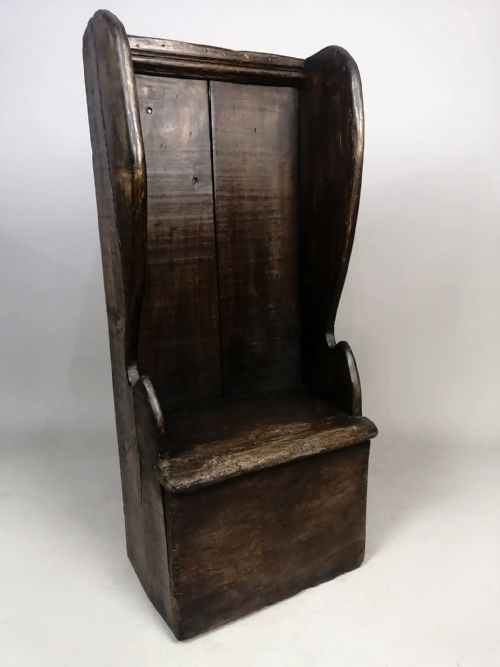
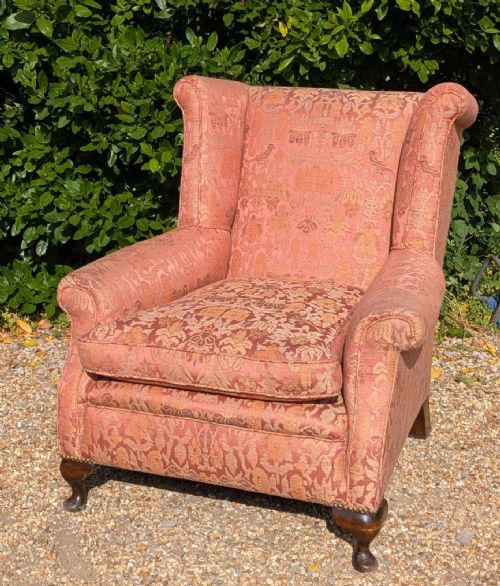
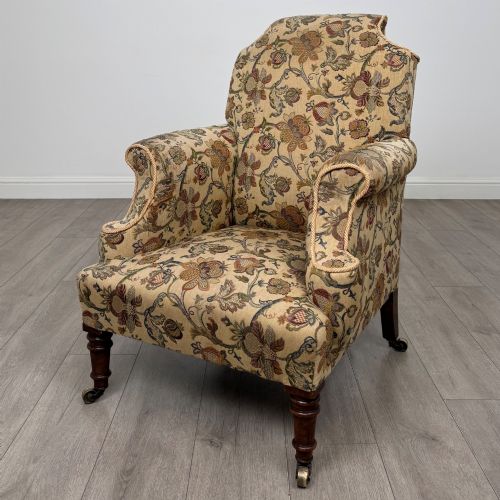
An English country wing chair provides deep seating enclosed by characteristic side panels designed to block draughts from open fires. The selection spans robust vernacular examples from the seventeenth and eighteenth centuries, including early lambing chairs, alongside later nineteenth-century iterations.
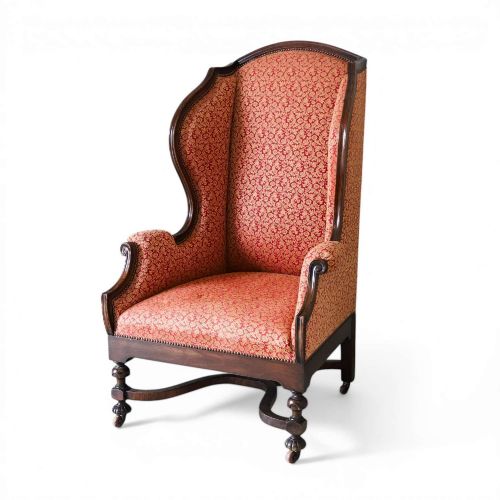
Forms on this page range from grand George III mahogany and walnut wingbacks to vernacular fruitwood lambing chairs and later padded fireside models. Buyers encounter pieces from various eras including the Victorian period, Edwardian pieces reflecting Howard styles, and twentieth-century interpretations.
How they were made
Cabinetmakers and joiners utilised timber frames constructed from oak, walnut, mahogany, and fruitwood to build the structural skeleton of each English country wing chair. These wooden frameworks provide the sturdy architecture necessary to support generous padding and heavy upholstery.
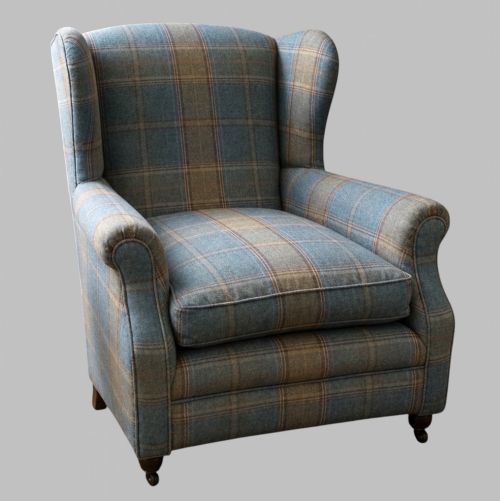
Traditional stuffing and contemporary feather fillings provide the interior volume, secured beneath fabrics such as velvet, wool plaid, and standard textiles. Brass accents sometimes finish the construction details, while exposed timber legs display regional turning and carving techniques.
Materials recorded across the selection include mahogany, walnut, oak, fruitwood, brass, and various textiles.
What varies in quality
Proportion and scale distinguish an exceptional English country wing chair from more pedestrian examples, governing how the wings sweep back from the armrests. Timber selection also dictates grade, separating modest fruitwood frames from finely figured mahogany and walnut structures.
The integrity of the original timber frame and the quality of historical upholstery materials establish the baseline for surviving examples. Pieces retaining early surfaces and traditional stuffing exhibit a greater fidelity to their period of origin.
Howard and Sons
The English Country Wing Chair Glossary
- Wingback
- A high-backed armchair featuring integrated side panels designed to shield the occupant from cold draughts. This form evolved during the seventeenth century and remains a staple of traditional seating.
- Lambing chair
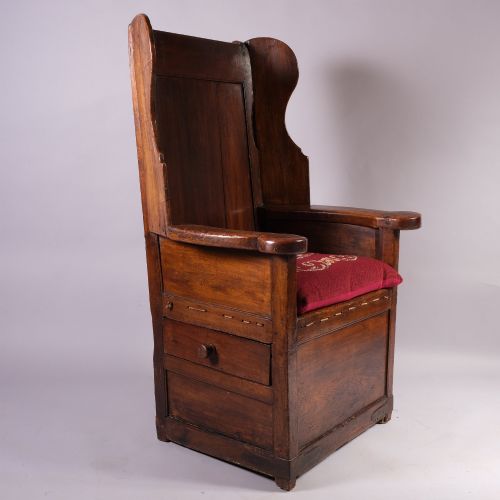
- A vernacular seating form featuring an enclosed lower section, often incorporating a solid wooden seat and high sides. These functional chairs originated in rural farmhouses.
- Carolean style
- A decorative aesthetic drawing upon late seventeenth-century design characteristics associated with the reign of Charles II. Pieces in this style typically display rich turning and structural elaboration.
- Vernacular
- Furniture built by local tradesmen using regional materials and traditional methods rather than following metropolitan high-style fashions. These pieces reflect the practical needs of domestic life.
English Country Wing Chair: Frequently Asked Questions
What is an English country wing chair?
An English country wing chair is a traditional fireside armchair defined by protective side wings and a high back. These seats developed to keep occupants warm by blocking cold indoor draughts.
The category encompasses grand mahogany Georgian library pieces as well as rustic seventeenth-century and eighteenth-century vernacular lambing chairs.
How do I date a wing chair?
Dating relies upon examining the timber species, leg turning, stretcher arrangement, and construction joints. Earlier pieces utilise oak and fruitwood with vernacular joinery.
Later nineteenth-century and Edwardian examples incorporate refined mahogany frames, castors, and distinct stylistic revivals pointing toward specific historical eras.
Where were lambing chairs used?
Lambing chairs served practical domestic roles in rural farmhouses and country dwellings near open hearths. The solid enclosed base protected shepherds and household members from floor-level cold.
These functional seats later transitioned into desirable vernacular antiques valued for their rustic timber patination and character.
How do I style a wing chair?
A wing chair functions naturally beside a fireplace, library bookshelf, or as a standalone reading seat in a traditional or eclectic interior. Their substantial silhouettes ground a room visually.
Pairing these chairs with complementary wood finishes and textiles like wool plaid or velvet enhances their historic character.