
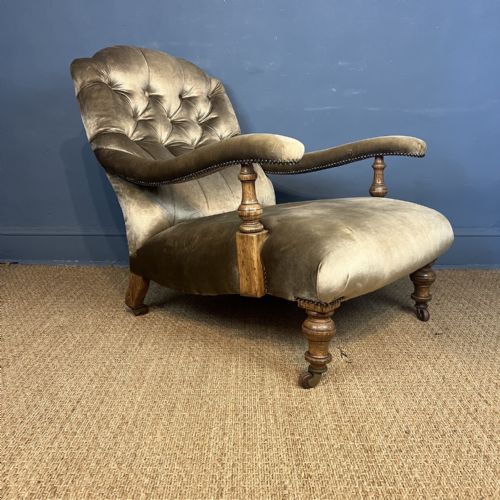


Olive Green Lounge Chair
An olive green lounge chair brings substantial period presence into a room, offering deep seating wrapped in rich velvet, leather, or woven fabrics.
Olive Green Lounge Chair
When you search for an olive green lounge chair, you encounter a selection of seating rooted primarily in the nineteenth century, spanning Victorian, William IV, and Edwardian eras. These pieces take various forms, from deep-seated fireside and wingback armchairs to carved frame nursing chairs and chaise longues.
The dominant aesthetic draws upon traditional English country house and French chateau styles, featuring substantial wooden frames upholstered in shades of green velvet and leather. Many examples utilise classic silhouettes like the Howard style or traditional wingback designs built for comfort and presence.
How they were made
Makers constructed the supportive frameworks of these chairs using durable hardwoods including oak, mahogany, rosewood, and general timber. Craftsmen shaped these timbers into sturdy legs, exposed frames, and carved details that supported heavy interior padding.
Upholsterers then applied deep cushioning finished with textiles such as velvet and leather, often secured or accented with brass elements. The combination of dense hardwood and tactile fabric created durable seating designed for long-term domestic use.
Some nineteenth-century armchairs are so deep that sitting in them properly requires a footstool just to reach the floor.
What varies in quality
The distinction between standard and superior pieces rests on the complexity of the timber carving and the architectural balance of the frame. Chairs displaying refined woodwork, such as detailed rosewood or oak framing, reflect greater artisanal skill.
Quality also shows in the depth and execution of the upholstery work, particularly in how well the fabric or leather follows the contours of wingbacks and deep seats. Pieces exhibiting substantial proportions and integrated period details command greater attention.
Hampton and Sons
The Olive Green Lounge Chair Glossary
- Howard style
- A deeply comfortable upholstered armchair design originating in the nineteenth century, known for low rolled arms and generous proportions. Collectors prize them for supreme lounging comfort.
- Chaise longue
- An elongated upholstered seat intended for reclining, combining the backrest of a chair with the seat of a daybed. These pieces typically feature a single raised end for head support.
- Wingback armchair
- A high-backed chair with side panels designed to shield the occupant from drafts and trap heat from a fire. The wings extend from the armrests up to the headrest.
Olive Green Lounge Chair: Frequently Asked Questions
What defines an olive green lounge chair?
An olive green lounge chair is typically an antique seating option from the nineteenth or early twentieth century, upholstered in green velvet or leather. These chairs encompass styles like the Howard, wingback, and nursing chair.
They combine robust hardwood frames with deep padding, offering both decorative character and functional seating suited to period or traditional interiors.
How do I date an antique armchair?
Dating relies on examining the construction methods, timber types, and stylistic cues present in the frame. Nineteenth-century pieces often feature woods like rosewood, mahogany, or oak alongside characteristic upholstery styles.
Makers' marks or stamps, when present, provide definitive clues to the workshop and decade of origin.
Where were these chairs used?
Historically, large upholstered armchairs and wingbacks found homes in libraries, drawing rooms, and studies of substantial English and French residences. They were positioned near fireplaces to provide warmth and comfort.
Smaller forms like nursing chairs served specialised domestic purposes in bedrooms or private sitting rooms.
How do I care for antique upholstery?
Preserving velvet or leather upholstery involves keeping the chairs away from direct sunlight and excessive heat sources to prevent fading and drying. Gentle brushing maintains the nap of velvet.
Leather surfaces benefit from appropriate conditioning treatments to keep the material supple over time.