








Green Watercolour River Scene
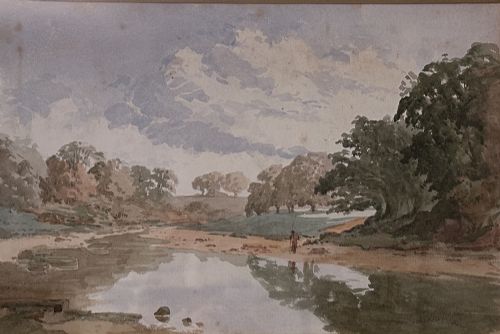
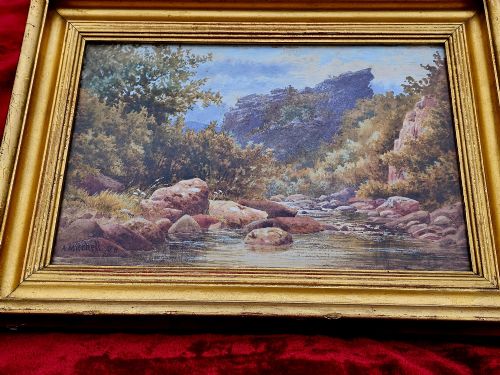
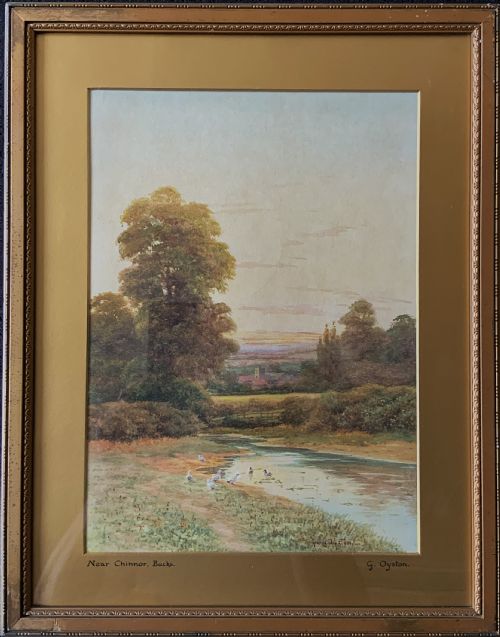
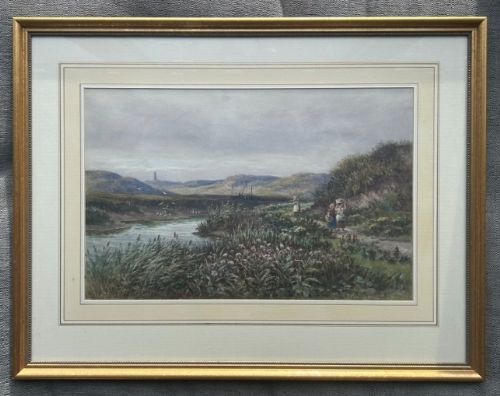
A green watercolour river scene brings the quiet pull of British waterways onto paper through translucent washes and fine brushwork.
Green Watercolour River Scene
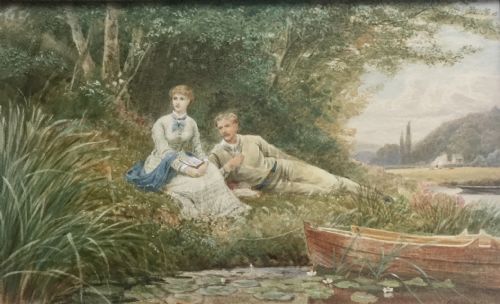
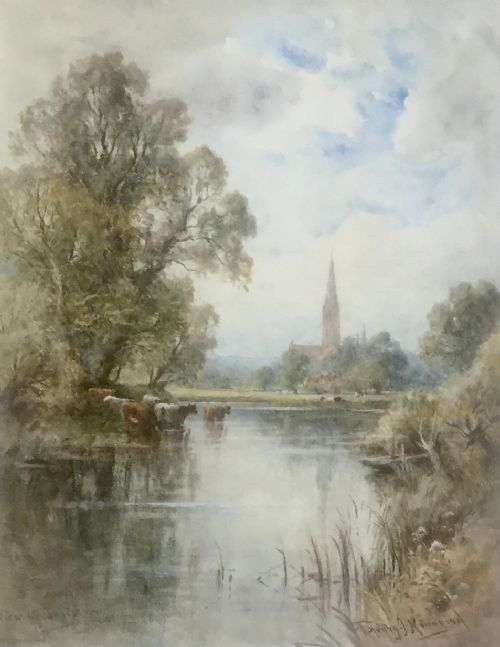
A green watercolour river scene comprises works on paper depicting waterways, banks, and rural or pastoral views across Britain. These paintings capture light and moisture using fluid pigments applied to paper surfaces, often framed behind glass in wood or giltwood frames.
The versions most common on this page date from the nineteenth and early twentieth centuries, spanning the Victorian and Edwardian periods up to the mid-twentieth century. They range from small landscape studies to substantial framed fine art paintings by named artists.
Subjects frequently incorporate natural bodies of water such as the Thames, Welsh rivers, and rural streams accompanied by figures, cattle, or boats. They represent traditional British fine art traditions focused on atmospheric landscapes.
Materials and technique
Artists apply watercolour pigment and paint directly onto paper using water as a medium, allowing layers of transparent wash to build depth and luminosity. This technique relies on the white of the paper to shine through the green and earthy tones, creating natural highlights.
Finished works are typically housed beneath protective glass within wooden or giltwood frames that complement the delicate nature of works on paper. These traditional mountings protect the fragile medium from atmospheric moisture and handling.
Green Watercolour River Scene Retail Price Guide 2026
Typical asking prices for green watercolour river scene among the pieces listed under this phrase on Sellingantiques today, from the lower quarter to the upper quarter. They describe what is for sale here now, not the wider market.
Subjects concentrate on British rivers, lakes, and rural waterways executed in traditional fine art styles.
Quality variations
The strength of composition and sureness of brushwork separate accomplished watercolours from simpler topographical sketches. Master painters control pigment density and water flow to achieve atmospheric depth without muddying the green hues.
Provenance and documentation also influence standing, particularly when works are signed by Royal Academy exhibitors or listed artists from the Victorian and Edwardian eras. The preservation of the paper and the integrity of the original framing contribute further to desirability.
David Cox Jnr·George Oyston·Henry John Kinnaird·Thomas Pyne·William Joseph Boyes
The Green Watercolour River Scene Glossary
- Watercolour
- A paint consisting of pigment suspended in a water-soluble vehicle. It is applied in translucent washes to create luminous effects on paper.
- Giltwood
- Wood carved and covered with a thin layer of gold leaf or metal powder. This material frequently frames nineteenth-century fine art.
- Wash
- A thin, fluid layer of transparent watercolour pigment spread across the paper. It establishes skies, water, and foliage backgrounds.
- Fine art
- Creative work valued primarily for its aesthetic appeal and execution. These paintings represent professional studio and plein-air output.
Green Watercolour River Scene: Frequently Asked Questions
How should I display a watercolour painting safely?
Keep watercolours away from direct sunlight to prevent the green pigments and paper from fading over time. Hanging them in rooms with stable humidity protects the paper and the wooden frame.
Ensure the glazing does not touch the surface of the paper directly. Professional framing with proper mounts preserves the airflow required for works on paper.
How do I identify the period of a landscape watercolour?
Examine the style of dress on any figures, the architectural details of bridges or boats, and the framing materials. Victorian and Edwardian works often carry signatures, dates, or artist inscriptions on the reverse.
Paper types and handwritten gallery labels also offer clues to the decade of creation. Comparing the technique to known regional landscape schools narrows down the date further.
What is the difference between a sketch and a finished painting?
A finished painting shows deliberate composition, layered washes, and fine details intended for exhibition. Sketches are usually rapid, spontaneous studies recorded directly outdoors.
Finished works often bear artist signatures or exhibition titles. Both hold distinct appeal for collectors depending on their focus.
Why are these paintings predominantly on paper?
Paper serves as the traditional and ideal support for watercolour pigment because its absorbency holds the diluted paint effectively. It allows the luminous white ground to reflect light back through the transparent green washes.
Working on paper also enabled artists to travel easily and paint river scenes directly on location. This portability contributed to the popularity of landscape watercolour painting.