



Thames River Watercolour Painting
When you search for a thames river watercolour painting, you are looking at original works on paper capturing London landmarks and riverside villages from the nineteenth and twentieth centuries.
Thames River Watercolour Painting
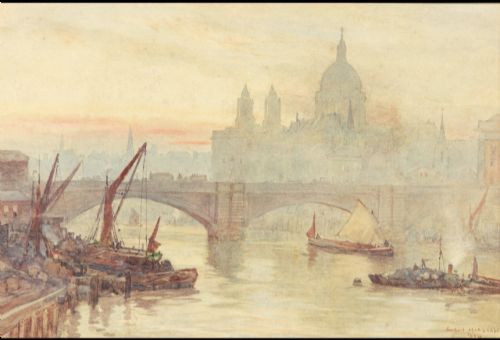
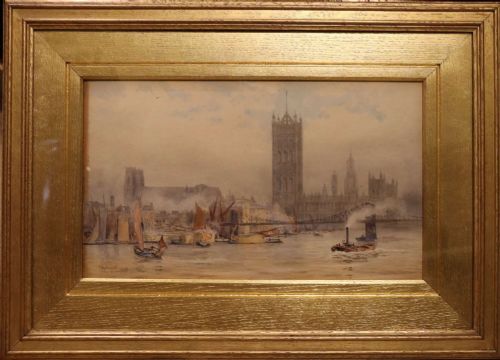
A thames river watercolour painting captures maritime scenes, bridges, and rural backwaters along the waterway, moving from rural Berkshire down to the Pool of London. These works take the form of framed wall art, ranging from intimate village views to large topographical compositions of Westminster and St Paul's Cathedral.
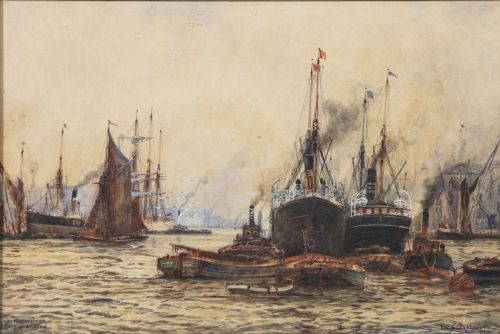
You will most frequently meet Victorian and Edwardian examples on this page, created by British artists recording the changing commerce and scenery of the capital and surrounding counties. The compositions span bustling industrial river traffic, misty morning docks, and quiet pastoral reaches near Windsor and Marlow.
Materials and Technique
Artists worked primarily with watercolour pigment suspended in water, applied with brushes onto heavy paper sheets to create translucent washes and fine opaque highlights. Ink was occasionally utilised alongside the paint to define architectural details and ship riggings in busy port scenes.
Works were typically protected beneath glass within wooden frames, preserving the water-soluble pigments from atmospheric moisture and handling. The absorbent nature of the paper demanded deliberate brushwork, as corrections were difficult to conceal once the pigment dried.
Seagulls occasionally steal the show above the Houses of Parliament.
Qualities of Execution
The distinction between standard watercolours and finer examples lies in the confidence of the brushwork and the management of atmospheric light. Stronger pieces convey the damp mist of a smokey London morning or the luminous expanse of the upper river through skilful control of washes.
Compositional balance and accurate topographical detail separate accomplished professional artists from amateur records. A more successful painting integrates figures, architecture, and water into a unified whole rather than a rigid architectural drawing.
H. Medlycott·Alfred Young Nutt·Frank William Scarbrough·Henry John Kinnaird·Robert Winchester Fraser·Frederick G. Coulridge·Jack Merriott·Walter Duncan·Henry Sykes·Frederick George Coleridge·Harold E Frecker·Frank Wasley·Carleton Grant·Frances E Nesbitt·William A. Macdonald·Herbert John Finn·Gordon Meadows·David Cox Senior·F Dimes·Frederick Charles Dixey·William Grey·John Varley·Philip Connard·F J Lees·Edwin Thomas Dolby
The Thames River Watercolour Painting Glossary
- Watercolour pigment
- Finely ground colour particles mixed with a water-soluble binder, used for painting on paper.
- Topographical
- A style of art dedicated to the accurate depiction of specific places, buildings, and landscapes.
- Wash
- A fluid application of diluted watercolour paint across paper to create smooth backgrounds of sky or water.
- Eyot
- A small island located in a river, frequently appearing in rural Thames landscape compositions.
Thames River Watercolour Painting: Frequently Asked Questions
How do I care for antique watercolours?
Keep watercolours away from direct sunlight to prevent the pigments from fading over time. Ensure they hang in rooms with stable humidity to protect the paper and wooden frames.
Are these paintings original?
Yes, the listings comprise original hand-painted works on paper rather than modern prints or reproductions. Each piece was individually painted by the artist in the period stated.
How do I distinguish Victorian from Edwardian pieces?
Victorian paintings generally date from the nineteenth century and often reflect romanticised realism or detailed topography. Edwardian works from the early twentieth century frequently adopt looser, atmospheric brushwork.
Where were these scenes painted?
The views concentrate on the River Thames, stretching from rural Berkshire and Oxfordshire locks down through Windsor, Richmond, and into the heart of London. Subjects include bridges, wharves, cathedrals, and pastoral riverbanks.