





British Topographical Painting
British topographical painting records specific places with a clarity that bridges historical record and direct observation.
British Topographical Painting
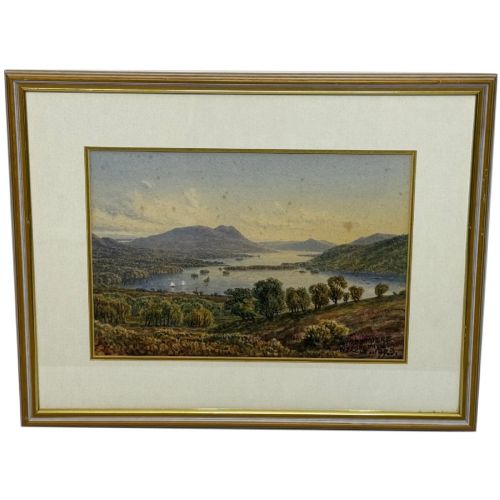
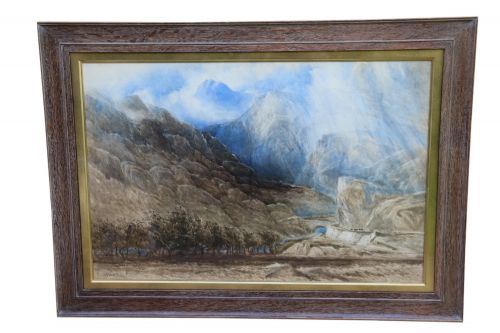
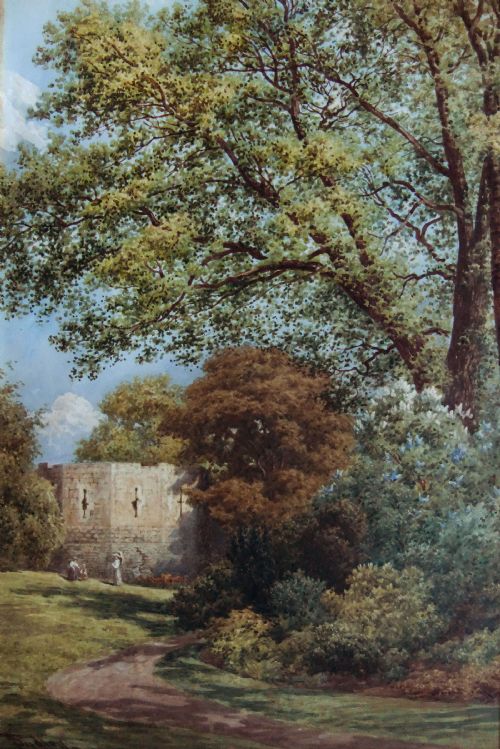
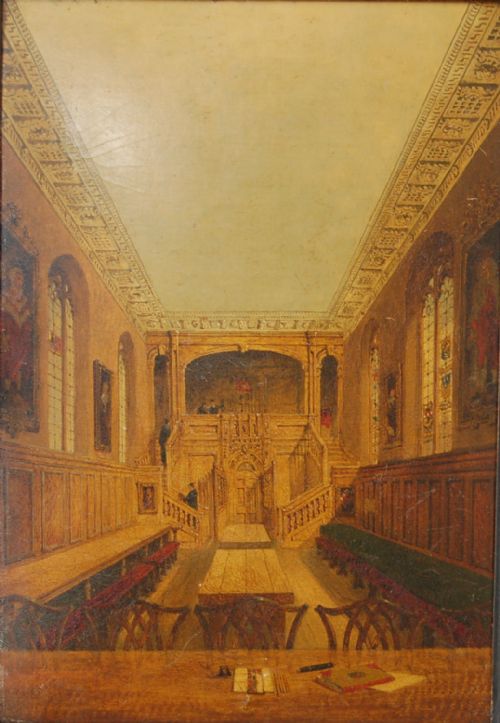
A British topographical painting is a detailed depiction of a specific landscape, building, or townscape, executed with a focus on recognisable geography and architecture. When exploring this genre, a buyer encounters works ranging from early nineteenth-century watercolours to mid-twentieth-century views of rivers, bridges, and coastal piers. These pieces function as visual documents of cities and countryside before modern industrial alterations reshaped the geography.
The selections available here lean heavily toward works on paper rendered in watercolour, alongside occasional oil paintings on canvas and board. Subjects span prominent urban centres such as London and York, as well as rural vistas in Yorkshire, the Lake District, and North Wales. Each piece captures a distinct locality, often inscribed with the specific place name and date by the artist.
Materials and methods
Artists relied primarily on watercolour pigment applied to paper, a medium favoured for capturing the transient atmospheric effects of light and weather across British landscapes. Painters often constructed their compositions with precise pencil underdrawings before applying washes of colour to define architectural facades and natural terrain. Oils on canvas or wood panels appear less frequently, providing heavier texture and deeper pigment saturation for larger coastal and urban scenes.
Framing typically involves wood and gilt mouldings under glass, which served to protect fragile paper surfaces from moisture and dust over the decades. The physical composition relies on traditional hand-stretching of paper and the application of gum arabic to enhance the luminosity of watercolour pigments. These straightforward materials allowed artists to work both in studio settings and directly outdoors before their subjects.
Listings span the seventeenth century through to the 1960s, executed predominantly in watercolour on paper with occasional oils on canvas.
Distinctions in quality
Quality rests upon the precision of the draughtsmanship and the artist's ability to render architectural perspective and atmospheric depth convincingly. Stronger works demonstrate confident brushwork and a subtle handling of light, whereas lesser pieces can feel stiff or overly formulaic in their adherence to standard topographical layouts. The inclusion of contemporary figures and local activity often elevates a composition beyond a mere architectural diagram into a living record.
Condition forms another key differentiator, as works on paper are vulnerable to foxing, fading from sunlight, and water damage over time. Pieces that retain their original paper tone and vibrant pigment saturation stand significantly higher in visual appeal than those degraded by poor storage. The presence of authentic period framing and clear contemporary inscriptions regarding the location and artist adds historical weight to the piece.
William Taylor Longmire·Henry Martin Pope·Joseph Farrington·Amos Green·Tom Dudley·Claude Muncaster·Herbert John Finn·Joseph Murray Ince
The British Topographical Painting Glossary
- Watercolour
- A painting method in which the paints are made of pigments suspended in a water-based solution. It remains the dominant medium for British topographical views on paper.
- Foxing
- Brown spots and discolouration that develop on old paper due to chemical reactions involving iron impurities. It is a common occurrence in antique works on paper.
- Gilt
- A thin layer of gold leaf applied to wood or other materials for ornamentation. It frequently edges the frames that house these watercolours and oils.
British Topographical Painting: Frequently Asked Questions
How were these watercolours displayed?
These works were traditionally framed behind glass in wood mouldings to protect the delicate paper surface from atmospheric dirt. They hung in domestic parlours, studies, and institutional halls.
Owners often preserved them away from direct sunlight to prevent the watercolour pigments from fading over decades of exposure.
How do I identify the location in a painting?
Many pieces feature contemporary handwriting on the front or reverse, noting the exact town, river, or building depicted. Artists frequently titled their watercolours directly on the mount or sheet.
Landmarks such as specific bridges, abbeys, or mountain passes also provide clear clues for identifying the exact geographic viewpoint.
How do I care for antique watercolours?
Antique works on paper require protection from direct sunlight and high humidity to prevent fading and mould growth. Keeping them behind UV-filtering glass ensures the pigments remain stable.
Displaying them in stable indoor environments away from damp exterior walls preserves both the paper and the original frame.