
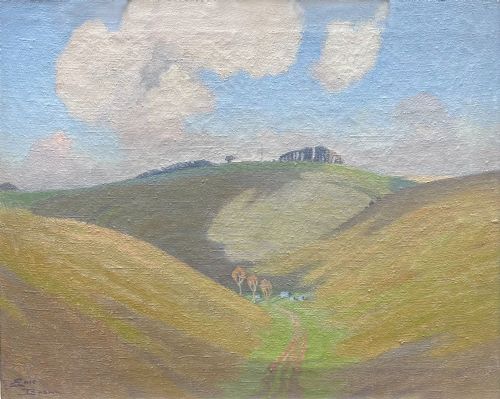
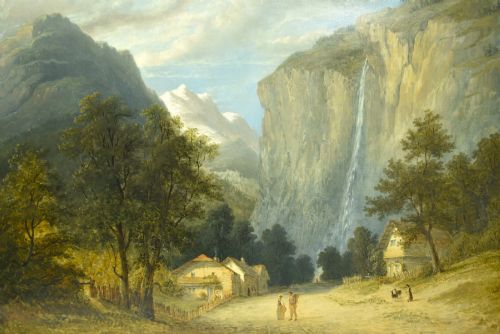


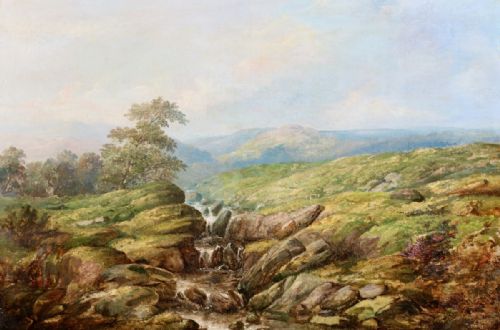


Green Valley Oil Painting
A green valley oil painting brings an open landscape straight onto the wall, caught in oil paint upon canvas or wood.
Green Valley Oil Painting
A green valley oil painting captures rural scenery, riverbanks, and upland passes through the traditions of nineteenth-century and twentieth-century British and European art. These works span periods from the Victorian and Edwardian eras through to the 1960s, reflecting changing approaches to landscape representation.
The subjects range from Welsh valleys and Scottish glens to Yorkshire dales and Alpine settings. Canvas and wood panel serve as the primary supports for these painted views.
How they were made
Artists applied oil paint using brushes and occasionally palette knives to build texture and depth across canvas or wood panel surfaces. Gilt wood frames frequently complete the presentation of these landscapes.
Pigments were layered to capture atmospheric effects such as evening light, valley shadows, and water reflections.
Geese occasionally wander into the river scenes.
What varies in quality
Quality rests in the handling of light and the command of tone across the canvas. Works by established Royal Academicians and recognised regional painters demonstrate superior spatial depth and brushwork control.
The preservation of the original paint surface and the suitability of the accompanying gilt wood frame influence the overall character of each painting.
Hubert Wellington·Reginald Grange Brundrit·Stephen Enoch Hogley·Ernest Higgins Rigg·Owen Bowen
The Green Valley Oil Painting Glossary
- Canvas
- A heavy woven fabric stretched across a wooden frame to serve as a painting surface. It provides the flexible ground for many oil paintings.
- Oil paint
- A slow-drying paint made by combining pigment particles with a drying oil such as linseed. This medium allows for smooth blending and rich colour depth.
- Wood panel
- A rigid wooden support used by artists instead of canvas. It offers a firm foundation for detailed brushwork.
- Gilt wood
- Wood decorated with gold leaf or a gold-coloured finish. This material is standard for traditional picture frames.
- British Impressionism
- An art movement focusing on light and everyday subjects through visible brushstrokes. It appears across various late nineteenth and early twentieth-century landscapes.
Green Valley Oil Painting: Frequently Asked Questions
What periods do these paintings cover?
The works span from the nineteenth century and the Victorian era through Edwardian times and into the mid-twentieth century, including pieces from the 1920s, 1930s, and 1960s.
Different decades bring distinct artistic movements, ranging from traditional landscape representation to post-impressionist and fauve approaches.
What surfaces are used for these landscapes?
Artists painted primarily on stretched canvas or wood panels. These traditional supports hold the oil pigments and maintain their structure over decades.
Canvas allows for a textured surface finish, while wood panels provide a rigid foundation for detailed compositions.
Where do the landscape scenes come from?
The locations include valleys, rivers, and mountainous regions across Wales, Scotland, Yorkshire, and the wider British countryside, alongside continental views.
Specific places referenced in titles range from North Wales and the Isle of Arran to Swiss valleys and Yorkshire dales.
How should I frame and display an oil painting?
Many of these works retain their original gilt wood frames, which complement the tones of the oil paint. Displaying them away from direct sunlight protects the pigments from fading.
Ensure the hanging wall is stable and free from excessive moisture fluctuations to preserve both canvas and frame.