





Dales Landscape Painting
A dales landscape painting captures the rugged topography of northern England through the brush of artists working from the late Victorian era to the mid-twentieth century.
Dales Landscape Painting
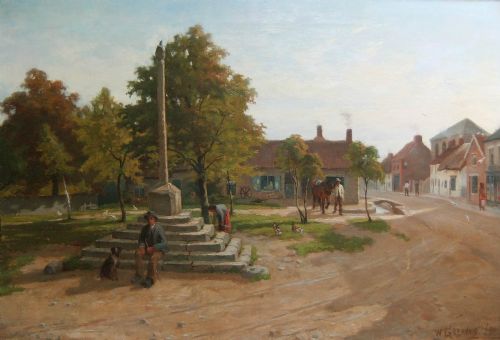
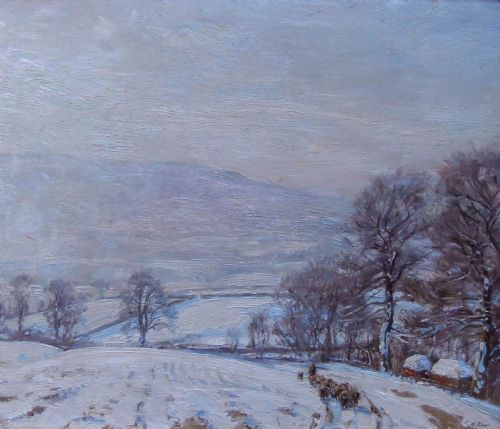
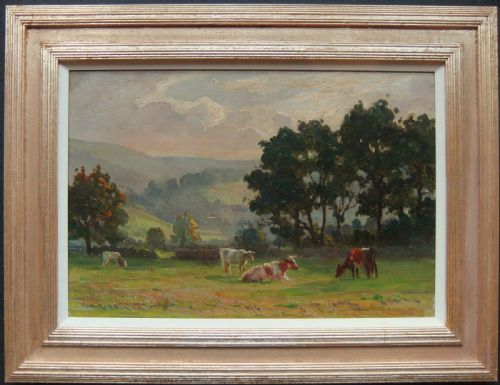
A dales landscape painting focuses on the rural scenery, villages, rivers, and fells of Yorkshire and neighbouring northern valleys. These works document specific locations such as Wensleydale, Swaledale, and Wharfedale across changing seasons and weather conditions.
The most common examples on this page date from the Edwardian period through to the mid-twentieth century. They bridge traditional topographical recording and looser British Impressionist or Modern British styles.
What Varies in Quality
Quality rests upon the artist's handling of natural light and atmospheric depth rather than the mere accuracy of architectural or geographical detail. Stronger examples demonstrate confident brushwork that conveys the texture of stone walls, moors, and fast-flowing rivers.
Compositional balance distinguishes accomplished regional painters from casual amateurs. The best works integrate local structures, such as barns and bridges, into the wider sweep of the valley without losing the sense of scale.
Several watercolours were painted by Fred Lawson and his wife Muriel Metcalfe, recording the same Yorkshire fells from slightly different kitchen windows.
William Greaves·Fred Lawson·Arthur Reginald Smith·Reginald Grange Brundrit·John Frederic Greenwood·Herbert Royle·Fred Stead·Ernest Higgins Rigg·Walter H. Allcott·Joseph Pighills·Kershaw Schofield·John Smith Atherton·Amy E Antill·Harold Wharfe·Joseph Appleyard·Claude Horsfall·Ethel May Mallinson·William Maxwell Reekie·George Graham·James Hardaker·David R Anderson·Maurice Long·William Manners·Arnold Denby·Frederick Dove Ogilvie
The Dales Landscape Painting Glossary
- Plein air
- Painting executed outdoors rather than in a studio. This approach allowed artists to respond directly to changing light and weather in the dales.
- Watercolour
- A paint consisting of pigment suspended in a water-based solution, typically applied to paper. It was widely used for quick landscape studies.
- British Impressionism
- An artistic approach focusing on light and spontaneous brushwork. Practitioners applied these principles to northern rural topography.
- Oil on panel
- A painting executed on a wooden board rather than stretched canvas. This provided a rigid surface favoured by artists working on location.
Dales Landscape Painting: Frequently Asked Questions
What periods do these paintings cover?
The works span from the late nineteenth century through the Edwardian era and into the mid-twentieth century. Most examples cluster around the interwar decades.
During this timeframe, regional artists established distinct local idioms that combined realism with emerging modernist tendencies.
Which valleys appear most often?
Wensleydale, Swaledale, and Wharfedale feature prominently in the titles and subjects. Artists returned repeatedly to specific spots like Castle Bolton and local rivers.
These locations offered varied topography ranging from open moorland to sheltered village streets and historic bridges.
Are these works oil or watercolour?
Both mediums are heavily represented across the collection. Watercolour was favoured for lighter, atmospheric studies executed quickly on paper.
Oil paintings on canvas, board, or timber panels provided heavier textures suited to winter scenes and deeper tonal contrasts.
How can I identify the specific location?
Many pieces include contemporary inscriptions, signatures, or exhibition titles written directly on the front or verso. These notes often name the exact beck, village, or fell.
Local landmarks such as specific waterfalls, castles, and dry stone walls help verify the depicted Yorkshire or northern setting.