



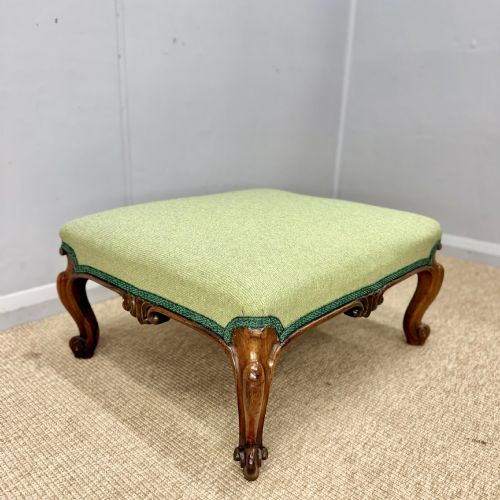


Green Upholstered Ottoman
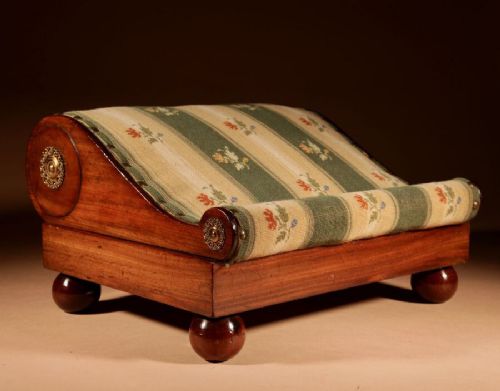
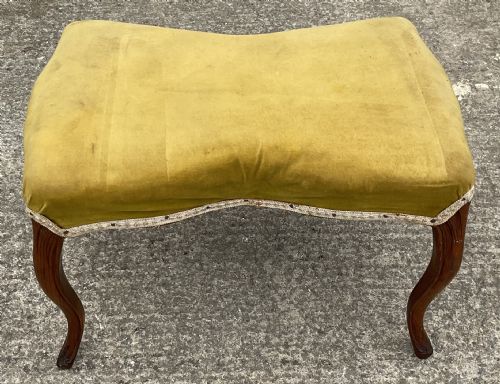
A green upholstered ottoman brings both resting comfort and period character to a room, spanning forms from compact footstools to long window seats.
Green Upholstered Ottoman
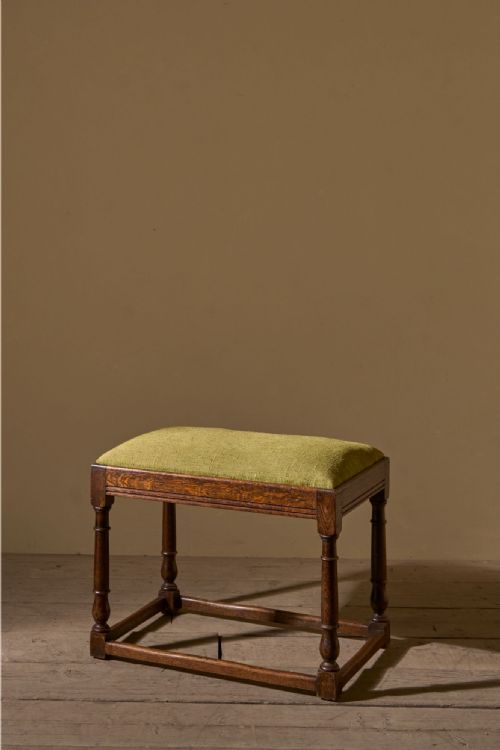
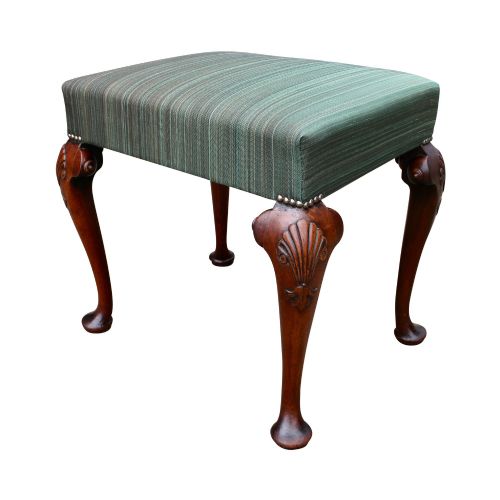
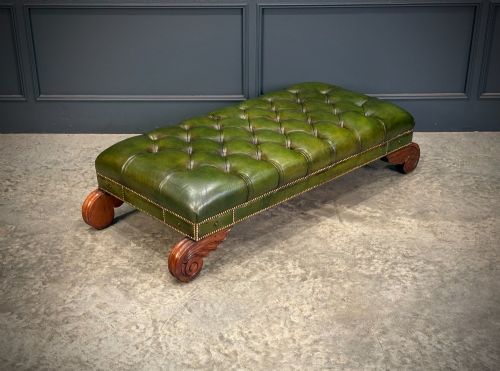
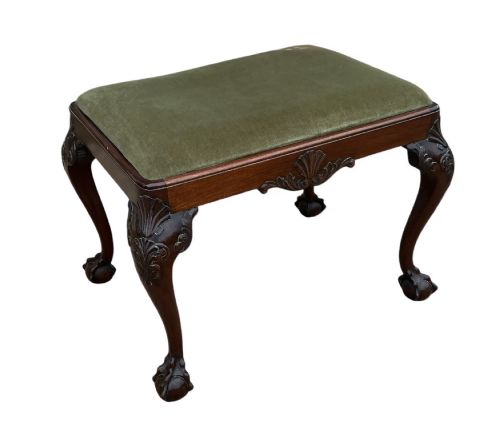
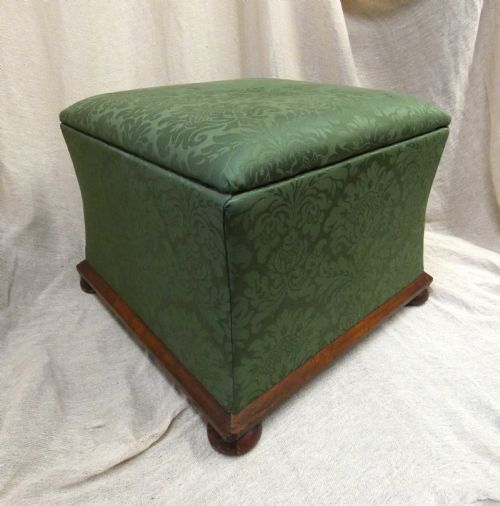
A green upholstered ottoman covers a wide range of nineteenth-century and early twentieth-century seating, from small footstools to large storage chests and daybeds. You will frequently encounter walnut, mahogany, and rosewood frames paired with buttoned leather, heavy linen, velvet, or needlework upholstery.
The selection here encompasses specific period pieces and revival designs, including Regency, Victorian, and Queen Anne styles. Many pieces serve dual purposes as footrests, dressing stools, or low hall seats.
Origins vary across English workshops, French ateliers, and continental makers, reflecting diverse craftsmanship from simple beech frames to elaborately carved rosewood.
Materials and Construction
Frames rely on dense hardwoods such as mahogany, walnut, rosewood, oak, and beech, often shaped with hand-carved details or spiral turnings. Structural integrity depends on traditional joinery within the wooden bases and sturdy internal supports.
Upholstery techniques combine traditional stuffing materials with durable top coverings like leather, chenille, tapestry, and heavy linen, sometimes secured with decorative brass buttoning or stud work.
The selection encompasses nineteenth-century and early twentieth-century designs, including Regency, Victorian, Chippendale Revival, and Queen Anne styles.
Judging Quality and Craftsmanship
Quality rests upon the choice of timber and the precision of the frame's carving, where dense hardwoods and crisp mouldings distinguish finer examples. The harmony between the timber frame and the upholstery treatment determines the overall balance of the piece.
Finer items demonstrate careful attention to internal construction and timber selection, whereas simpler pieces rely on stained beech or pine with straightforward textile coverings.
Harry and Lou Epstein
The Green Upholstered Ottoman Glossary
- Ottoman
- A low upholstered seat or bench without a back or arms, often featuring storage capabilities or serving as an extended footrest.
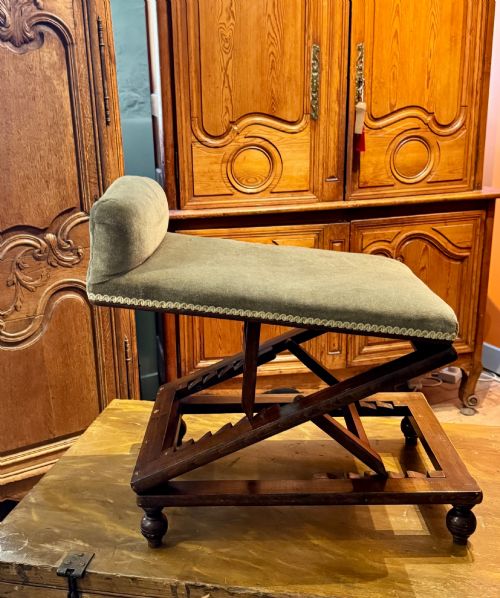
- Gout stool
- An adjustable footstool designed to support the legs at various angles, frequently found in nineteenth-century domestic settings.
- Needlework
- Hand-stitched textile work utilising wool or silk yarn on a canvas mesh ground, commonly seen on period upholstery.
- Duchesse brisee
- A multi-piece upholstered daybed or chaise longue arrangement, typically comprising a chair and one or two footstools.
- Chenille
- A fuzzy tufted fabric yarn that creates a soft, textured pile surface popular on antique dressing stools.
Green Upholstered Ottoman: Frequently Asked Questions
How do I use an ottoman in a modern room?
These pieces function well as coffee table substitutes, end-of-bed benches, or extra living room seating. Their compact footprints allow them to move easily between spaces.
Pairing a walnut or mahogany frame with existing wooden furniture grounds the room while adding a functional soft surface.
What is the difference between an ottoman and a footstool?
Footstools generally provide a resting place for feet and remain smaller in scale, whereas ottomans often incorporate storage compartments, reversible box designs, or larger dimensions suitable for sitting.
Many nineteenth-century examples blur these lines by functioning as both low seats and leg supports.
How can I tell a Victorian stool from a Regency one?
Regency pieces often display classical influences with clean mahogany lines, brass accents, or fluted legs dating from the early decades of the nineteenth century. Victorian examples tend towards heavier walnut or rosewood frames with elaborate carving or buttoned upholstery.
Examining the turning style and timber grain helps clarify the manufacturing decade.
Are these textiles original?
Upholstery on antique seating frequently dates to later restorations, though certain pieces retain period needlework, tapestry, or leather coverings.
Restorers often refresh worn textiles using appropriate period-style fabrics like heavy linen or chenille to preserve the historical character.