



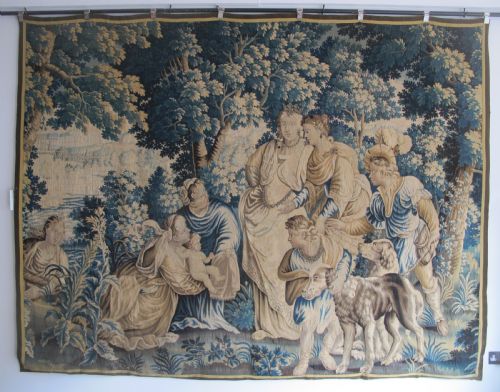
Green Tapestry Wall Hanging
These large-scale textiles bring rich botanical depth to an interior, transforming plain plaster into a layered pastoral landscape.
Green Tapestry Wall Hanging
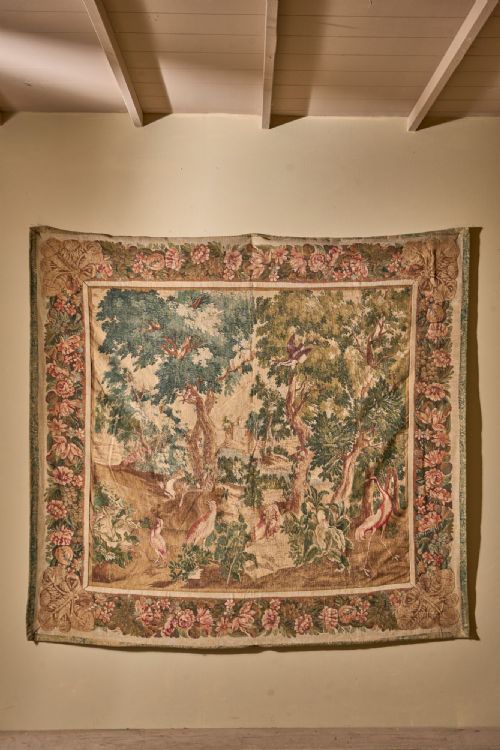
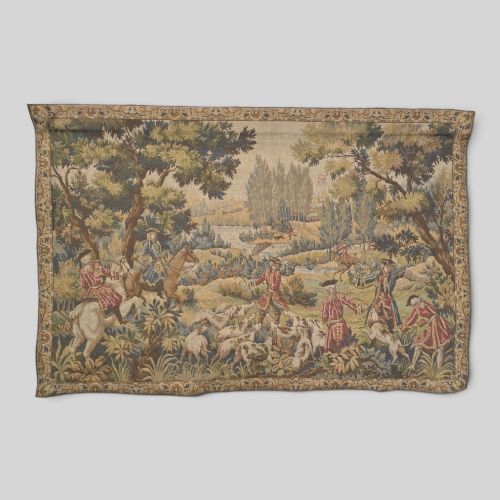
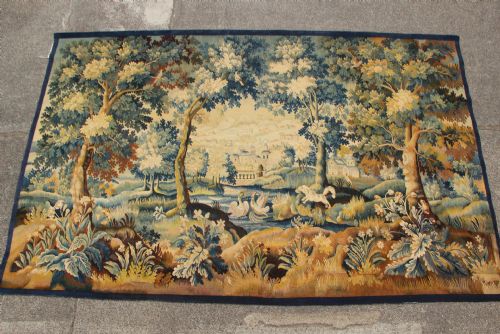
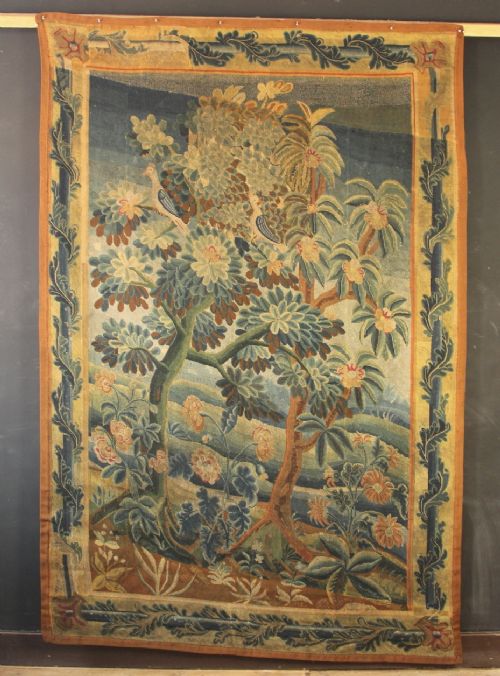
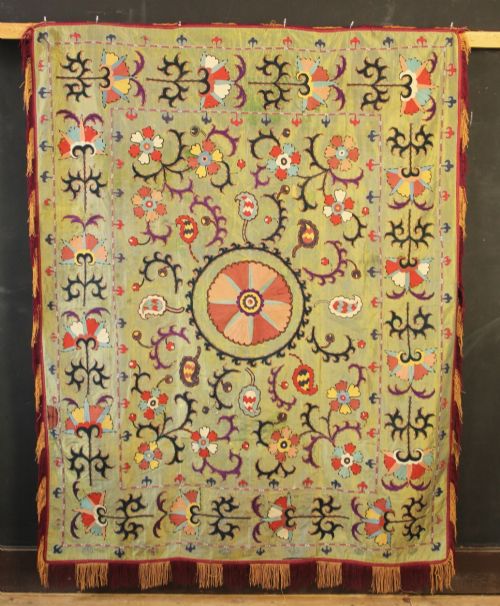
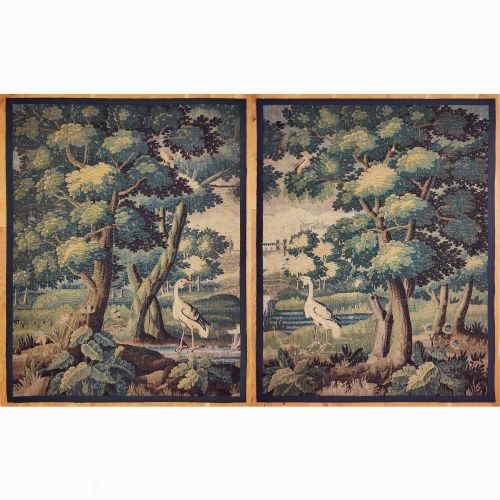
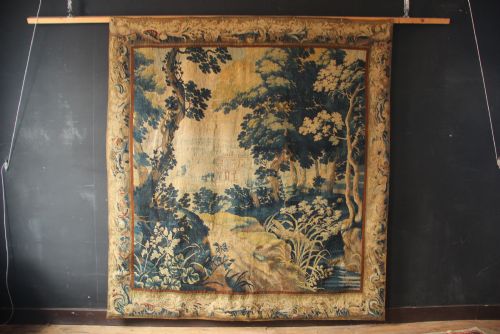
A green tapestry wall hanging encompasses centuries of woven and embroidered textile art, ranging from Flemish verdure forest scenes to Central Asian embroidered panels. The selections available on this page lean heavily towards seventeenth-century Flemish verdure works and eighteenth-century French Aubusson pieces, alongside nineteenth-century interpretations and regional textiles.
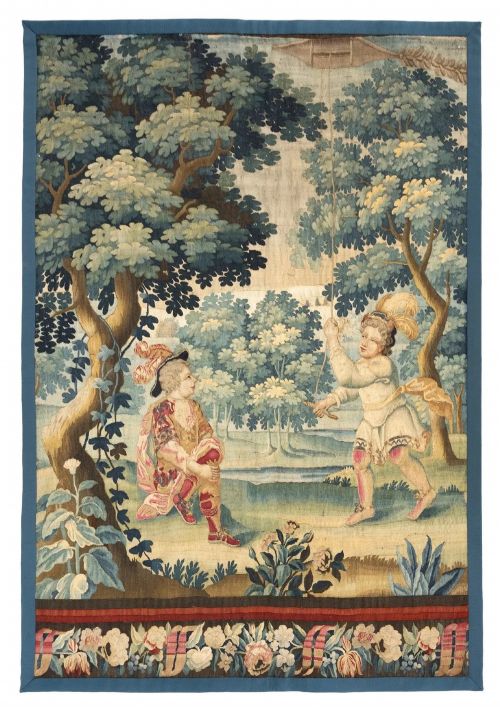
Buyers encounter grand mythological scenes, pastoral landscapes populated by foliage and game parks, and intricate needlework panels designed specifically for interior display. These textiles function effectively as substantial acoustic and visual focal points within reception rooms, studies, and hallways.
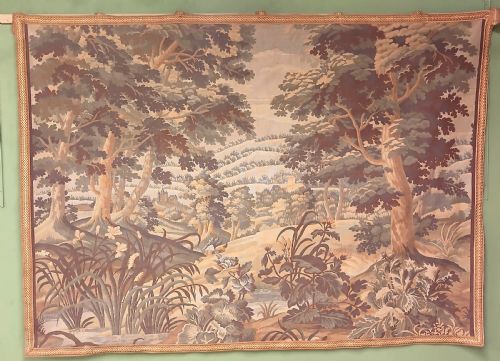
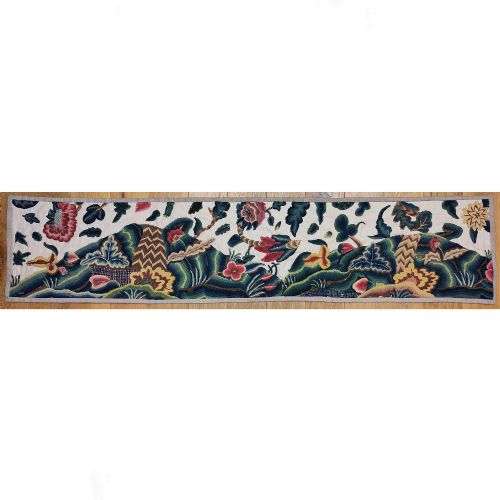
The format varies considerably, from towering floor-to-ceiling panels spanning several metres to long, narrow friezes and framed textile fragments. Verdure designs dominate the palette, utilising deep botanical greens, olive, and verdigris tones alongside earthy browns and muted blues.
Materials and construction
Traditional weavers constructed these panels using a combination of wool, silk, cotton, and linen yarns on high-warp or low-warp looms, building up dense pictorial surfaces through interwoven weft threads. Silk highlights frequently provided luminous contrast against the heavier woollen foliage, while linen served as a sturdy structural warp foundation.
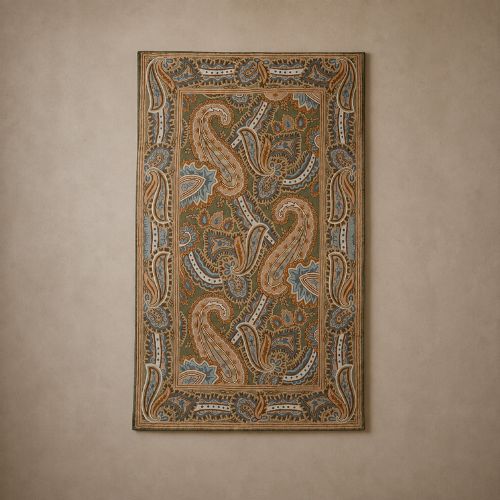
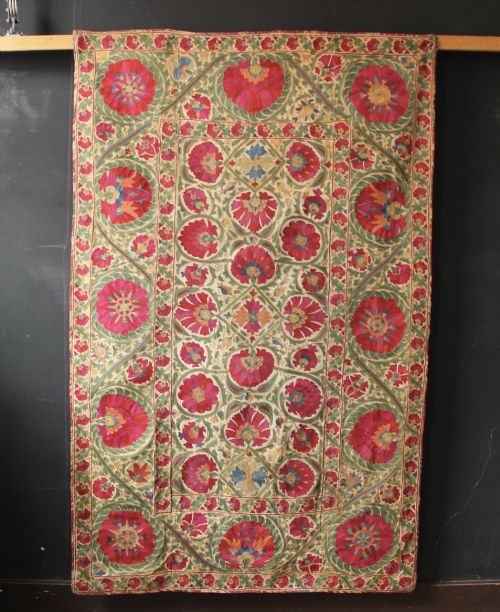
Needlework and embroidery panels relied on crewelwork techniques or fine silk stitching applied directly to linen or cotton ground fabrics, occasionally incorporating water-based pigments to enhance specific shaded details. Central Asian and Scandinavian textile variants introduced distinct regional stitching methods on cotton and wool foundations.
Dyeing methods relied upon natural botanical and mineral sources to achieve the enduring verdant hues that define these pieces, though centuries of light exposure have naturally mellowed bright chlorophyll tones into softer olive and sage variations.
The listings feature materials spanning wool, silk, cotton, linen, wood, pigment, and glass across periods from the late sixteenth to the early twentieth century.
Factors of distinction
The visual depth of a verdure landscape relies on the complexity of its botanical rendering and the subtlety of its colour transitions, where master weavers created convincing atmospheric perspective through careful tonal gradation. Simpler panels employ repetitive leaf motifs with limited palettes, whilst superior examples integrate detailed flora, distant chateaux, and fauna.
The structural integrity of the textile foundation dictates its durability, as heavy wool and silk yarns experience natural tension over centuries. Superior survival depends on the original quality of the weave, the presence of supportive linen linings, and the absence of aggressive chemical cleaning or poor historical repairs.
The Green Tapestry Wall Hanging Glossary
- Verdure
- A type of tapestry featuring a dominant landscape design composed of trees, foliage, plants, and frequently birds or animals. These scenes draw the eye into dense simulated forests using rich green and earth-toned palettes.
- Aubusson
- A town in central France renowned for producing woven tapestries from workshops established over centuries. Pieces originating from this region often showcase lighter pastoral or floral compositions inspired by French rococo and baroque aesthetics.
- Crewelwork
- A style of embroidery utilising wool yarn to execute flowing designs on a sturdy linen or cotton twill foundation. This technique appears frequently in English textile panels designed for wall hanging.
- Flemish Baroque
- A prominent seventeenth-century aesthetic characterised by dramatic theatrical compositions, heavy foliage, and rich mythological narratives. Weavers in centres such as Audenarde and Flanders produced the definitive large-scale examples of this style.
- Lakai
- A nomadic Uzbek group known for distinctive embroidered textiles featuring bold geometric and floral motifs. Their work frequently employs vibrant silk threads on contrasting dark ground fabrics.
Green Tapestry Wall Hanging: Frequently Asked Questions
How do I hang a heavy antique textile safely?
Large woven panels require weight to be distributed evenly along the top edge rather than suspended from isolated points. Conservators typically recommend stitching a wide cotton canvas sleeve or Velcro heading to the reverse, which then fastens to a securely mounted wooden batten on the wall.
Avoid applying direct pressure or metal clips directly to the ancient fabric fibres, as this causes localized tearing. Allowing a small gap between the textile and the wall also ensures adequate air circulation behind the piece.
How can I distinguish a seventeenth-century Flemish piece from a nineteenth-century copy?
Early Flemish examples typically display characteristic hand-spun wool and silk yarns dyed with natural pigments that have mellowed into complex, harmonious patinas. The borders of seventeenth-century panels often feature dense, naturalistic floral and architectural cartouches woven as an integral part of the main composition.
Nineteenth-century revivals frequently exhibit brighter synthetic undertones, stiffer mechanical weave structures, or simplified border designs. Examining the reverse side reveals the irregularity of hand-weaving versus the uniformity of later mechanical production.
What is the difference between a verdure tapestry and a pastoral tapestry?
Verdure tapestries focus primarily on botanical landscapes, thick forests, foliage, and occasional small animals or game birds. Human figures are either entirely absent or play a minor secondary role within the overwhelming woodland scenery.
Pastoral tapestries place human activity at the centre of the composition, depicting shepherds, romantic couples, and agricultural scenes set against gentle open countryside. Both styles share a predominance of natural green, brown, and blue chromatic ranges.