





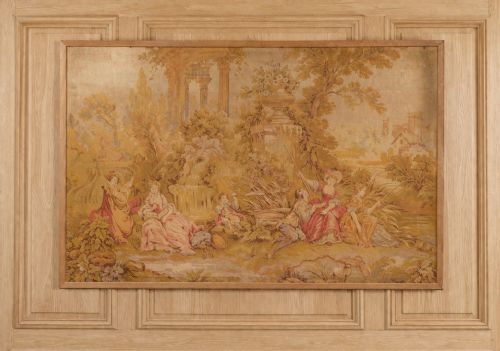
Large Tapestry Panel
A large antique tapestry panel brings centuries of woven history into a room, offering grand scale and rich texture.
Large Tapestry Panel
A large antique tapestry panel is a substantial textile artwork designed for vertical display, often functioning as a wall hanging, screen, or room divider. These pieces originate from various historical periods, ranging from the seventeenth century through to the early twentieth century.
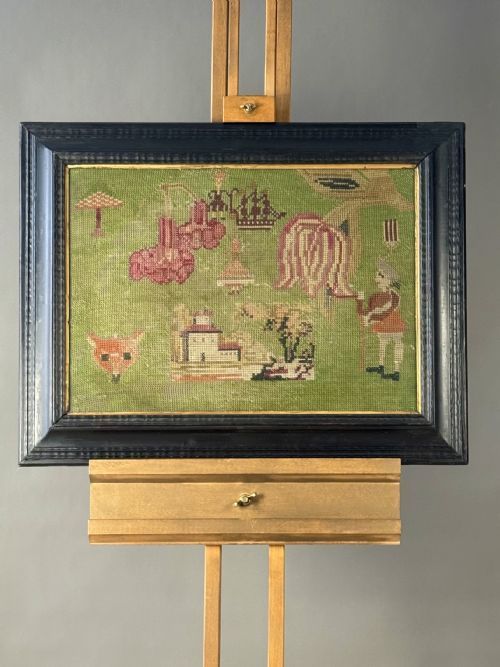
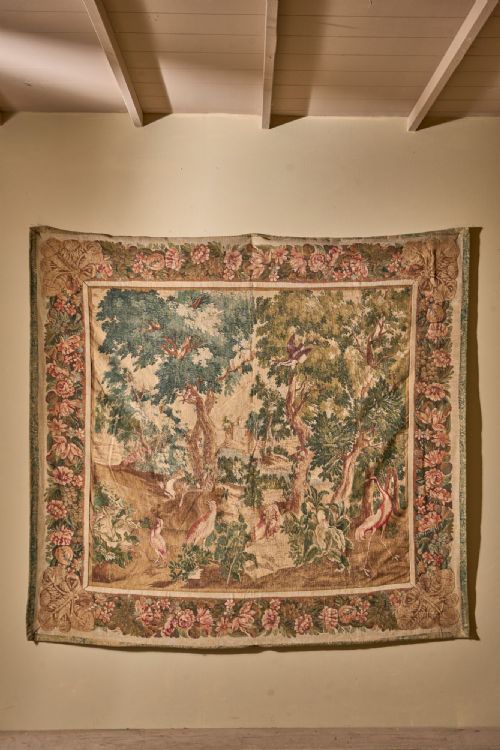
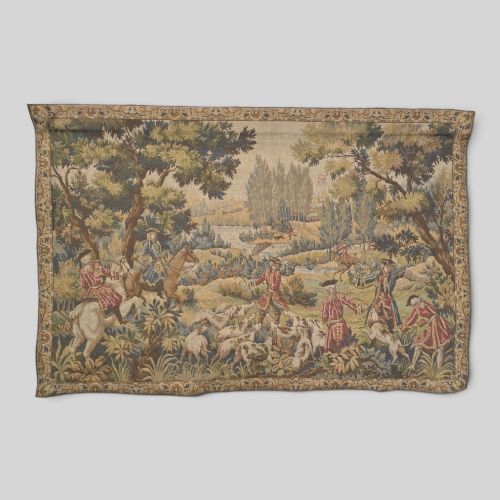
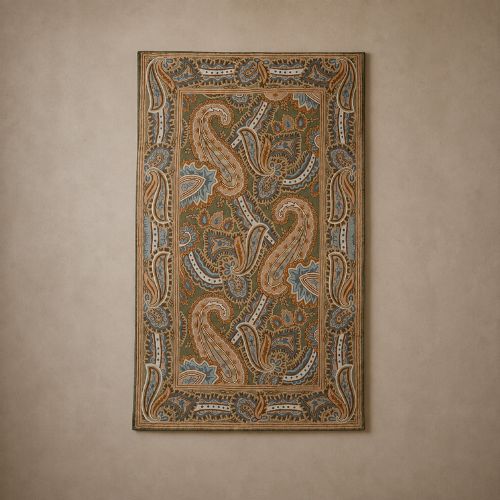
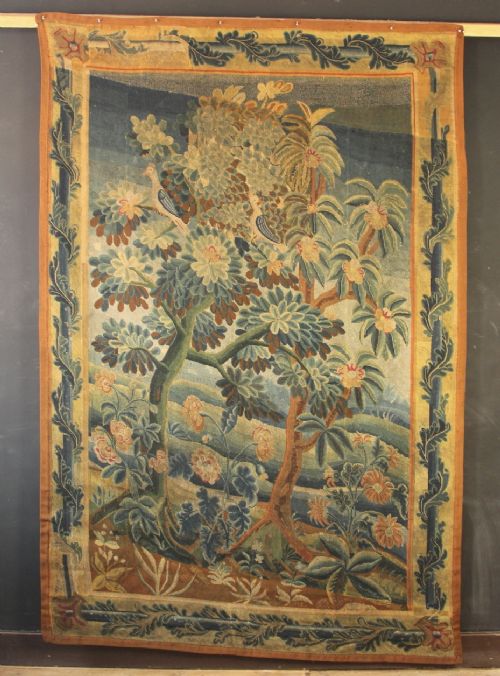
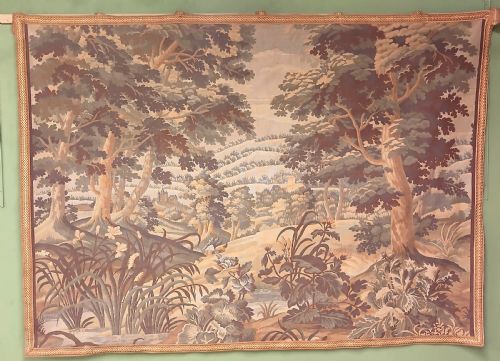
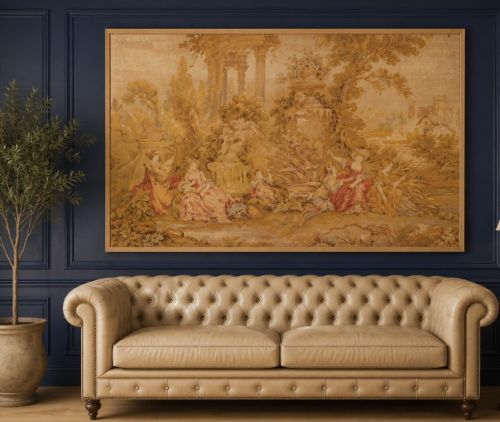
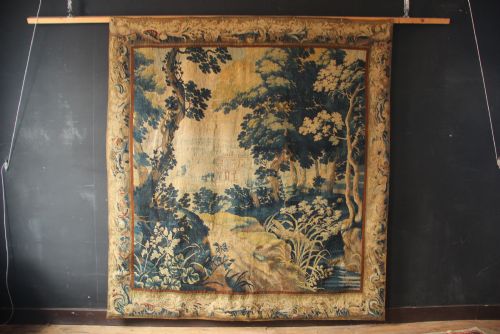
Buyers on this page most frequently encounter French and Flemish examples, alongside English needlework and Asian textiles. The selection spans pastoral scenes, verdure landscapes with foliage, and intricate embroidered panels mounted in timber frames.
Formats vary from expansive wall art to framed panels and multi-fold privacy screens. They serve primarily as interior decoration, bringing historical depth and complex patterns into domestic spaces.
Materials and construction
These textiles rely on natural fibres such as wool, silk, cotton, and linen, sometimes enhanced with metal thread. Weavers and embroiderers worked these materials by hand, creating dense surfaces through techniques like needlework, crewelwork, and traditional weaving.
Many panels are supported by structural elements including timber frames, wood mounts, or glass protection. Larger compositions often integrate sturdy backing fabrics and wooden frames made from walnut or mahogany to support the weight of the textile.
Several panels double as domestic privacy screens, proving that ancestors valued portable walls just as much as open-plan living.
Determinants of quality
Quality rests upon the fineness of the weave, the complexity of the design, and the condition of the fibres. Tightly woven wool and silk threads retain intricate pictorial details and subtle colour shifts far better than looser constructions.
The integrity of the physical support also matters significantly. Original wooden frames, clean stitching, and minimal intervention by restorers distinguish the finest survivors from heavily repaired or degraded examples.
The Large Tapestry Panel Glossary
- Verdure
- A tapestry style dominated by lush foliage, trees, and plants, often featuring birds or distant landscapes. These woodland scenes were particularly popular in seventeenth and eighteenth-century weaving.
- Needlework
- Stitched ornamentation applied to a base fabric by hand using a needle. This encompasses techniques like needlepoint and crewelwork found across many framed panels and screens.
- Ikat
- A dyeing technique where yarns are pattern-dyed before weaving to create distinctive feathered motifs. These panels originate primarily from regions such as Uzbekistan and Borneo.
- Frieze
- A long, horizontal decorative band often utilised in interior architecture and textile art. In these listings, it describes elongated tapestry panels suited for wall display.
Large Tapestry Panel: Frequently Asked Questions
How do I hang a large tapestry panel?
Most large panels require a secure hanging system that distributes the weight evenly across the top edge. Many are mounted within wooden frames or attached to a hidden batten to prevent sagging.
Heavier woven examples should be fixed directly to wall studs using appropriate brackets rather than standard plaster fixings. Glass-framed pieces require heavy-duty mirror hangers rated for their specific weight.
Where were these tapestries originally made?
The pieces originate from diverse European and Asian workshops, with significant representation from France, Flanders, and England. Continental centres produced detailed verdure and pastoral scenes.
Other examples stem from Central Asian and Indonesian traditions, including Suzani and Ikat panels from Uzbekistan and Borneo. Each region utilised distinct local materials and traditional dyeing methods.
What is the difference between tapestry and needlework?
Tapestry is created on a loom during the primary weaving process, where coloured warp and weft threads interlace to form the picture. The design is built directly into the fabric structure itself.
Needlework involves stitching decorative patterns onto an existing woven foundation fabric using a needle. This includes techniques such as needlepoint, tent stitch, and crewel embroidery.
How do I identify the age of a panel?
Dating relies on stylistic clues, material analysis, and construction techniques evident in the textile and frame. Seventeenth and eighteenth-century pieces often feature specific verdure motifs and hand-spun wools.
Nineteenth and early twentieth-century examples frequently show shifts in colour palettes, synthetic dye traces, or manufacturing methods typical of later revival periods.