





Green Wool Woven Tapestry
When you search for green wool woven tapestry, you enter a world of historic wall hangings, verdure panels and floor coverings dominated by Flemish and French workshops.
Green Wool Woven Tapestry
A green wool woven tapestry search brings up large wall hangings, cushion covers, room screens and rugs originating from European weaving centres. The majority of pieces belong to the seventeenth and eighteenth centuries, alongside later nineteenth century interpretations.
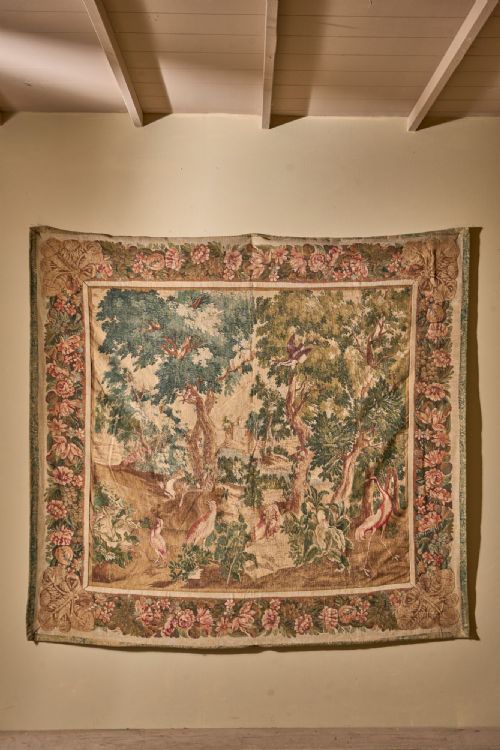
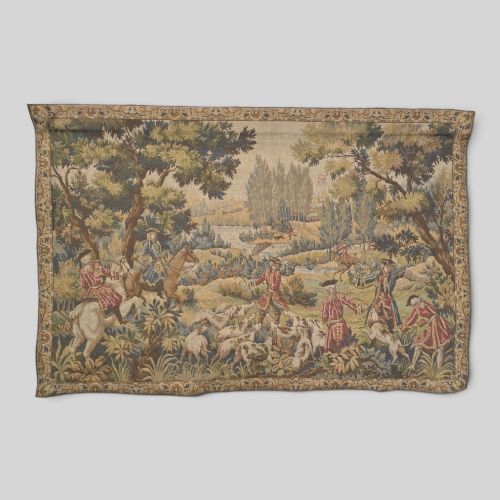
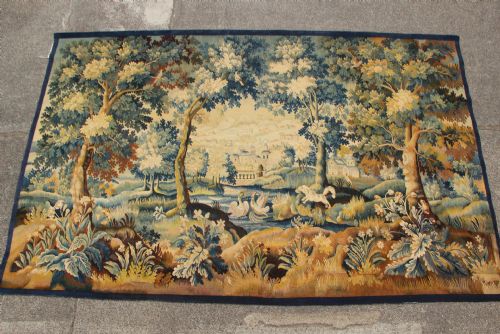
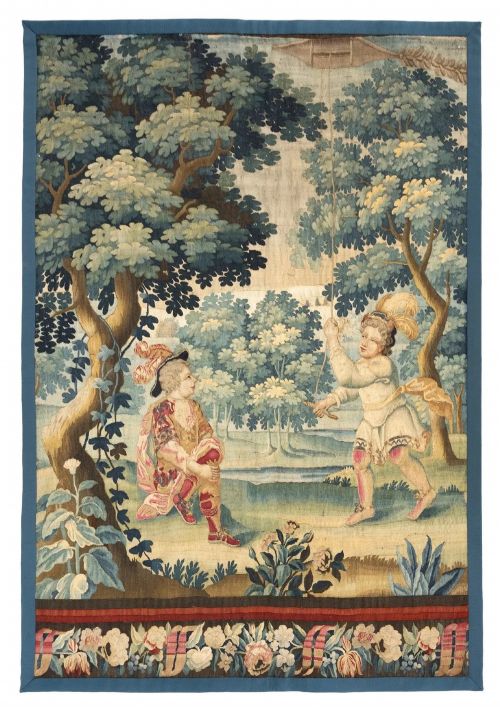
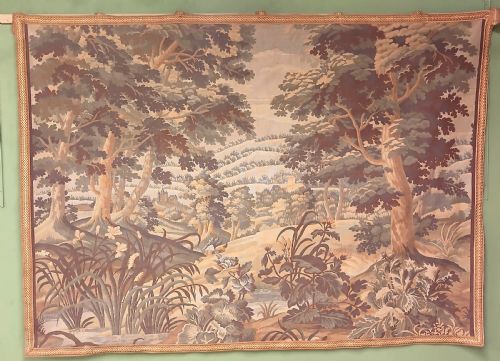
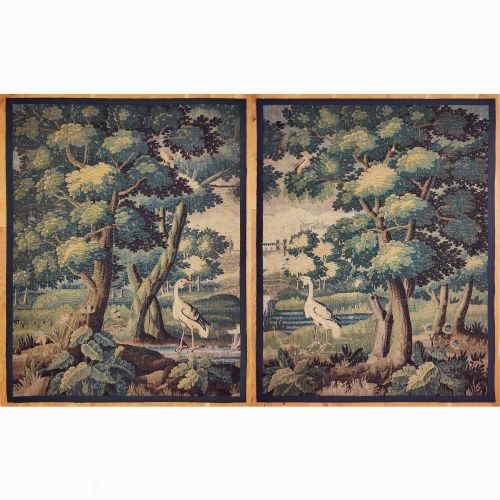
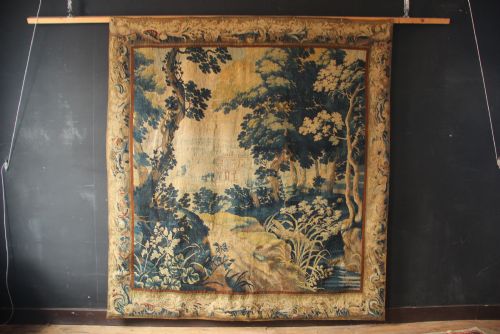
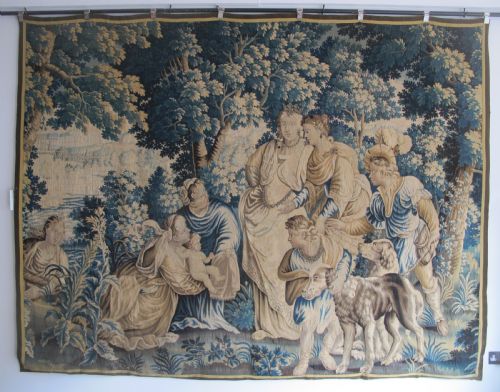
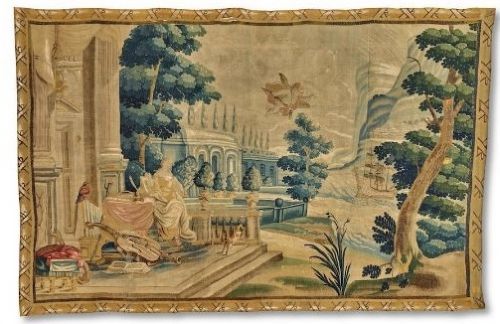
Verdure subjects dominate the selection, portraying lush garden landscapes, woodland foliage and mythological or pastoral scenes. Buyers encounter grand scale panels alongside smaller fragments, framed works and floor coverings.
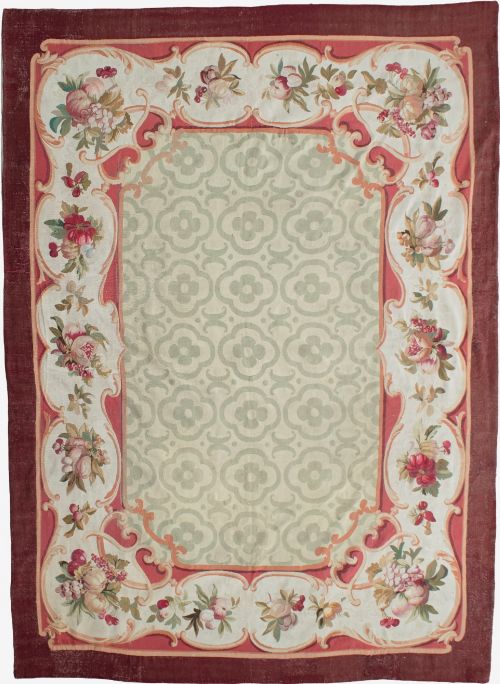
Origins trace primarily to Flemish and French workshops, including Audenarde and Aubusson production. These heavy textile pieces served to insulate stone walls and decorate grand interiors across centuries.
What varies in quality
The density of the weave and the complexity of the design dictate the artistic standard of an antique textile. Finer works utilise a higher thread count and greater variety of dyed yarns to achieve depth and shading in landscape elements.
The survival of original dimensions, colour vibrancy and structural integrity separates intact wall hangings from heavily restored fragments. The skill of the original workshop and the clarity of the pictorial composition determine the distinction between standard room decorations and major museum-grade survivals.
The listings on this site span four centuries of textile production, moving from sixteenth-century North German fragments to early twentieth-century French wall panels.
The Green Wool Woven Tapestry Glossary
- Verdure
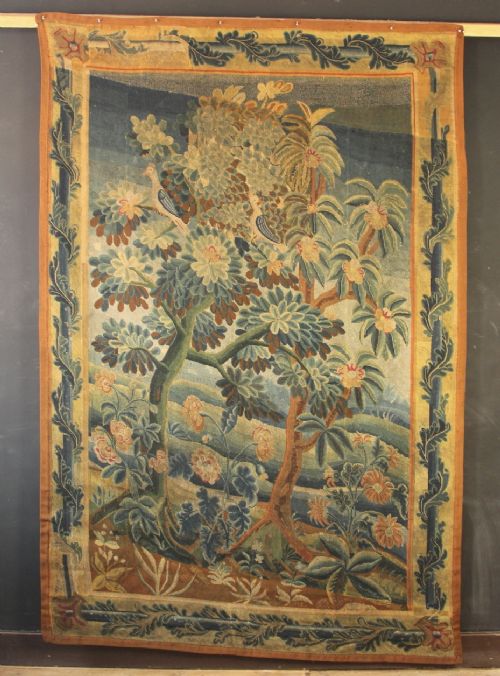
- A type of tapestry featuring a stylized landscape design dominated by trees, foliage, plants and birds. These woodland scenes typically employ varied shades of green and blue wool.
- Aubusson
- A textile originating from the town of Aubusson in France, known for flat-woven carpets and wall hangings produced from the seventeenth century onward. These works often depict pastoral, floral or architectural themes.
- Flemish
- Pertaining to Flanders and the historic low countries, which served as a primary European centre for tapestry production during the sixteenth and seventeenth centuries. Flemish pieces are renowned for fine wool work and detailed pastoral or mythological subjects.
- Kilim
- A flat-woven carpet or rug produced in regions including the Caucasus, Anatolia and parts of Eastern Europe. These items utilise slit-weave techniques to create geometric patterns.
- Needlework
- Hand-stitched textile embellishment applied to a canvas or fabric ground. Many eighteenth-century decorative panels incorporate this technique alongside traditional woven elements.
Green Wool Woven Tapestry: Frequently Asked Questions
How do I hang a large antique tapestry?
Large textile panels require even distribution of weight to prevent stretching and distortion of the wool fibres. Conservation practices generally involve sewing a heavy-duty fabric casing or velcro strip along the top reverse edge, which attaches to a hidden wooden baton mounted securely to the wall.
Avoid direct hanging from localized points or hooks that pull on individual threads. Maintaining a small gap between the textile and the wall ensures adequate air circulation and prevents moisture accumulation behind the piece.
What is a verdure tapestry?
A verdure tapestry is a historic wall hanging that depicts a lush, stylized landscape filled with trees, leaves, foliage and occasionally animals or architectural ruins. These scenes rely heavily on deep greens, blues and earthy tones created from natural wool and silk dyes.
Historically, these landscapes brought the feel of the outdoors inside noble homes while providing valuable insulation against cold stone walls. They range in size from intimate cushion covers and fire screens to massive wall panels covering entire rooms.
How can I tell a Flemish tapestry from a French one?
Flemish pieces from the sixteenth and seventeenth centuries often exhibit dense, crowded foliage, heavy mythological or biblical narratives, and robust borders filled with fruit and flowers. The weaving tends to be deeply layered with rich, dark wools and subtle tonal shifts.
French production, particularly from Aubusson during the eighteenth century, frequently shifts toward lighter pastoral scenes, refined floral bouquets and rococo cartouches. Aubusson works often display softer pastel palettes and more open compositional arrangements reflecting contemporary French interior design trends.