



Green Staffordshire Figurine
These green staffordshire figurine pieces bring vibrant Victorian character to a room through traditional earthenware animals and figures.
Green Staffordshire Figurine
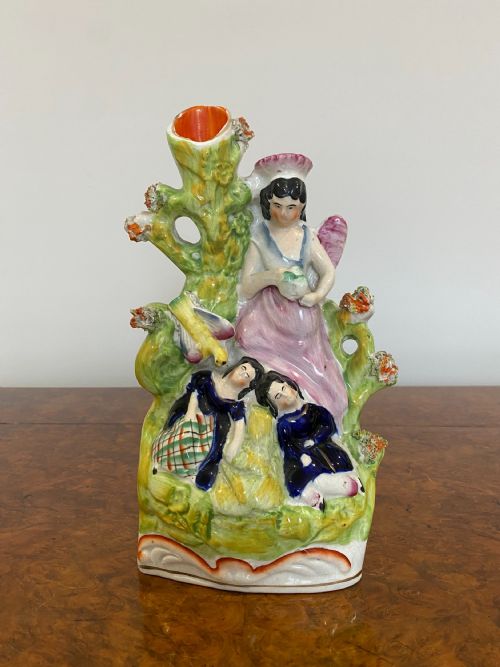
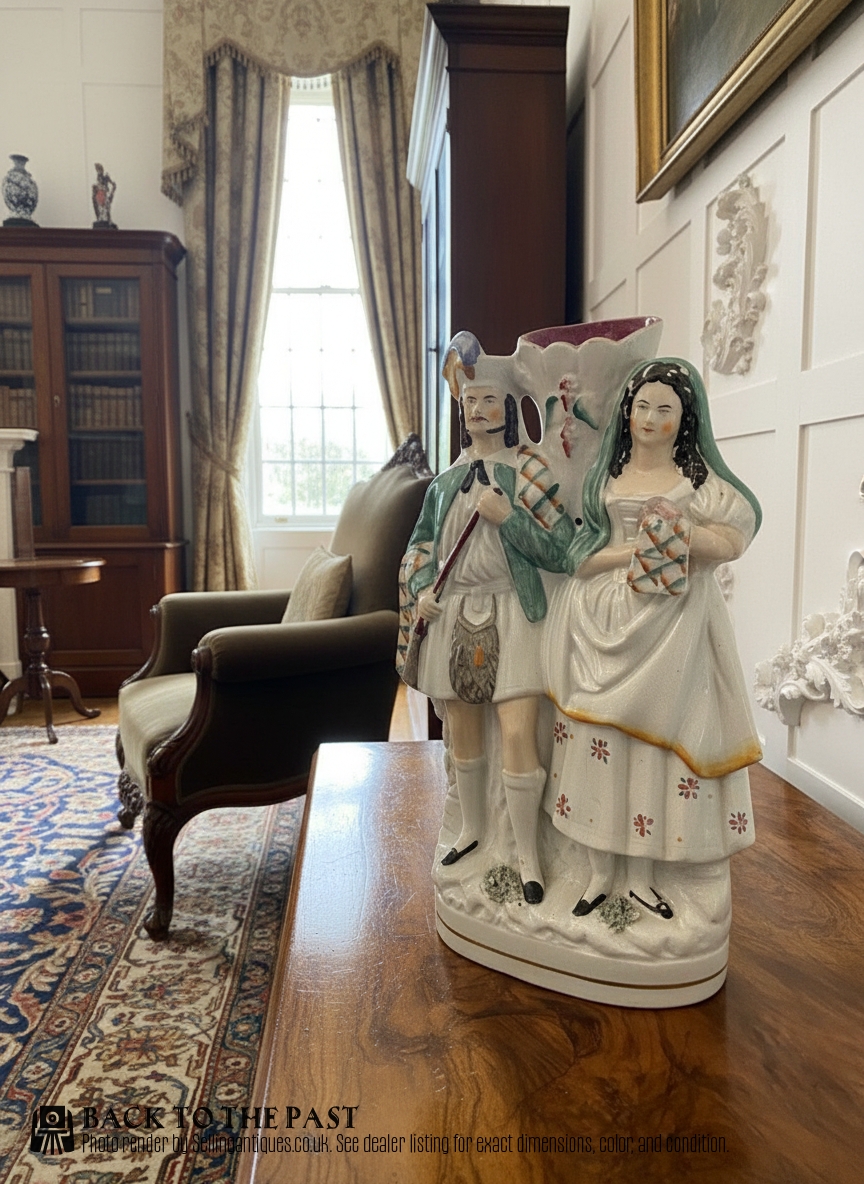
When you search for a green staffordshire figurine, you encounter nineteenth century pottery shaped into decorative figures, spill vases, and sculptural figure groups. These earthenware pieces capture rural subjects, theatrical portraits, and prominent historical personalities from the Victorian and Georgian eras.
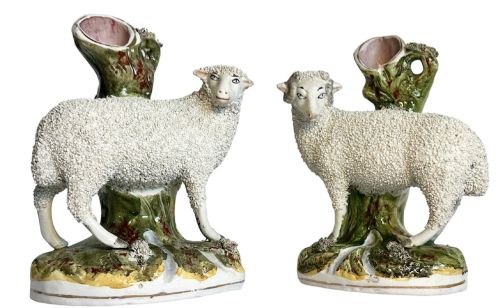
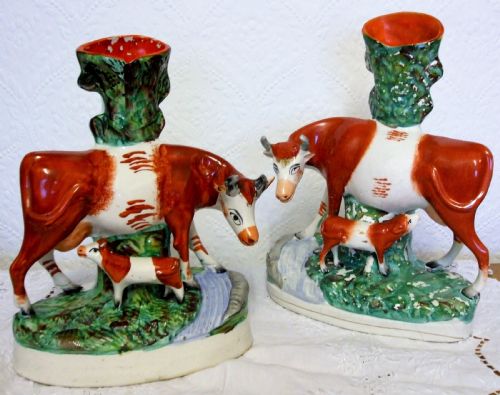
The most common examples on this page are sheep, cows with calves, and spill vases finished with distinctive green glazes and enamel paint. Makers produced these ceramic figures to sit on mantelpieces, bringing rustic charm and narrative scenes into homes.
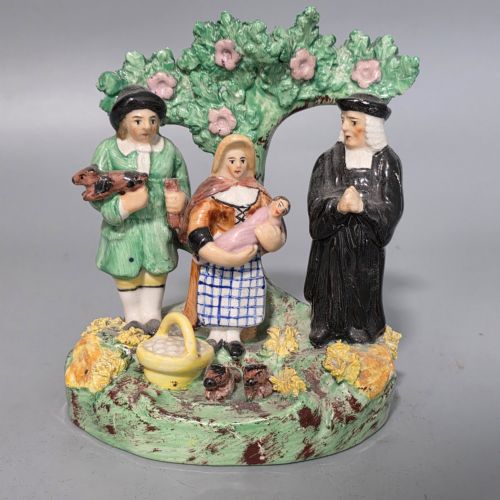
The selection ranges from early pearlware versions associated with Walton to large Victorian flat back figures and mounted jockeys. Each piece reflects the output of nineteenth century Staffordshire potteries through distinct hand painted details.
What varies in quality
The precision and detail of the hand painted enamel work distinguish the finer pieces from simpler workshop output. Skilled decorators achieved sharper expressions and more delicate vegetation on the green bases.
The quality of the glaze application also differs across the range, with some items displaying smooth, even pearlware surfaces while others show pooling and variation in the green lead glaze. Larger flat back pieces and detailed figure groups required greater technical skill in the kiln to prevent distortion.
A striped ceramic zebra stands ready among the sheep, proving nineteenth century potters possessed great imagination.
Walton·Enoch Wood factory
The Green Staffordshire Figurine Glossary
- Earthenware
- Porous pottery fired at a relatively low temperature, which forms the physical body of these figures. Potters glazed the fired clay to make it watertight and decorative.
- Spill vase
- A hollow ceramic holder designed to hold wooden spills used for lighting fires or pipes. These are often modelled as tree trunks beside sheep or cows.
- Pearlware
- A refined type of earthenware developed in the eighteenth century featuring a subtle bluish glaze over a white body. It provides a bright ground for enamel colours.
- Flat back
- A style of ceramic figure where the rear is unglazed or only partially modelled because the piece was intended to stand against a wall. This construction method became common in Victorian production.
- Figure group
- A sculptural ceramic composition involving multiple human or animal subjects interacting within a single scene. Examples include the Tithe Pig and Songsters groups.
Green Staffordshire Figurine: Frequently Asked Questions
What are green staffordshire figurine pieces?
These pieces are nineteenth century ceramic sculptures made in the pottery towns of Staffordshire, featuring prominent green glazed elements and enamel painting. They depict animals, historical figures, and theatrical portraits.
Potters created them as decorative ornaments for homes, often incorporating functional designs like spill holders for the mantelpiece.
How were spill vases used?
Spill vases held slender pieces of wood called spills, which residents lit from the hearth fire to carry flame to candles, lamps, or tobacco pipes. The hollow tree trunk section next to the ceramic animals served this practical purpose.
Over time, these utilitarian holders became purely decorative mantel ornaments as safer lighting methods emerged.
What is a flat back figure?
A flat back figure is a ceramic sculpture designed with a plain or unadorned rear surface because it stood directly against a wall on a shelf or mantelpiece. This method saved time and materials during production.
Victorian makers adopted this style widely for larger portrait figures and animal groups to ensure stability.
How do pearlware figures differ from later Victorian pieces?
Pearlware figures typically date to the earlier nineteenth century and feature a characteristic bluish glaze over a fine earthenware body, often associated with makers like Walton. They tend to have subtle enamel palettes.
Later Victorian pieces frequently utilise flat back construction and stronger green glazes with brighter enamel paint applications.