


Green River Painting
When you search for a green river painting, you are looking at landscape artworks capturing waterways from the eighteenth to the mid-twentieth century.
Green River Painting
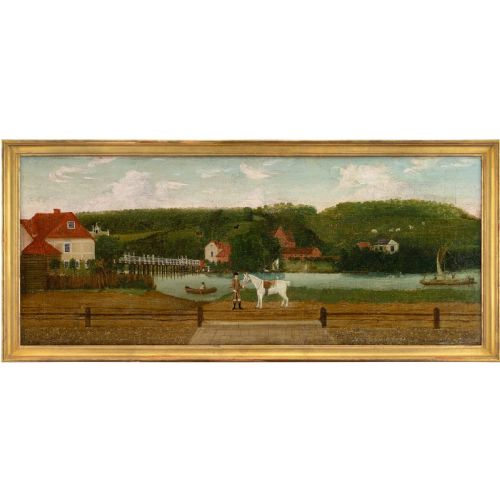
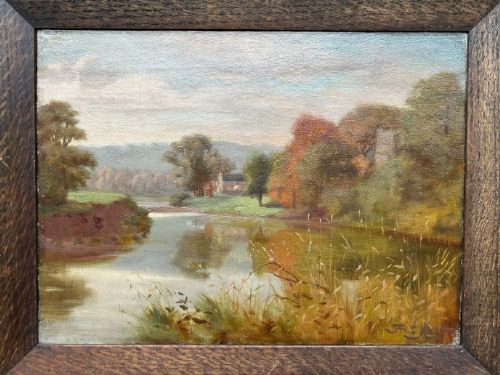
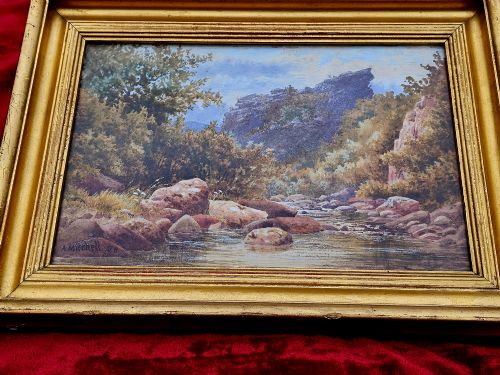
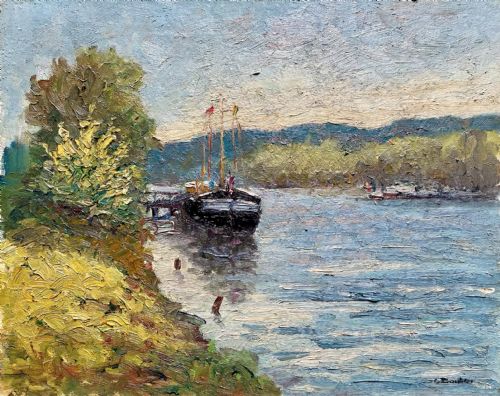
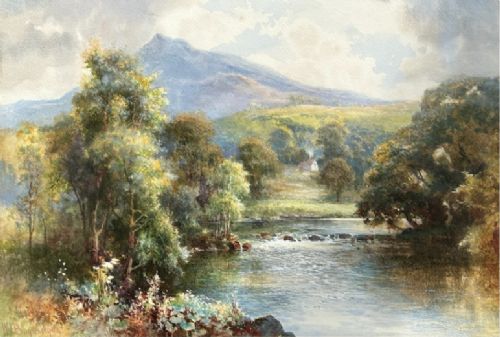
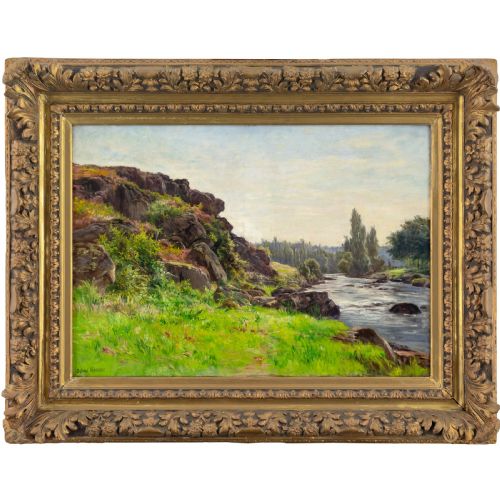
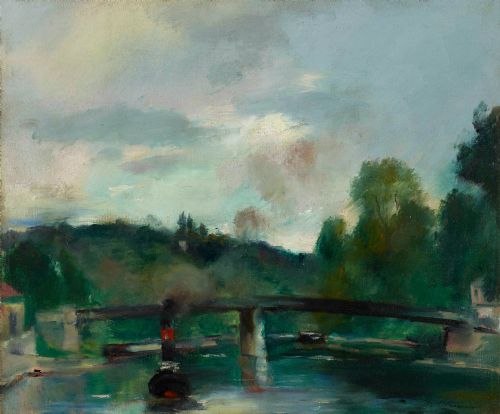
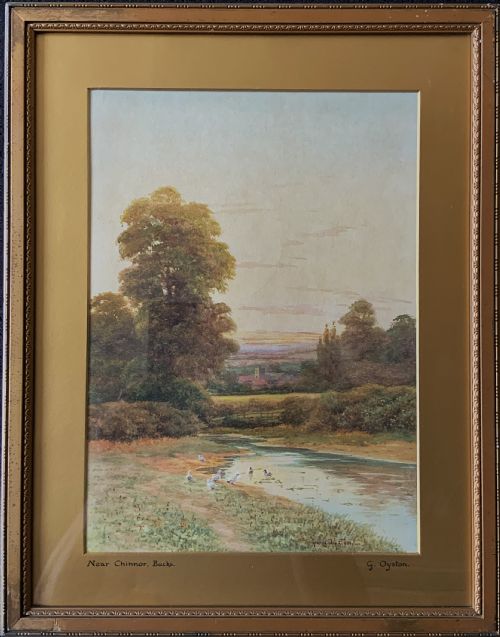
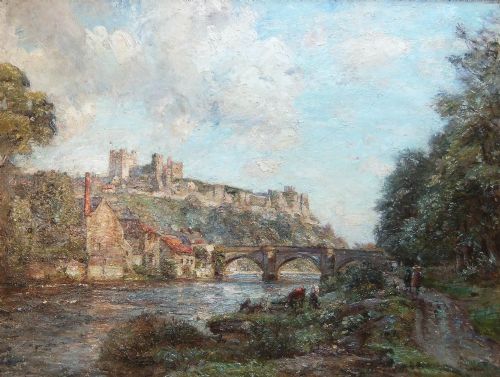
A green river painting typically presents pastoral views, pastoral waterways, and rural riverbanks executed during periods spanning from the eighteenth century through to the mid-twentieth century. These works capture specific geographies ranging from Welsh streams and English rivers to French country scenes.
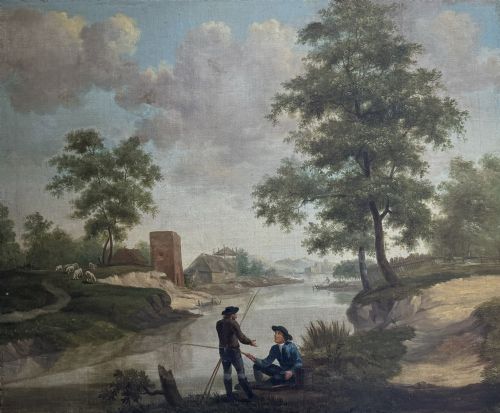
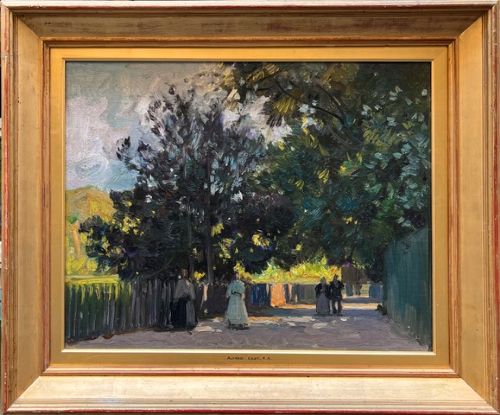
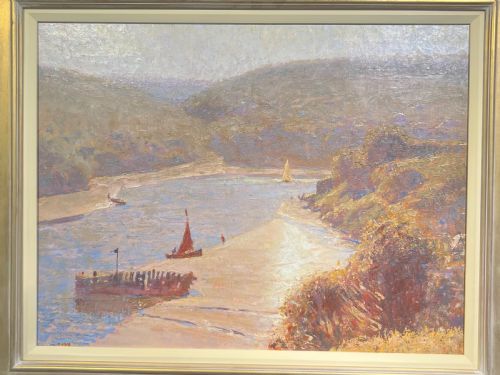
The versions most commonly met on this page include nineteenth-century oil paintings on canvas and early twentieth-century watercolour paintings depicting pastoral landscapes. Artists working within British, French, and Flemish schools recorded these aquatic vistas across various decades.
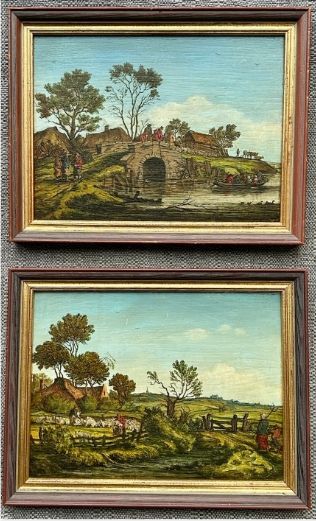
Compositions often feature figures fishing, footbridges, and leafy banks beside flowing water, categorised broadly under fine art wall art and oil paintings. The selection represents diverse regional interpretations of natural topography through impressionist and traditional lenses.
How they were made
Makers built these pieces primarily using oil paint on canvas or wood panels, alongside watercolours on paper. Prepared grounds and canvas laid onto board also appear across the historical works.
Framing and mounting frequently utilise giltwood and gesso frames to house the painted surfaces. Brushwork ranges from smooth academic application to visible impasto technique characteristic of impressionist schools.
Observed styles span British Impressionism, the Barbizon School, Victorian Naturalism, and mid-century impressionism.
What varies in quality
Quality depends upon the dexterity of brushwork and the confidence with which the artist handles light and shadow on the water. Masterful handling of paint creates atmospheric depth along the riverbanks.
The provenance and documentation associated with signed works by exhibited artists or Royal Academy participants elevate the standing of a piece within its historical period.
George Graham·Alfred Young Nutt·Frederick Marriott·William Joseph Boyes·Gabriel Mathieu·George Oyston·Sir Alfred East·Herbert Royle·Paul Desire Trouillebert·Henry H Parker·Sydney Yates Johnson·John Horace Hooper·William George Tennick·Hubert Wellington·Honore Cavaroc·Archibald Kay·Henri Jaques Delpy·Sir David Murray·Mario Pinetti·Henry John Kinnaird
The Green River Painting Glossary
- Canvas
- A heavy woven fabric used as a surface for oil painting. It is typically stretched over a wooden frame before application.
- Gesso
- A plaster-like mixture applied to wood panels or frames to prepare a smooth surface for painting or gilding.
- Impasto
- A technique where paint is laid thickly on a surface, leaving visible brush or palette knife marks.
- Watercolour
- A painting method where water-soluble pigments are suspended in a water-based solution on paper.
- Barbizon School
- A mid-nineteenth-century French art movement characterised by tonal simplicity and direct observation of nature.
Green River Painting: Frequently Asked Questions
What periods do these paintings cover?
The inventory encompasses works spanning from the eighteenth century through Victorian, Edwardian, and mid-century modern eras. Each period brings distinct stylistic approaches to landscape representation.
Later pieces often reflect impressionist influences, while earlier examples adhere more strictly to traditional academic conventions of British and European landscape painting.
How were these landscape artworks displayed?
These paintings were traditionally housed in domestic interiors, often set within ornate giltwood and gesso frames designed to complement the subject matter. They served as primary wall art for drawing rooms and studies.
Today, they function similarly in home interiors, requiring stable wall placements away from direct moisture and excessive sunlight to preserve the canvas and paint layers.
Can I identify the exact river depicted?
Many titles and signatures explicitly record specific locations, such as the Thames, the Seine, or Welsh river pathways near Bethesda. Artists often inscribed these details on the reverse or within the primary documentation.
Where inscriptions are absent, stylistic markers and regional school classifications help narrow down the likely geographic origin of the natural scene.
What is the difference between oil and watercolour versions?
Oil paintings utilise pigment suspended in drying oils applied to canvas or wood panels, offering rich textures and deep colour layering. Watercolours employ translucent washes on paper, yielding a lighter and more luminous finish.
Both mediums capture natural light differently, with oils allowing for thick impasto techniques and watercolours relying on the reflective quality of the underlying paper.