
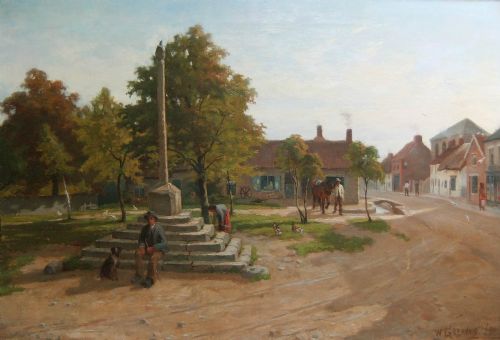


Antique Picture of Yorkshire
An antique picture of Yorkshire records northern landscapes, harbours, and towns through the brush of Victorian and early twentieth-century painters.
Antique Picture of Yorkshire
An antique picture of Yorkshire comprises original watercolours, oil paintings, and engravings depicting northern rural views, coastal harbours, and historic market towns. The pieces span from the late nineteenth century into the mid-twentieth century, capturing the changing artistic styles of the period.
Most examples encountered here are works on paper executed in watercolour pigment, depicting familiar locations such as Whitby, Richmond, and York. Artists worked within British Impressionism, Victorian Realism, and the broader twentieth-century British school.
Buyers find compositions ranging from quiet river valleys and farmyards to bustling fishing dockyards and coastal seascapes. Each artwork serves as a visual record of a specific northern locale during a distinct era.
How they were made
Artists applied watercolour paint and pigment onto paper, often working en plein air to capture the shifting light of the Yorkshire landscape. Many of these works were subsequently framed behind glass to protect the delicate water-soluble mediums.
Oil paintings were constructed using oil on canvas or oil on board, building up richer surface textures and deeper colour tones. These panels and canvases required wooden stretchers and frames to support the weight of the paint layers.
Draftsmanship underpinned both mediums, occasionally aided by ink or pencil underdrawing visible beneath translucent washes of pigment. Engravings utilised printed plates to reproduce architectural views of regional landmarks.
Flither pickers dot the shoreline in nineteenth-century oils, gathering bait along the rocky coast.
What varies in quality
The strength of the composition and the confidence of the brushwork distinguish finer watercolours from more standard topographical records. Masterful handling of light and atmosphere separates accomplished artists from competent amateurs.
Condition plays a part, particularly regarding the preservation of pigment vibrancy against fading caused by exposure to light. The integrity of the paper support and the quality of the original framing also influence the overall standard of a piece.
Alfred George Morgan·Fred Lawson·Tom Dudley·William Greaves·Arthur Reginald Smith
The Antique Picture of Yorkshire Glossary
- Watercolour
- A paint consisting of a suspension of colour in a water-soluble binder, used extensively for landscape works on paper. It allows for translucent washes and delicate atmospheric effects.
- Oil on Canvas
- A painting medium where pigments are bound with drying oils and applied to a stretched woven fabric support. This technique provides durable surfaces and rich colour saturation.
- Diptych
- A painting comprising two separate hinged or matching panels designed to be displayed together. The evidence includes paired views of religious and civic architecture.
- British Impressionism
- An artistic approach focusing on light, fleeting moments, and everyday rural or coastal subjects. Painters adopted looser brushstrokes to convey immediate sensory impressions.
- Provenance
- The documented history of ownership or the origin of an artwork, often establishing its authenticity and studio background. It connects a piece directly to the artist's estate or early exhibitions.
Antique Picture of Yorkshire: Frequently Asked Questions
What subjects do these Yorkshire pictures show?
The artworks depict a diverse range of northern scenes, including coastal harbours like Whitby, rural river valleys such as Wharfedale, and historic city streets in York.
Artists also recorded everyday agricultural life, farmyards, and architectural landmarks across the county during the nineteenth and twentieth centuries.
How should I care for a watercolour painting?
Watercolours require protection from direct sunlight to prevent the pigments from fading over time. Glazing with appropriate glass helps shield the delicate paper surface from atmospheric moisture and dust.
Displaying pieces away from damp environments ensures the paper support remains stable and free from foxing.
Are these paintings original works?
The selection consists primarily of original hand-painted watercolours and oil paintings created directly by regional artists. Signed examples carry the personal mark of the painter on the front or verso.
The inventory also contains period engravings produced to illustrate historical publications about the county.
How do I identify the period of a painting?
Stylistic clues, such as the loose brushwork of early twentieth-century British impressionism or the tighter realism of the Victorian era, help date a piece. Framing materials, artists' signatures, and old exhibition labels provide further chronological evidence.
Recorded dates associated with the artists' known working periods anchor the timeframe of each artwork.