

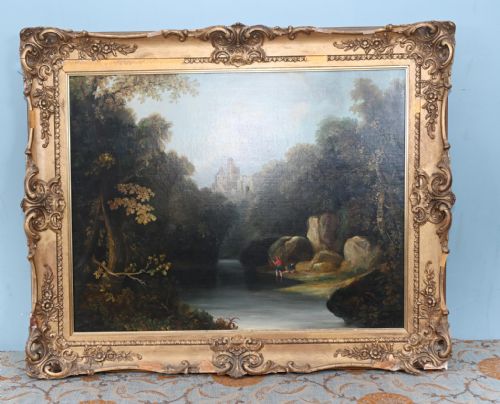

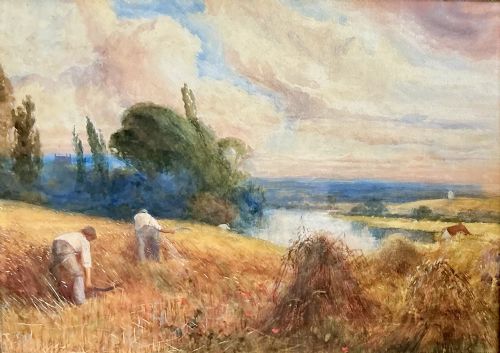
Victorian River Scene
When you search for a victorian river scene, you are looking at nineteenth-century painted vistas of flowing water, valleys, and riverbanks that capture nineteenth-century topographical tastes.
Victorian River Scene
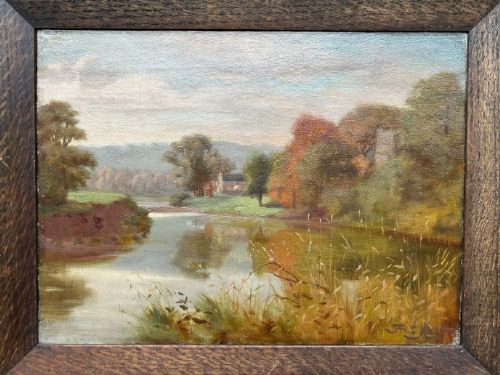
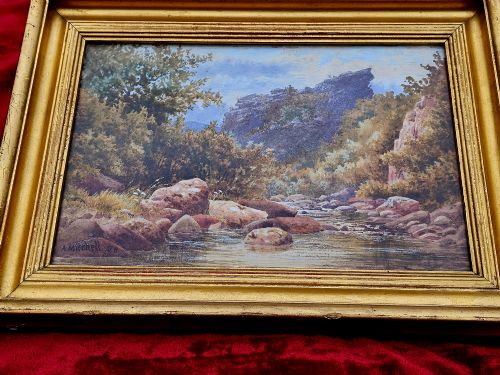
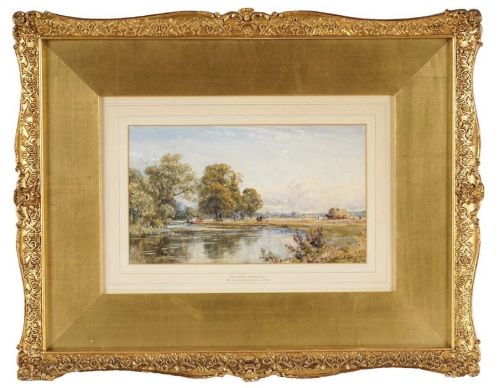
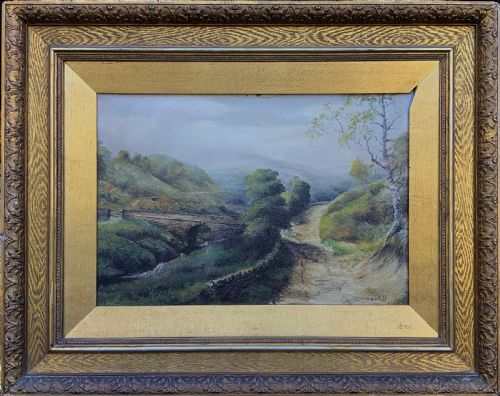
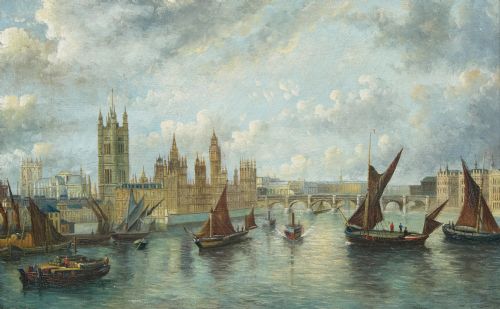
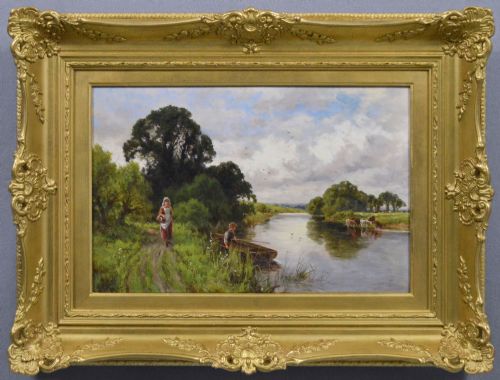
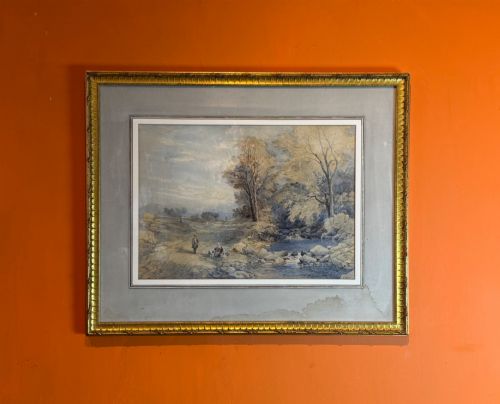
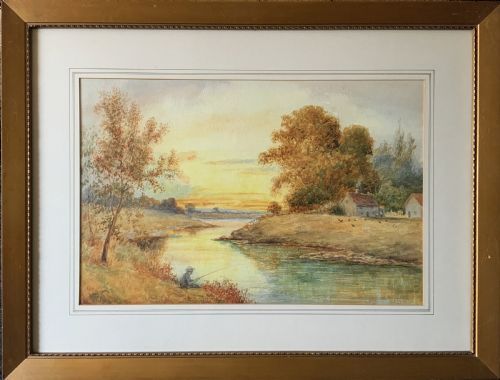
A victorian river scene records the waterways of Britain and Europe during the nineteenth and early twentieth centuries, painted in oils or watercolours. These works range from intimate rural watercolours to large scale oil paintings on canvas depicting locks, estuaries, and riverbanks.
Most pieces on this page originate from the Victorian and Edwardian periods, frequently executed by named artists associated with regional British schools. The subjects span named rivers such as the Thames, Severn, and Tyne, alongside Welsh and Scottish waterways.
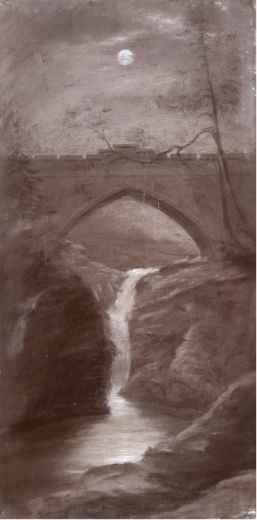
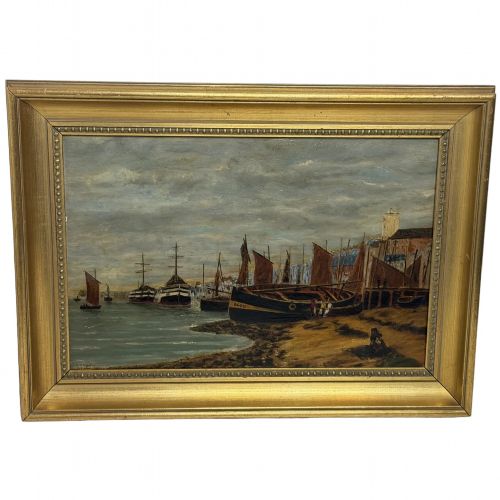
The compositions vary from pastoral watercolours with figures and cattle to atmospheric tonalist views of industrial ports and quiet backwaters. Framed art pieces from this grouping often retain their original giltwood surrounds.
How they were made
Artists painted these scenes using oil paint on canvas or board, and watercolour on paper, frequently supported by charcoal or pencil underdrawing. Canvas works utilise heavy stretched grounds, whilst watercolours rely on absorbent paper to capture translucent washes.
Finished works were typically housed in ornate giltwood frames that provided structural rigidity and visual depth to the composition. The physical materials reflect standard nineteenth-century studio practices, including the use of commercially prepared canvases and rag papers.
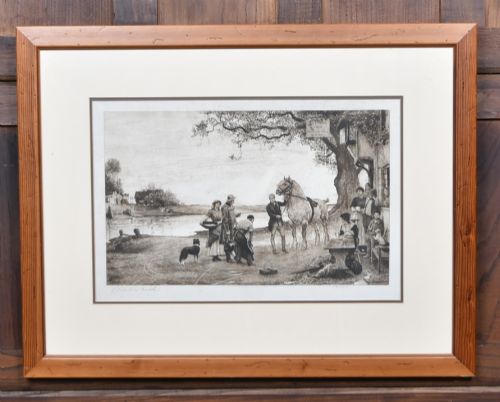
Listings span the nineteenth and early twentieth centuries, featuring oil on canvas, watercolour, charcoal, and etching.
What varies in quality
Quality in a victorian river scene rests upon the confidence of the brushwork, the handling of natural light, and the spatial depth of the composition. Stronger works demonstrate assured draughtsmanship and careful observation of atmospheric conditions rather than formulaic repetition.
The presence of a documented artist signature, exhibition history, or attribution to a recognised regional school elevates the standing of a painting. Original framing and undisturbed surfaces further distinguish superior examples from standard decorative works.
Alfred Young Nutt·Frederick Marriott·Robert Thorne Waite·Thomas Bush Hardy·David Cox Jnr·Benjamin Williams Leader
The Victorian River Scene Glossary
- Watercolour
- A painting method where fine pigment is suspended in a water-soluble binder and applied to paper. This medium allows for luminous washes that simulate the reflective surface of water.
- Giltwood
- Carved wood treated with a thin layer of gold leaf or metallic powder. It is commonly found on the ornate frames enclosing nineteenth-century canvases.
- Tonalism
- An artistic style that emerged in the late nineteenth century, emphasising atmospheric effects and shadowy, muted palettes. Works in this vein often depict river scenes at dusk or dawn.
- Tondo
- A circular painting or relief sculpture. This format appears occasionally in nineteenth-century landscape and river views.
- Etching
- A printmaking process where acid cuts into unprotected areas of a metal plate to hold the ink. It produced linear rural scenes during the nineteenth century.
Victorian River Scene: Frequently Asked Questions
Are these paintings original?
The listings comprise original nineteenth-century works executed by hand in oil or watercolour, rather than modern reproductions. Artists painted these scenes directly from nature or within studios during the Victorian and Edwardian eras.
Each piece bears the distinct brushstrokes and material characteristics of its period, from traditional canvas supports to historic paper stocks.
How should I frame them?
Many works arrive in period giltwood frames that complement the nineteenth-century aesthetic. Preserving these historic surrounds maintains the integrity of the piece.
If framing is required, choose simple mounts and traditional mouldings that respect the age and medium of the artwork.
Did artists paint outdoors?
Many nineteenth-century painters produced initial watercolour sketches or oil studies outdoors on site. Finished exhibition pieces were often completed later in the studio using these field observations.
The portable box easel and improved watercolour tubes made outdoor sketching increasingly popular during this era.