


Green Porcelain Lamps
Green porcelain lamps bring a rich, translucent colour and formal presence to a room, turning antique export vases and French 19th Century bodies into functional lighting.
Green Porcelain Lamps
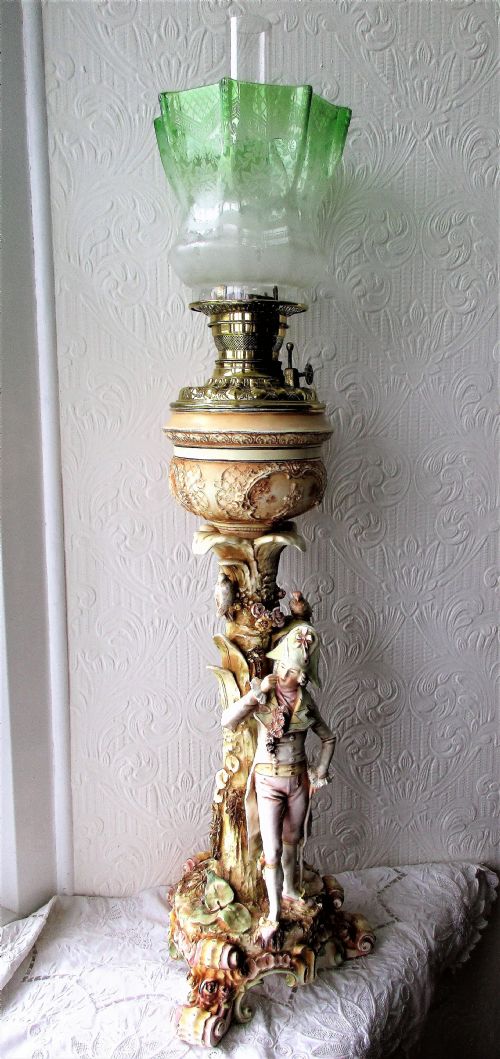
Green porcelain lamps combine historical ceramic bodies with electrical hardware, taking the form of table lamps, converted oil lamps, and decorative vases mounted for illumination. When you search for green porcelain lamps, you encounter pieces spanning the 19th Century, Victorian era, and 1930, originating from Chinese kilns and French workshops.
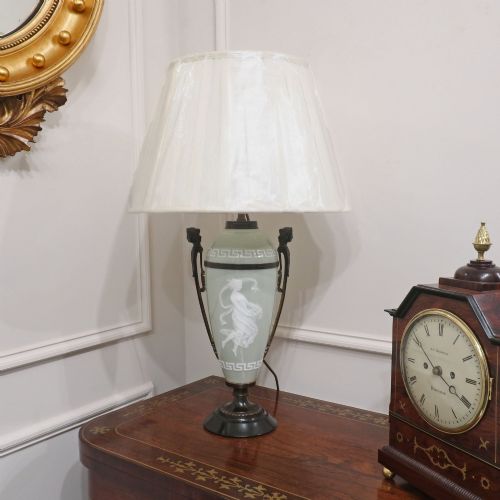
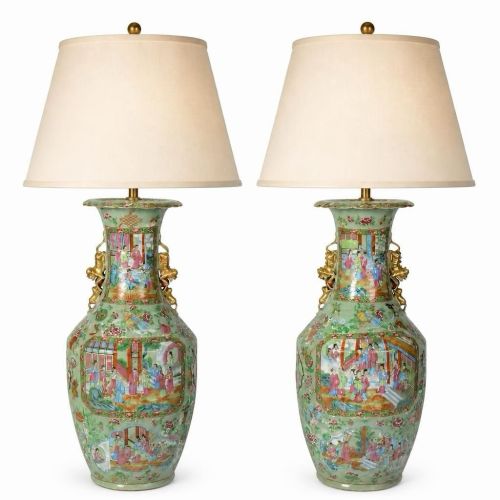
The most common versions on this page are Chinese export ceramics, particularly Celadon and Famille Verte vases, alongside French Neoclassical and Pâte-sur-Pâte pieces. These range from single ginger jars to large matched pairs, often adapted from earlier vessels.
The ceramic bases carry diverse green tones, from pale sea-green celadon to vibrant emerald famille verte palettes. They bridge decorative arts and interior lighting, retaining their original hand-painted motifs or monochrome glazes beneath modern wiring.
How they were made
The foundational vessels were thrown or moulded from porcelain clay, then fired at high temperatures to achieve a vitrified, non-porous body. Glazes containing iron oxides produced the soft green of celadon, while enamels were applied over the glaze for famille verte and rose medallion designs.
Many European and English examples integrate cast or chased metalwork, using ormolu, gilt bronze, and brass as mounts, handles, and bases to elevate the ceramic body. Fabric shades complete the construction, paired with fitted electrical components during conversion.
Several ginger jars had long, peaceful careers holding dry tea before waking up wired for electricity.
What varies in quality
Quality rests in the crispness of the porcelain throwing, the depth and clarity of the green glaze, and the precision of any hand-painted enameling. Superior Chinese export pieces display finely detailed brushwork and balanced potting, while lesser examples show thicker, less refined bodies.
The metal mounts play a decisive role in overall execution, separating standard conversions from exceptional works. Fine gilt bronze and ormolu mounts fit the ceramic contours seamlessly, whereas lesser pieces rely on simple brass fittings lacking sculptural weight.
The Green Porcelain Lamps Glossary
- Celadon
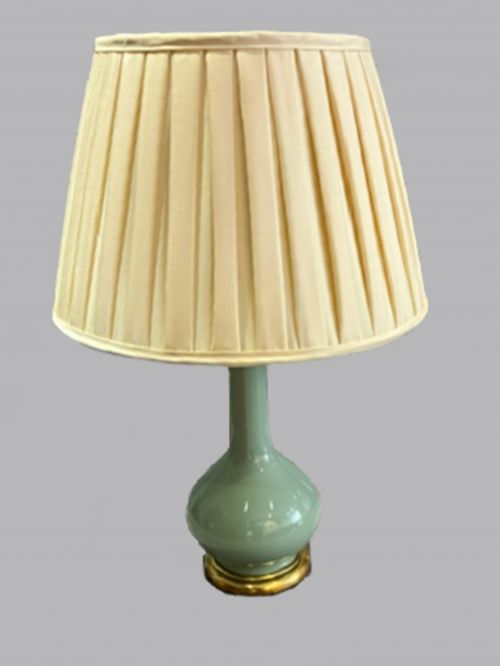
- A transparent green glaze over a porcelain body, prized for its subtle sea-green shade. It mimics the appearance of jade.
- Famille Verte
- A palette of green enamels dominant on Chinese porcelain, introduced during the Qing Dynasty. It often includes iron red, blue, and yellow accents.
- Ormolu
- Gilt brass or bronze applied to furniture and ceramics for decorative mounts. It provides a rich golden contrast to the green porcelain.
- Pâte-sur-Pâte
- A French ceramic technique where liquid clay is painted onto a porcelain body in layers to create a low relief cameo effect.
Green Porcelain Lamps: Frequently Asked Questions
Are these lamps converted from old vases?
Many green porcelain lamps started life as Chinese export vases, ginger jars, or decorative vessels before being mounted and wired for electricity. The conversion process preserves the antique ceramic body while adapting it for modern interior use.
Some pieces retain original metal mounts from the nineteenth century, while others received electrical fittings and brass bases later in their lifespan.
How do I date a green porcelain lamp?
Dating relies primarily on the style, glaze, and potting of the ceramic base, alongside the character of any metal mounts. Pieces range from mid-nineteenth-century Chinese export wares to later Victorian interpretations and twentieth-century productions.
Examining the base and the wear on the porcelain helps distinguish older Qing dynasty styles from later revival pieces.
Do these lamps come with shades?
The listings typically present the lamps with fabric shades suited to their proportions and period style. These shades complement the ceramic bases and brass or gilt bronze hardware.
Buyers often retain the accompanying shade or replace it to match their specific interior colour scheme.