


Green Pine Blanket Box
A green pine blanket box provides robust storage with centuries of rustic character, featuring hand-forged ironwork and painted surfaces.

Green Pine Blanket Box
A green pine blanket box is a functional storage chest constructed from softwood timber and finished with green pigment or paint. These pieces appear across various regional traditions, including English country houses, Dutch workshops, Scandinavian folk art, and Welsh artisan workshops.
Buyers most frequently encounter 19th-century examples alongside earlier 18th-century pieces. Common regional variations include dome-top marriage chests, campaign chests, and simpler domestic storage boxes.
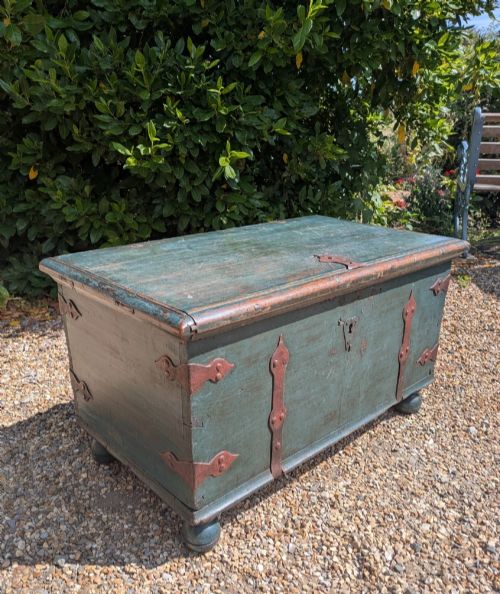
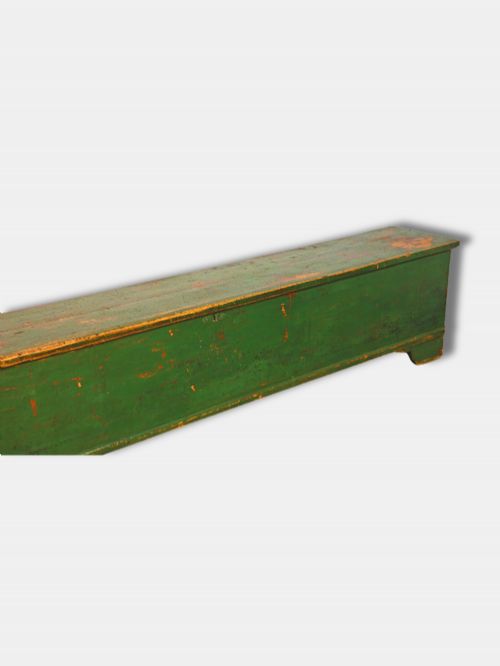
The primary forms range from flat-topped utility boxes to domed coffers and marriage chests intended for household linens and personal belongings. Many retain their original painted finishes, whilst others show layers of historic patination and wear.
Materials and construction methods
Construction relies primarily on solid pine timbers joined to create durable domestic storage. Carpenters utilised basic yet sturdy joinery appropriate for daily household use.
Surfaces were frequently finished with oil-based or distemper paints, often in shades of green. Some domestic items incorporated internal linings such as baize, fabric, or leather for delicate contents.
Many a diligent apprentice likely practiced his blacksmithing on these very strap hinges, hammering out frustrations into sturdy ironwork.
Assessing quality and character
Quality in a green pine blanket box relates closely to the survival of its original painted surface and historic patination. Pieces retaining untouched early pigment carry greater visual integrity than those stripped or repainted later.
The sophistication of the ironmongery also distinguishes finer examples. Hand-forged strapwork and robust working hinges demonstrate superior craftsmanship compared to utilitarian replacements.
Structural honesty and regional distinctiveness elevate certain pieces, such as documented marriage chests with folk art motifs or campaign trunks with military provenance.
The Green Pine Blanket Box Glossary
- Strapwork
- Iron bands applied to the exterior of a chest to reinforce corners and joints. These metal strips are often hand-forged and fixed with visible handmade nails.
- Marriage chest
- A decorative storage box commissioned to celebrate a wedding or alliance. These pieces frequently display painted initials, dates, or folk art motifs unique to their region of origin.
- Dome top
- A curved lid design that encourages water runoff and increases internal capacity. This form appears frequently on 18th-century and 19th-century coffers.
- Kist
- A traditional regional term for a heavy wooden storage chest or box. The word derives from Germanic roots used widely in northern European and British vernacular furniture.
- Patination
- The surface alteration and mellowing of materials through age, handling, and light exposure. This natural ageing process creates depth and character on painted pine and iron.
Green Pine Blanket Box: Frequently Asked Questions
What were these boxes originally used for?
These chests served primarily for storing household textiles, woollen blankets, and personal clothing. In domestic settings, they also functioned as impromptu seating or tables.
Specialist variants like marriage chests held a bride's dowry linens, whilst military pieces transported officer equipment during campaigns.
How do I care for painted pine?
Maintain stable indoor humidity levels and keep wooden chests away from direct heat sources and strong sunlight. Dust gently with a dry cloth and avoid harsh chemical cleaners.
Applying a microcrystalline wax can help protect fragile historic paint finishes without altering their appearance.
Are original painted surfaces common?
Original paint survivals depend heavily on the history of individual pieces and how domestic owners maintained them over generations. Many surviving items retain early or original green finishes, though touching up was historically common.
Expert examination under magnification often reveals underlying paint layers and the age of the pigment.
How can I tell a regional style apart?
Regional attribution relies on construction details, hinges, and painted decoration styles. Dutch and Scandinavian pieces often display distinct folk art motifs, whilst British country workshops favoured simpler forms.
Hardware styles and lock mechanisms also provide clues to the geographic workshop of origin.