
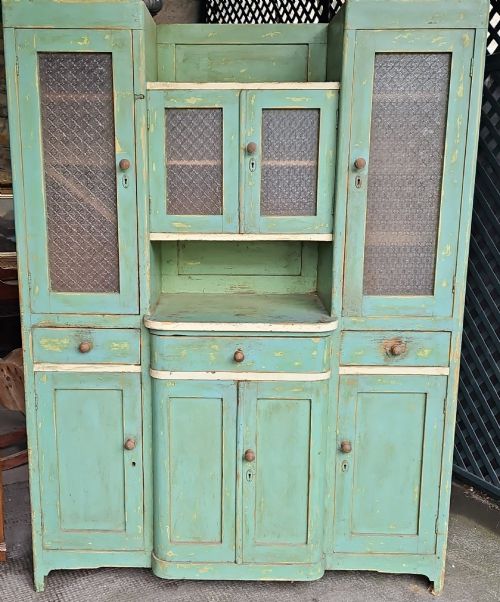
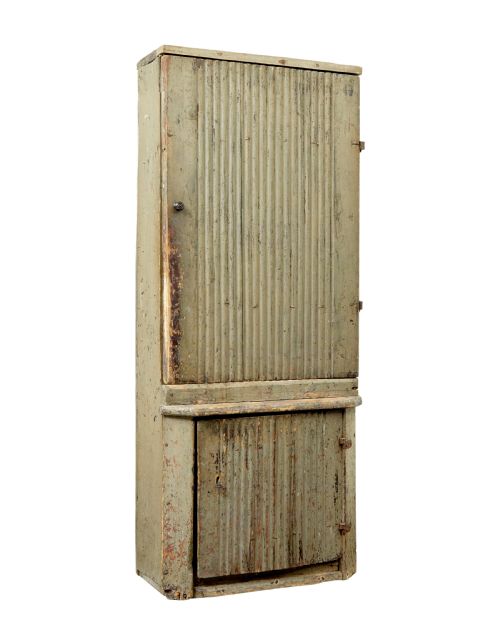


Green Painted Pine Cupboard
A green painted pine cupboard brings immediate warmth and practical utility to a room through its heritage of country craftsmanship and enduring painted finish.
Green Painted Pine Cupboard
A green painted pine cupboard is a utilitarian storage piece typically found in domestic settings from the eighteenth and nineteenth centuries, spanning kitchen dressers, food cupboards, and housekeeper's cabinets. These pieces originate from various regions including England, Scotland, Ireland, Scandinavia, and Hungary, reflecting local rural traditions.
The selections encountered here range from simple wall-hung cupboards and small shop fittings to large dresser bases, pot board dressers, and tall hall wardrobes. Most examples date from the nineteenth century, with earlier Georgian pieces and Edwardian adaptations appearing alongside folk art variations.
Buyers seek these items for their honest construction and the decorative quality of aged green pigment, which adds character to contemporary and traditional interiors alike. They serve as functional storage furniture that doubles as a strong visual anchor in kitchens, dining rooms, and hallways.
How they were made
Makers constructed these cupboards primarily from solid pine, utilising timber planking for panels, shelves, and structural carcases. Wood was frequently joined using traditional methods suited to workshop production rather than high-end cabinet making.
Surfaces were finished with layers of paint, often in shades of green, applied over decades of use and sometimes refreshed or altered during the working life of the piece. Hardware such as brass, iron, and metal handles, hinges, and occasional glass or textured glass panels completed the assembly.
Some cupboards carry the subtle ghost of old pantry smells, locked quietly into the pine boards after centuries of storing dried herbs and provisions.
What varies in quality
Quality in a green painted pine cupboard depends largely on the integrity of its surface finish and the retention of its original structural form. Pieces retaining early or original paint schemes hold greater interest than those with later repainting, though the character of the pigment matters significantly.
Proportion and scale distinguish finer regional examples from standard utility items, with well-balanced cornices, panelled doors, and original hardware contributing to a superior presence. The degree of untouched regional character, whether English country house or Scandinavian folk art, defines the upper tier of these pieces.
Melissa White
The Green Painted Pine Cupboard Glossary
- Pot board dresser
- A kitchen dresser featuring an open slatted lower shelf, known as a pot board, historically used for storing heavy pots and pans off the floor.
- Housekeeper's cupboard
- A large storage cabinet traditionally used in substantial homes for linens, dry goods, and household supplies, often fitted with multiple doors and drawers.
- Folk art
- Decorative work produced within a traditional community culture, often displaying regional motifs and hand-mixed pigments unique to the maker or locality.
- Dresser base
- The lower section of a kitchen dresser, functioning as a sideboard with cupboards or drawers beneath a solid wooden top.
- Cornice
- The decorative moulding situated at the top of a tall cupboard or dresser, providing a finished architectural edge.
Green Painted Pine Cupboard: Frequently Asked Questions
What rooms suit a green painted pine cupboard?
These cupboards suit kitchens, boot rooms, and living spaces where practical storage and a strong decorative finish are desired.
Their robust construction allows them to handle heavy daily use while introducing rustic colour to the interior.
How do I care for the painted surface?
Maintain the painted finish by dusting regularly with a dry cloth and avoiding harsh chemical cleaning products that might lift historic pigment.
Keep the timber away from direct heat sources to prevent shrinkage and cracking in the pine panels.
Are the shelves adjustable?
Most period cupboards feature fixed interior shelving built directly into the structural frame during initial construction.
Later Edwardian examples occasionally incorporate simple support battens that allow for minor adjustments.
How do I identify a regional style?
Regional characteristics appear in the specific choice of mouldings, foot styles, and the tone of the green paint applied.
Scandinavian and Alpine pieces often display distinctive folk carving or brighter hues, whereas English country examples favour simpler, utilitarian lines.